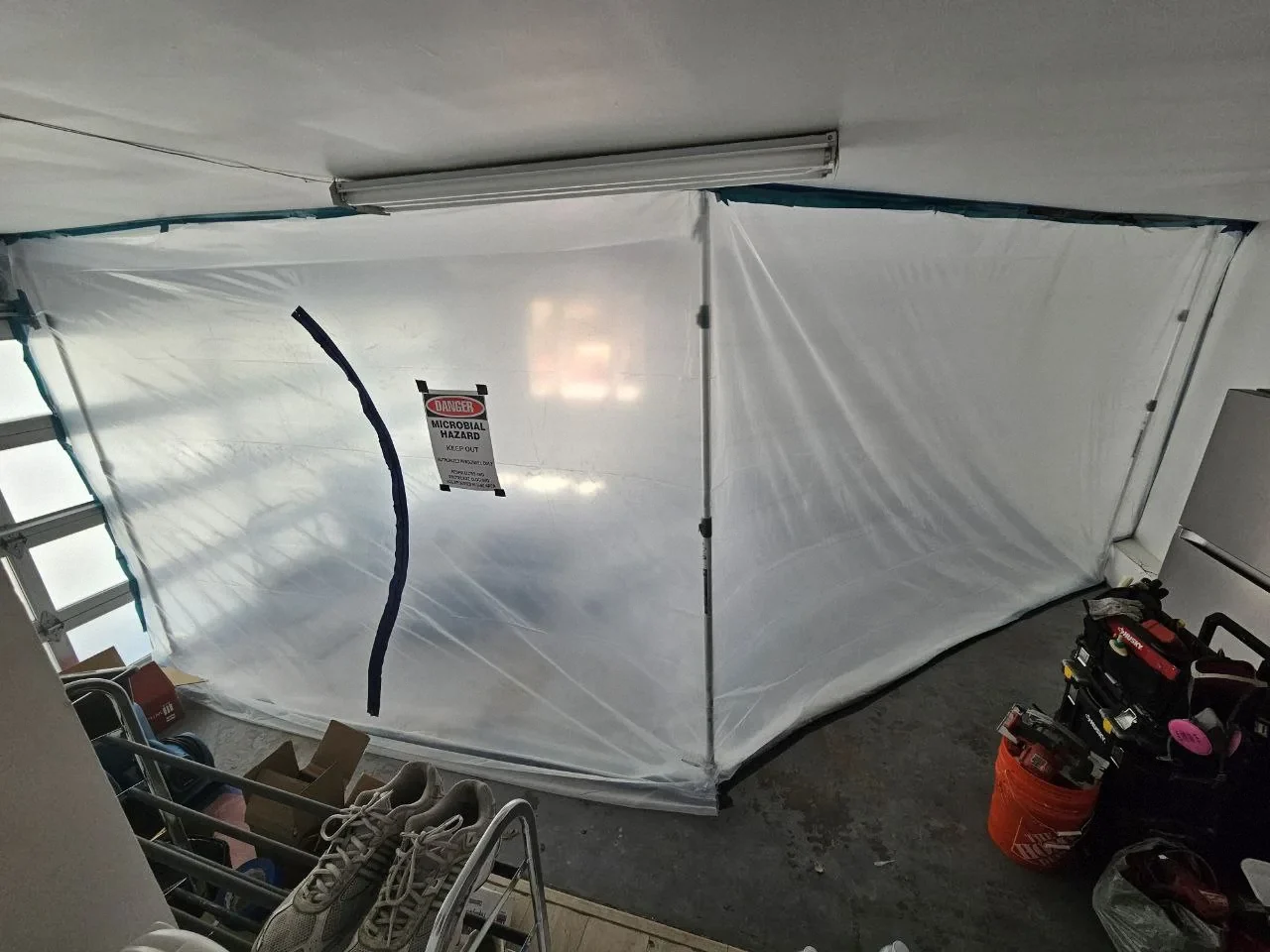
Investigate the moisture source
A musty odor or visible discoloration deserves investigation, but it does not establish the full extent or identify the source. Explain where the condition appeared, when it was noticed and whether water is still entering. A mark on a ceiling or wall may be the first visible evidence even when the source is elsewhere.
The U.S. Environmental Protection Agency advises correcting moisture as well as cleaning mold. Depending on the conditions, a plumber, roofer or building-envelope professional may be needed. Replacing a finish over a continuing leak does not solve the water problem. Ask which provider will investigate and repair the source.
Keep clear of wet electrical equipment and unstable material. Do not disturb a large or concealed suspect area merely to see how far it extends. Individual health concerns belong with a qualified health professional; the appearance of a surface alone is not a medical diagnosis.
Understand what was examined
Ask an assessor to identify the accessible affected materials, observed moisture and any areas that could not be inspected. Water can travel under flooring or behind a cabinet. A visual observation is useful, but it should not be presented as proof about an assembly that has not been opened.
Provide the history of the condition, including whether it followed rain, an appliance issue or a known plumbing leak. Safe photographs and records of previous repairs help explain the sequence. Do not infer a pipe material or foundation type from a home’s age; the actual property needs to be evaluated.
Before a finish is opened, discuss how the work area and contents will be protected, what material may be removed and how the scope will be revised if new damage is found. Establish who can authorize that change. The correct treatment depends on the exposure, material and site conditions.
A written scope also helps occupants understand disruption. Ask which rooms need to be unavailable, how belongings will be identified if moved and how access to unaffected areas will be maintained. A resident may be able to report a condition but may not be authorized to approve removal of building materials. Identify the decision maker before work begins and agree how discoveries outside the original assessment will be communicated. If the source is not yet known, arrange the additional investigation rather than assuming that the first visible mark identifies it. The person assessing the property should explain any practical limits on inspection and what remains to be checked when access becomes available.
When a resident needs to report a concern
Gilroy Code Enforcement lists unsafe living conditions among private-property concerns it handles within city limits. A resident can ask the city whether the address and observed condition fall within its authority. A report is not a mold test and does not replace an investigation or repair of an active moisture source.
Tell the housing provider where water or visible growth appeared and whether it continues. Keep a copy of the request and any response. Provide photographs only when they can be taken safely, and coordinate access through the owner or manager. A shared wall or common area may require more than one person’s cooperation.
Describe observable facts rather than assigning a cause or responsibility before the investigation. If the concern is urgent or the area is unsafe, follow the relevant official safety instructions. Keep the steps for reporting a housing condition separate from the practical task of stopping ongoing water entry.
A local tenant and landlord resource
Gilroy says it provides grant funding to Project Sentinel for tenant-landlord information and fair housing mediation services. The resource can help the parties understand available processes when a housing-related disagreement remains unresolved. It does not itself order a mold cleanup or guarantee a particular outcome.
An owner and resident can keep communications focused on the location, access and requested repair. If work will affect more than one room or unit, ask how residents will receive updates and when access is needed. The responsible parties should agree who can approve the scope and how a change will be communicated.
A mediation service, a city code concern and a restoration assessment have different functions. Ask the relevant organization about eligibility and the current service before relying on it. Questions about legal rights or health should go to a qualified professional in that field.
Coordinate permitted reconstruction
If source repair or rebuilding requires a building permit, Gilroy says the work must remain accessible and exposed for inspection until the inspector approves it. The city also says the permit must be on site throughout construction or modification. This applies to work requiring a building permit, not automatically to every mold assessment.
Gilroy’s inspection guidance says drywall nailing is inspected before taping. If a permitted reconstruction includes that work, the permit holder should schedule the relevant inspection at the correct stage. Confirm the actual inspection sequence with the city because projects and requirements differ.
Ask the responsible trade who will hold the permit, provide access and arrange inspections. If hidden damage changes the proposed repair after an assembly is opened, discuss the change with the permit holder and building office. Finishes should not conceal work that must remain visible for a required inspection.
Plan the handoff
Before a room returns to ordinary use, ask for a written description of what was treated, what source repair was completed and which areas were not accessible. Identify any remaining work assigned to a different trade. The handoff should describe observed results without claiming to know the condition of an unopened space.
If moisture returns, record when and where it appeared and arrange another investigation. It may involve the same path or a different one. Keep the assessment, source-repair record, photographs and applicable permit information together so the next professional can understand the earlier work.
If insurance is involved, ask the insurer what documentation and disposal procedures apply. Coverage depends on the policy and the facts of the claim. Do not assume that a city housing resource or a repair estimate determines the insurer’s decision.
To discuss a Gilroy property, call (650) 550-0619. Describe the affected area, the known moisture source, access restrictions and who can authorize the assessment. The work proposed depends on conditions at the property.
For a business or shared property, coordinate the sequence with the people responsible for adjoining spaces. An investigation may require access above a ceiling or to a room on the other side of a wall. Clarify the proposed boundaries, the timing of entry and who will receive updates if the work area changes. Keep the contact details for each trade with the project record. If a later repair or inspection is outstanding, the owner should know its location and responsible party before replacing a finish. A complete handoff helps avoid confusion between the work that was performed and work that has only been proposed.
Common questions
Does a musty odor identify the moisture source?
No. It can prompt an investigation, but the location and extent need to be assessed at the property.
Can Gilroy review an unsafe living condition?
The city lists unsafe living conditions among Code Enforcement concerns within city limits. Ask whether the address and condition are within its authority.
What local help is available for a tenant-landlord dispute?
Gilroy says it funds Project Sentinel tenant-landlord information and fair housing mediation services. Ask the organization about the particular concern and current process.
Does every mold cleanup require a building permit?
No blanket conclusion follows from the presence of mold. Ask the city about the actual repair or reconstruction proposed.
When is drywall nailing inspected in permitted work?
Gilroy’s inspection guidance says drywall nailing is inspected before taping. Confirm the actual inspection sequence with the city.