Follow current safety directions
Do not enter moving floodwater or touch wet electrical equipment. Water can conceal holes, debris and unstable surfaces. Follow evacuation and reentry directions from local officials, and call 911 for immediate danger. Wait until the property is accessible before arranging an assessment or retrieving belongings.
Once access is authorized, explain where water entered, which spaces were reached and whether water remains. Photographs taken safely and the time of the event help document what was visible. A water line on a wall does not establish the moisture remaining behind it or the source of the flood.
Identify the person who can authorize work and any limitations on access. A renter should notify the housing provider; a manager of a shared building may need to coordinate entry with several occupants. The next steps depend on the actual property and the directions of the responsible authorities.
Assess the building and the water path
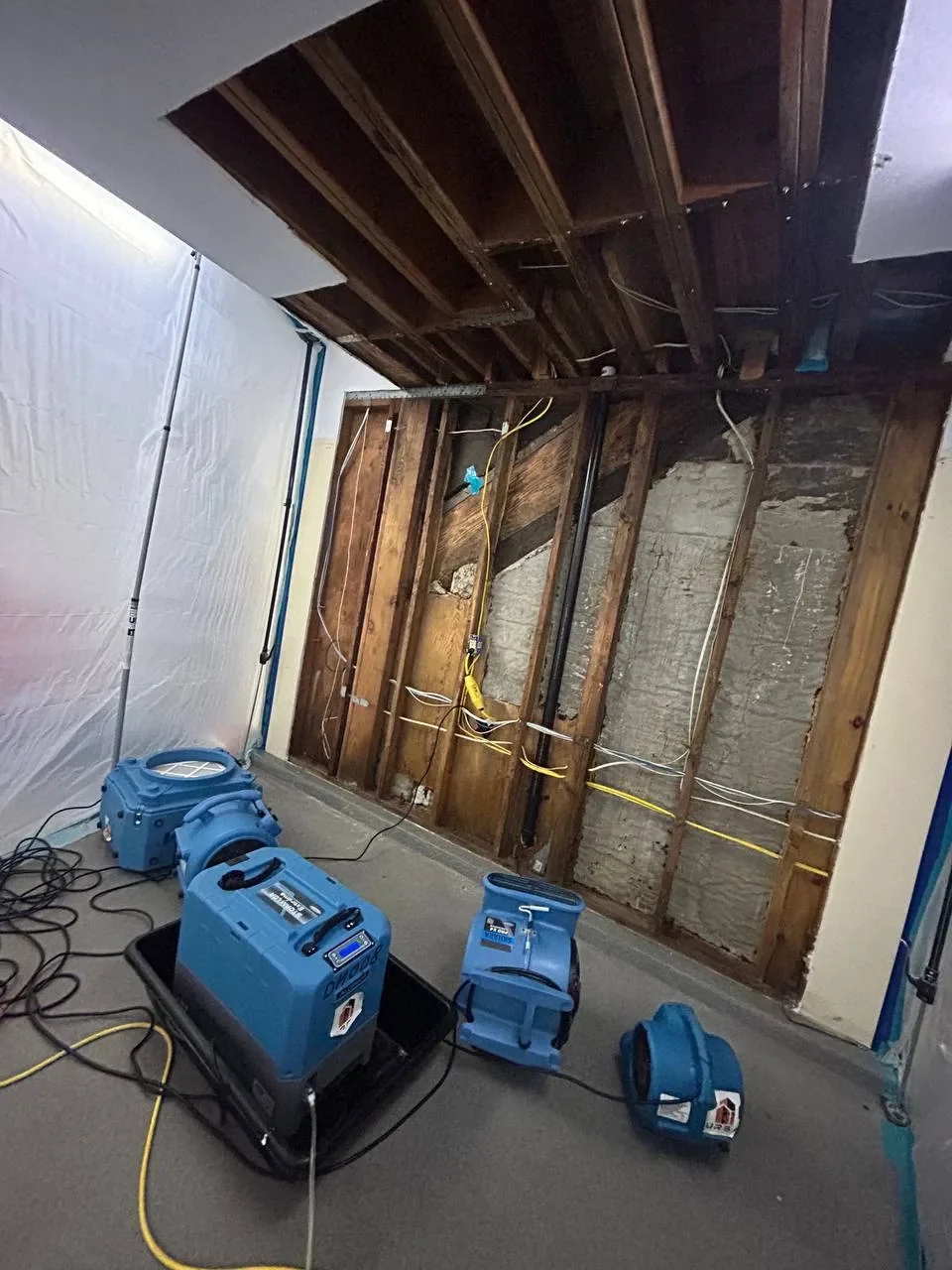
An assessment should describe accessible affected materials, the observed or suspected source and areas that could not be inspected. Water may travel below a floor or behind a cabinet. Ask what was examined, what was measured and what remains uncertain before deciding which finishes can be retained or need further attention.
Outside water, a fixture backup and a supply-line failure may require different source repairs. Describe the sequence without assuming liability or assigning a cause from the first visible mark. If a drainage feature or slope is involved, a qualified professional may need to evaluate the site as well as the affected room.
Agree how the work area and belongings will be protected and how newly discovered damage will be communicated. If another trade must repair the source, identify that responsibility separately from drying or cleaning. A permanent finish should not conceal unresolved water entry or work that needs an inspection.
A permit depends on location and proposed development
Gilroy Municipal Code section 27E.15 requires a development permit before construction or other development in an established special flood hazard area. Confirm the current map, the address and the proposed work with the city. This does not mean that every flooded property is in such an area or that water removal alone is automatically regulated development.
When reconstruction is proposed, provide a clear description of the damaged and proposed work. The city can explain whether floodplain and building approvals apply and which party should apply. Do not infer a particular requirement from a neighbor’s address or from an old photograph of a flood.
An insurance estimate, a cleanup scope and a municipal permit have separate functions. Keep all three with the project record if applicable, but allow the responsible agency to make its own determination. Coordinate required inspections before covering work the inspector must see.
How the city reviews substantial damage
Gilroy’s floodplain ordinance assigns the floodplain administrator permit review that includes determinations of substantial damage and substantial improvement. That role matters for relevant floodplain development. A wet room or an insurer’s estimate alone does not establish the city’s determination for a particular structure.
Ask the city how the project is evaluated and what information it needs. The work may involve more than restoring the visible finish, and the responsible professional should describe the proposed scope accurately. Do not assume that every water loss triggers elevation or rebuilding requirements.
If the estimate changes after a wall or floor is opened, document the revised scope and discuss any required amendment with the permit holder. Keep the information used by the city separate from general flood-preparedness advice. The applicable result depends on the location, structure, work and current ordinance.
Questions about the mapped boundary
The city code gives the floodplain administrator a role in interpreting the exact boundary when a mapped line appears to conflict with field conditions. It also provides a reasonable opportunity to appeal that interpretation. Ask the city about the specific parcel rather than estimating a boundary from a street name or a regional news report.
A mapped designation is one input to the permit question; it does not describe every way water can enter a building. Surface drainage, a blocked fixture or a plumbing leak can affect a property regardless of a particular map classification. Each source needs its own investigation.
Keep the address, relevant map information and correspondence with the city. If a professional survey or design is needed, ask the responsible agency what information will help resolve the question. An administrative boundary interpretation should not be presented as a guarantee that a property cannot flood.
What a development application describes
For a development permit application under section 27E.15, Gilroy lists scaled plans with the location and elevation of the area and structures, proposed utility locations, and grading and drainage information among the minimum items. These are application details for the regulated development, not a checklist for every cleanup.
If the city says an application is needed, ask the designer or permit holder to assemble the information for the actual site. A drainage plan is different from a cleanup record: one describes proposed work and site conditions for review, while the other describes the damage and work performed.
Coordinate the city review with the people handling source repair and reconstruction. A revised design may change the timing of inspections or the order in which trades can work. Keep the approved information available and ask the permit holder how updates will be communicated.
Prepare for the handoff
Ask the cleanup provider to identify completed work, inaccessible areas, any remaining moisture investigation and repairs assigned to another trade. Record the original location and visible condition of belongings when safe. Electrical equipment exposed to water should be assessed by a qualified person before use.
If an insurer is involved, ask what photographs and disposal documentation are needed. Coverage depends on the policy and facts of the claim. Keep estimates, authorizations, permit records and inspection results together so the parties can distinguish the source repair from cleanup and later rebuilding.
If water returns, note where and when it appears and arrange another assessment. The new water may have the same cause or a different one. Call (650) 550-0619 to discuss a Gilroy property, including active water, access restrictions and the people authorized to make decisions.
Where a home or business cannot use part of the property, arrange access and the order of work with the person responsible for the premises. Ask how contents will be identified if moved and which items need specialist handling. A water-damaged document, furnishing or appliance may require a different decision; a photograph alone cannot determine whether it can be safely restored. If the work area changes, the authorized contact should receive an explanation before an expanded scope proceeds. Keep a record of who performed each source repair and who is responsible for any remaining reconstruction. That information will help the owner coordinate the next visit and any required inspection.
Common questions
Can I enter while floodwater is moving?
No. Follow official evacuation and reentry directions, and avoid moving water and wet electrical equipment.
Does every flooded property need a floodplain development permit?
No. Gilroy’s ordinance applies the stated development permit requirement to construction or other development in an established special flood hazard area. Confirm the parcel and scope with the city.
Who makes a substantial damage determination?
Gilroy’s code assigns the floodplain administrator permit review including substantial damage and substantial improvement determinations for the relevant process.
What if a mapped boundary conflicts with field conditions?
The ordinance assigns interpretation to the floodplain administrator and provides a reasonable opportunity to appeal the interpretation.
What information may a development application need?
Section 27E.15 lists scaled plans and information about structures, utilities, grading and drainage among its minimum application items.