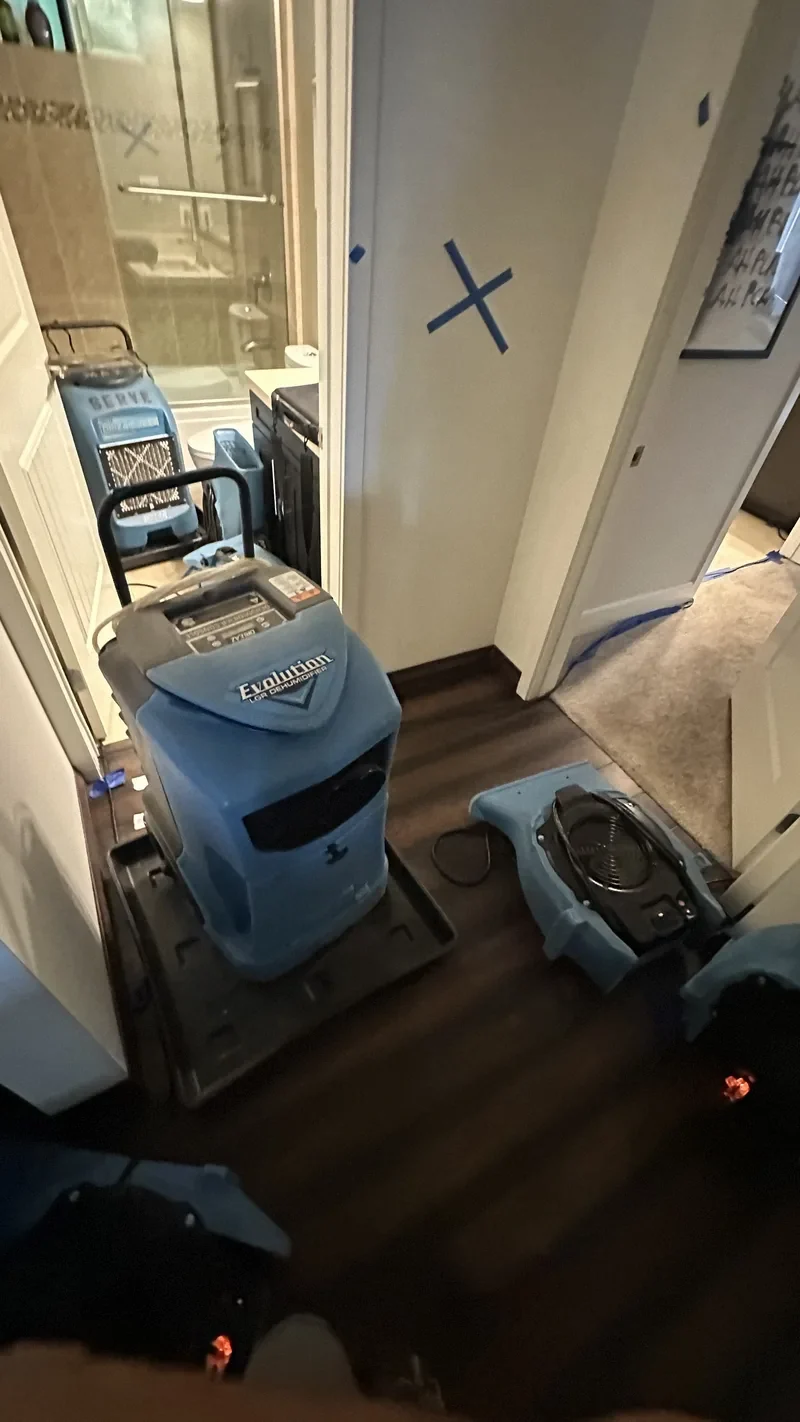
Water damage and carpet restoration in Pleasanton
Describe where water first appeared, whether it is still flowing and which rooms are affected. Mention any restrictions on access and any repair already attempted. These observations help direct the assessment; the source and the condition of wet materials still need to be checked at the property.
Keep people and animals clear of standing water, unstable ceilings and wet electrical equipment. Close a supply shutoff only if it can be reached safely. Do not step into water to reach a breaker or appliance. Call 911 for an immediate threat to life, and follow directions from the responding agency before entering a restricted space.
Water can show up away from its entry point. Note whether a fixture was in use, whether the problem coincided with rain and which surfaces became wet first. Photos and a timeline are useful when they can be collected safely. A mark on a wall alone cannot establish whether the source is a supply line, drain, roof or outdoor water.
Public systems and property work
Pleasanton operates and maintains its drinking-water distribution system and says it currently purchases its supply from Zone 7 Water Agency. The city’s Public Works Department also maintains the city water distribution and sewer systems. A reported issue in a public line and a repair within a property are separate decisions; the location and cause of the leak or backup must be established.
The city directs non-emergency water leaks, broken lines and sewer concerns to its Maintstar work-request portal. Provide a clear location and description and follow any instructions the city gives. The portal is for non-emergency requests; it is not a substitute for emergency services or a determination that a private room is safe.
If a fixture backs up, avoid adding water through connected drains while the source is being investigated. Keep people away from affected water and identify who is arranging the plumbing assessment. Cleanup of a contaminated room must be coordinated with repair of the line or other cause so that the same area is not exposed again.
If a slab leak is suspected, arrange a qualified investigation to locate the source before selecting a repair. A damp floor does not prove where a pipe has failed, and a building’s age does not establish the material or condition of its piping. Source repair and drying affected floor assemblies are separate steps that should be coordinated.
Floodplain information for an address
Pleasanton offers property-specific floodplain information through its floodplain information message center and Permit Center. The designation for a particular address should be checked against current official information. A nearby creek, a past storm or water in one yard does not by itself establish the flood classification of every building nearby.
The city’s floodplain guidance describes additional construction requirements when repair costs meet a substantial-damage threshold. Whether that rule applies depends on the building, location and official determination. If floodwater has damaged a structure, ask the city about its review before assuming that rebuilding can proceed in the same way as an ordinary interior repair.
When outdoor water enters, note the apparent route and high-water mark if it is safe to do so. Water may carry sediment or contaminants, and its path can change during a storm. Avoid approaching damaged electrical equipment. After access is permitted, a professional can evaluate drainage, openings and affected materials using the actual conditions rather than a citywide assumption.
Preparing for rain
Pleasanton provides free self-service sand and bags at 3333 Busch Road and asks residents to bring a shovel. Check current city information before going, particularly during a storm. Sandbags are a temporary measure and do not establish that a building is protected against all water entry.
A property owner can also review accessible drainage paths and record recurring problems for a qualified professional. Downspouts, paving and changes in grade can affect where surface water collects. Avoid making assumptions about hidden drainage or disturbing an area that is unsafe. The appropriate permanent repair depends on the site and any required approvals.
Keep essential records where they can be reached without entering a hazardous room. A list of contacts, insurance information and photos of undamaged contents may help after an event. If an evacuation or access restriction is issued, follow it. The availability of sandbags does not change the need to heed emergency instructions.
A temporary barrier must be placed without putting the person installing it in moving water or in contact with electrical hazards. If water is already entering quickly or an official evacuation notice is in effect, move to safety and follow the notice. Afterward, the location of any temporary measure can be included in the record for the person evaluating the property’s drainage and entry points.
Repair permits after an emergency
Pleasanton’s 2026 construction permit handout states that emergency equipment repairs requiring a permit must be followed by an application to the Building Official on the next business day. An emergency action and the later permanent repair are not automatically the same scope. Explain what was done and what remains to be rebuilt when contacting the city.
The same handout excludes changes to water-supply, sewer and drainage piping from its ordinary repair exemptions. A minor finish repair and a change to piping therefore should not be treated as identical for permitting. The Building Division can identify which application, plans and inspections apply to the actual work.
Ask the contractor who will coordinate permit submission and inspections before finishes are replaced. If opening a wall reveals additional work, discuss whether the approved scope needs revision. Keep a copy of the permit and inspection records, and do not assume that the completion of water removal substitutes for required building approvals.
Evaluate wet materials
The extent of moisture is not always visible at the surface. Flooring, wall backing and contents can be affected differently according to their materials, the water source and how long they were wet. An assessment should identify what can be examined and what may remain uncertain until a concealed area is opened.
Ask for a plan that separates stopping the source, removing water, treating affected materials, drying and rebuilding. A plumbing repair can stop new water without making the floor dry; conversely, drying will not correct a leak that remains active. The sequence matters when several parties are working at the same property.
Protect unaffected rooms and avoid moving potentially contaminated items through them without a plan. If additional damage is discovered, request an explanation of the finding and how the proposed work changes. Before closing an assembly, discuss what has been checked and whether applicable inspections have been completed.
A plan for a wet floor should consider the surface and the layers beneath it. Water may move under a finish or into the edge of a wall where it is not immediately visible. Ask which locations will be checked, how access will be obtained and whether any material must be removed to evaluate the assembly. The right approach depends on the source and exposure; it should not be decided solely by the appearance of the top layer. If a room has been exposed to sewage or outdoor floodwater, tell the assessment team so the proposed handling takes that condition into account.
Local areas and different buildings
Pleasanton’s General Plan identifies Downtown, Vintage Hills, Valley Trails and Del Prado among residential planning neighborhoods. These names offer geographic context, not evidence of a particular property’s construction, utility boundary or flood risk. Some planning areas extend beyond city boundaries; confirm the actual address before applying a city rule.
A detached house, a shared building and a commercial space can present different access and coordination needs. Identify the property manager or owner, any shared systems and the people who must approve work. Record what is known about the building without assuming pipe material or moisture history from the neighborhood name.
If you rent, notify the owner or manager promptly and keep a copy of the message. Describe the area and whether the water is continuing. Access, habitability, insurance and the repair scope are separate matters; the appropriate agency or housing adviser can explain how the rules apply to a particular tenancy.
Communicate the next steps
Keep photographs, repair notes, notices and estimates together for the people assessing the loss. Ask an insurer what documentation it needs and how it handles damaged belongings. Coverage depends on the policy and circumstances; a wet room or particular weather event does not by itself establish a claim outcome.
Before a visit, identify the safest route to the affected area and share any restrictions on entry or utility use. If the source has not been confirmed, say so. A written scope should explain what will be assessed, how additional findings will be handled and who is responsible for coordinating repairs.
Call Water Damage Guard at (650) 550-0619, 24/7, to discuss water damage in Pleasanton. Work should follow the condition of the property and the directions of the responsible agencies, with a clear handoff from source repair to treatment of wet materials and reconstruction.
For a larger project, ask each contractor to identify the work included and any item that depends on another party finishing first. A plumber may need to correct a failed line before a restoration team can evaluate the remaining moisture. A building inspector may need to see a repair before it is concealed. If the work is paused for an approval, agree on how the open area will be protected and who will receive the next update. These arrangements can be recorded without predicting the duration of a repair before the full condition is known.
Common questions
Who operates Pleasanton’s water distribution system?
Pleasanton says it operates and maintains its drinking-water distribution system and currently purchases supply from Zone 7 Water Agency.
Where can I request non-emergency help for a city water or sewer concern?
Pleasanton directs non-emergency water leaks, broken lines and sewer concerns to its Maintstar work-request portal.
How can I check my flood designation?
The city offers property-specific information through its floodplain message center and Permit Center. Use the actual address and current official information.
What if emergency equipment repair needs a permit?
Pleasanton’s 2026 handout says an application must follow on the next business day when an emergency equipment repair requires a permit.
Where can Pleasanton residents get sandbags?
The city lists free self-service sand and bags at 3333 Busch Road and asks residents to bring a shovel. Check current availability before visiting.