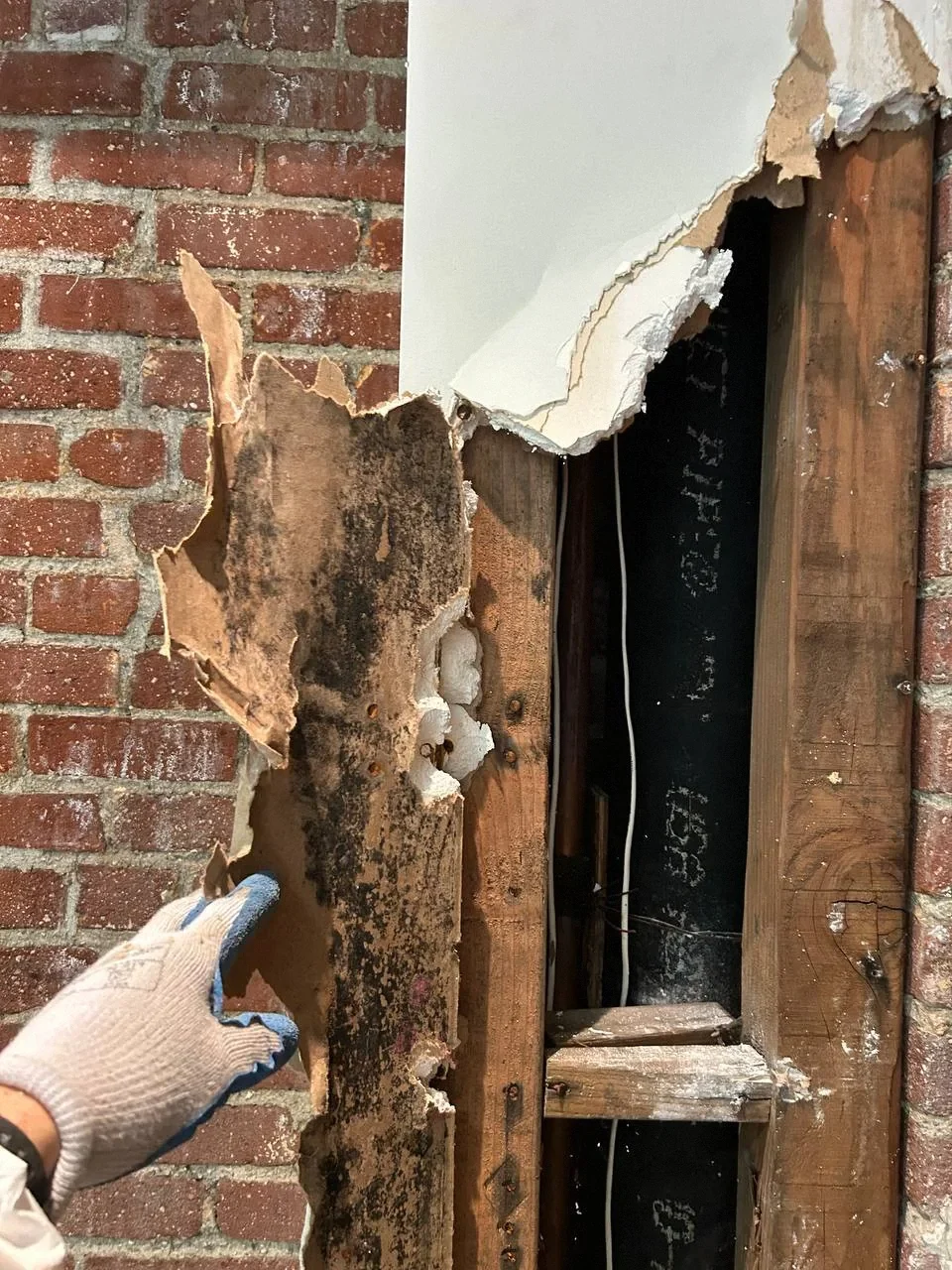
Look for the moisture source
Mold remediation starts by understanding why a material became wet. Water Damage Guard provides mold remediation in Pleasanton from San Carlos. Call (650) 550-0619, 24/7, to discuss a damp area, visible growth or a recurring odor. The source and extent of affected materials need evaluation at the property.
Keep people and animals away from visible growth and avoid disturbing it. A stain or odor can point to an area for investigation but does not establish the species or the full extent of contamination. If water is still entering, address the source safely and follow any official restrictions on access. Do not enter standing water to operate electrical equipment.
Note where the condition appeared, when it was first noticed and whether it changes after rain or plumbing use. Photographs can be useful when taken from a safe location. A good assessment distinguishes what is visible from the condition of materials that may be hidden behind a finish.
Reporting a rental moisture concern
Alameda County Public Health’s 2019 mold resource advises renters to notify the landlord of a moisture problem and contact the city building code office if there is no response. The document says code enforcement examines underlying moisture or building problems rather than performing a mold test. Confirm current contact information and procedures for the address.
Pleasanton’s August 2025 staff memorandum describes code enforcement as complaint-based and identifies immediate health and safety issues and substandard conditions among its priorities. It does not promise an inspection by a particular date or establish the condition of a specific rental. An immediate threat should be reported through the appropriate emergency channel.
Keep a copy of the message to the owner or manager and describe the location, dates and any continuing leak. Preserve notices and responses as the matter develops. A housing complaint, an insurance claim and the scope of physical remediation are separate decisions. The relevant agency can explain its process for the particular property.
A checklist for a specific type of unit
Pleasanton’s ADU and JADU legalization bulletin includes damp habitable rooms and visible mold in a substandard-building checklist. The bulletin addresses a particular process for previously unpermitted accessory or junior accessory dwelling units. It is not a finding that all rental properties have those conditions or that every house must use that checklist.
If the affected space is an accessory unit, ask the city which approvals and standards apply before assuming its status. An owner may need to distinguish assessment of a moisture problem from work required to legalize or alter the unit. A condition found during review should be addressed in the proposed repair rather than hidden by a finish.
Provide the people evaluating the unit with the known history of leaks and repairs. A checklist helps identify items to examine, but the actual condition and needed work must be determined for the unit. Keep records of the approved scope and any inspection findings.
Bathroom alterations and ventilation
Pleasanton’s January 2023 bathroom alteration handout describes mechanical exhaust and humidity control where required. Ventilation can help manage normal bathroom moisture, but it does not repair an active plumbing leak or prove that backing behind a shower is dry. The handout is dated; verify the current code edition and the rules applicable to the proposed alteration with the city.
A bathroom repair may include finishes, plumbing, electrical work or a change to ventilation. Describe each component to the Building Division and the people preparing the work. Requirements can depend on what is changed and whether a permit is needed. Ask which inspections must occur before an assembly is enclosed.
If a stain returns after a surface has been cleaned, investigate the water route rather than repeatedly covering it. Water can move behind tile or a cabinet and appear at a different point. A targeted assessment can determine where access is needed and what remains uncertain until materials are opened.
Decide how materials will be handled
The choice between cleaning, drying, removal and replacement depends on the material, the source of moisture and the condition found. A hard surface does not behave like porous insulation or flooring. Ask for a written explanation of what will be treated, what will be removed and how adjacent rooms will be protected.
Moisture may remain beneath flooring or in the backing of a wall even after the visible surface looks dry. The work plan should identify the areas to be checked and the conditions that would require more examination. If the cause is not corrected, replacement materials can become wet again.
Keep occupants and belongings away from the affected space while it is being evaluated. If contents must be moved, discuss how they will be handled without spreading dust into unaffected areas. A list of damaged items can help the owner and insurer, provided it is prepared without entering an unsafe space.
A plan for protecting the rest of the property should describe how the work area will be separated, where removed material will be staged and how people will travel through the building. If a shared ventilation system may have been affected, ask a qualified professional to assess it before operating it. These decisions depend on the conditions found and should be coordinated with the person responsible for the building. The presence of a fan or a closed door alone does not establish that the source has been corrected or that every affected surface has been addressed.
Coordinate repairs and inspection
Source repair and treatment of affected materials may involve different trades. A plumber can investigate a line while a building professional evaluates wet finishes or framing. Identify who will coordinate the sequence and communicate findings. An unfinished wall should be protected while any required inspection or approval is pending.
If the scope changes after an assembly is opened, request a description of the new condition and the proposed change. The contractor and city can determine whether plans or permits need revision. Do not assume that removing a stained finish addresses water entering from an unrepaired source.
Before reconstruction, ask how the remaining materials have been checked and whether all applicable inspections are complete. Keep the findings, approved scope and later changes together. This record can help the next contractor understand what was done and any limitation that remains.
Discuss the property
If an insurer is involved, ask what documentation it needs and whether it wants to examine damaged items. Coverage depends on the policy and circumstances. A smell, a complaint or a repair estimate does not itself determine the claim outcome.
Call Water Damage Guard at (650) 550-0619, 24/7, with the affected location and any known access restrictions. Share prior assessments and whether the water source has been stopped. An on-site evaluation can establish the next steps for the particular building.
For shared buildings, identify the person responsible for arranging access and the systems that may serve more than one unit. A repair in one space can depend on a source elsewhere. Coordinate with the owner or manager before opening common areas or interrupting a shared service.
Common questions
What should a renter do about persistent moisture?
Alameda County’s 2019 resource advises notifying the landlord and contacting the city building code office if there is no response. Confirm current local procedures.
Does the city inspect every property for mold?
The county resource distinguishes code inspection of underlying moisture conditions from mold testing. The actual complaint and jurisdiction determine the next step.
Does Pleasanton’s accessory-unit checklist apply to every home?
No. The city bulletin addresses a specific legalization process for previously unpermitted ADUs and JADUs.
Does bathroom ventilation repair an active leak?
No. Pleasanton’s 2023 alteration handout describes exhaust provisions, but a leak needs its own investigation and correction.
Can a stain show the full extent of moisture?
No. The assessment may need to consider flooring, wall backing and other concealed material before a repair scope is selected.