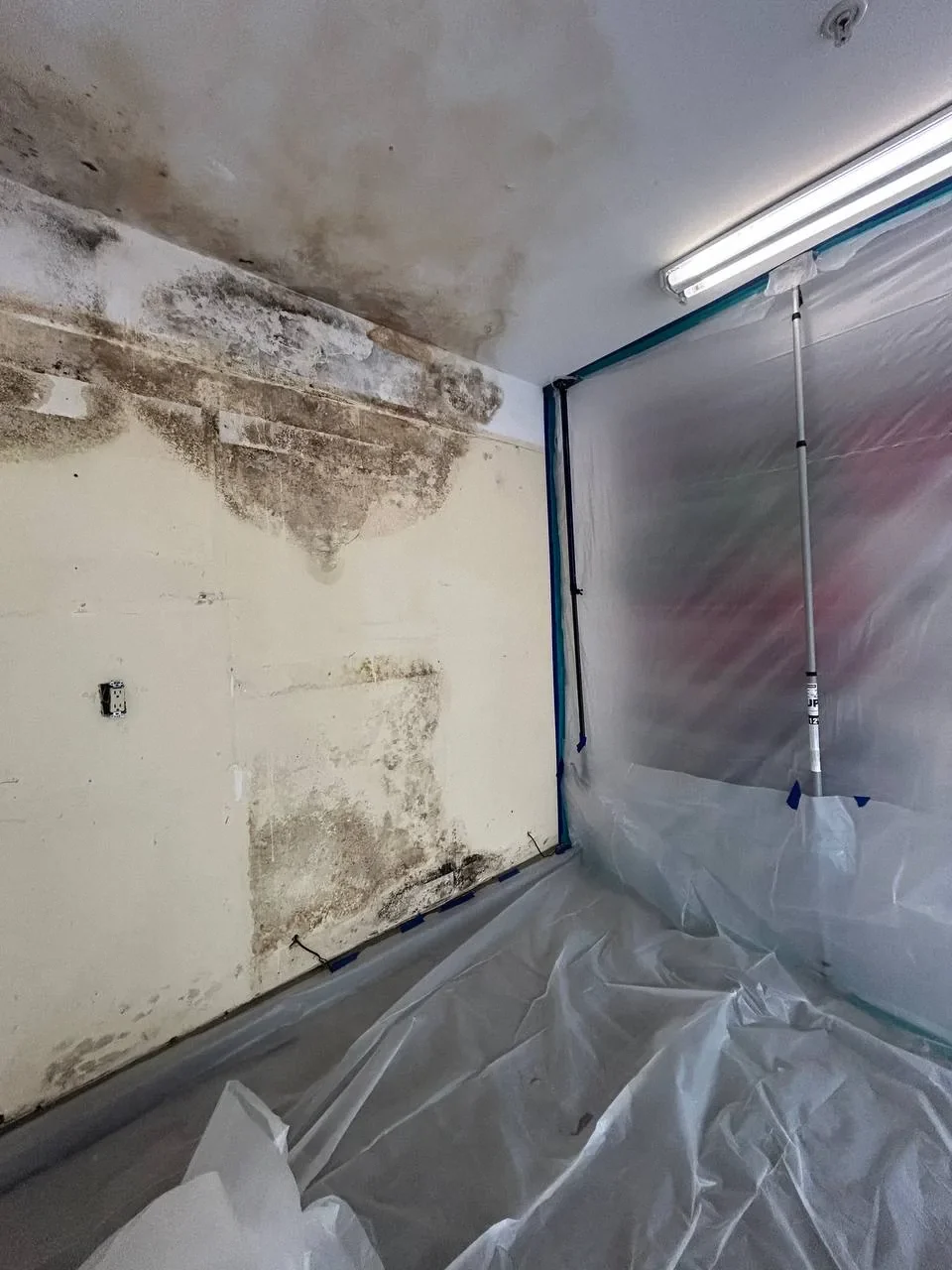
Find the source of moisture
Visible growth, a damp surface or a persistent musty smell is a reason to investigate the water source and affected materials. A stain does not show the full condition behind a wall or under a floor. Avoid disturbing a large or inaccessible area before it can be evaluated, and keep occupants away from unsafe conditions.
If a fixture is actively leaking and its shutoff can be reached safely from a dry location, closing it may limit additional water. Do not cross standing water to operate a switch or touch wet electrical equipment. Source repair and evaluation of affected material are separate steps.
Water Damage Guard provides mold remediation in Livermore from San Carlos and takes calls at (650) 550-0619, 24/7. Describe the affected rooms, suspected source and any access restriction. The condition of the property determines what can be examined and the appropriate scope.
Report a property condition
Livermore’s Neighborhood Preservation report page accepts reports by phone or form and states that anonymous complaints are not processed. The City says health and safety concerns are prioritized. Its stated response times are typical goals, not a guarantee of a finding or a repair outcome.
Describe the observed dampness, location, timing and any prior requests accurately. A complaint is not itself a determination that a code violation exists. If you rent, notify the owner or manager and retain a dated copy of the request; a shared wall or pipe may require coordinated access.
If an authority restricts entry, follow that instruction and ask how essential belongings can be retrieved safely. A city complaint, an insurance claim and a restoration assessment are different processes and may require different information.
When the City determines a building is unsafe
Livermore’s nuisance code lists hazardous plumbing and faulty weather protection among conditions that, when determined to exist by the building official or designee, make a building unsafe, substandard and dangerous under that chapter. A wet spot or visible growth alone is not automatically that official determination.
If a notice is issued, read its scope and ask the City about the required correction and any appeal or inspection process. Keep the notice with photographs and written communications made safely. The actual cause of moisture still needs investigation.
In a multi-unit building, the source of dampness can be beyond the first visible mark. Coordinate access through the owner or manager rather than assuming that the unit with the stain caused it. Record which spaces were inspected and what remains inaccessible.
Testing referrals described in a city report
Livermore’s FY 2024–25 housing report describes collaboration with Alameda County Healthy Homes for lead and mold testing of referred owners and tenants before abatement. This is a historical report about referred cases, not a guarantee of current service, a requirement to test every property or an open grant for remediation.
Ask the relevant agency whether a referral or support is currently available and whether the household and property qualify. Do not apply a lead-specific obligation described elsewhere in the report to every mold condition. An agency referral and a private restoration assessment have different purposes.
If a leak is continuing, discuss how it will be stopped as well as how affected materials will be evaluated. Testing or a complaint does not by itself repair a pipe or dry a wall.
A specific affordable-home resale policy
A City policy dated December 2019 for below-market-rate homes resold through Livermore’s Affordable Homeownership Program lists the appearance of mold among repair issues and describes inspection and written notice to the seller. This is a narrow program and resale context, not a rule for every home or proof that assistance is available for remediation.
An owner participating in that program should confirm current documents and requirements with the City before relying on the historic policy. A property may also be subject to other rules according to its actual condition and proposed work.
Keep the findings of any inspection, the notice and the description of completed repairs. Avoid attributing a moisture problem to a foundation or pipe material merely because the building is a certain age; the installation and condition need property-specific examination.
Evaluate affected materials
Moisture can travel beneath a floor covering or behind a cabinet. Ask the professional which surfaces and rooms were checked, what was inaccessible and how observations support the proposed scope. Measurements are most useful when interpreted in relation to the material and the exposure.
A hard surface, porous furnishing and concealed insulation may require different decisions. Discuss how the work area will be separated from unaffected spaces and how belongings will be handled. Avoid moving affected material through a clean common route without a plan.
If opening an assembly reveals additional damage, request updated findings before reconstruction. Keep the initial and revised descriptions together, including areas that could not be examined. A surface that appears dry does not establish the condition of the entire assembly.
Before work begins, agree on where belongings will be evaluated and how equipment will enter. In a multi-unit property, the manager may need to coordinate a common hallway and neighboring access. The team should identify surfaces that can be examined without opening an assembly and explain why additional access is proposed.
Coordinate repair and drying
Cleaning visible material without correcting continued moisture may leave the source unresolved. An investigation may identify plumbing, an exterior opening, equipment or another condition. The repair depends on what is observed, not on a citywide assumption about the building stock.
Ask who will complete the source repair, how drying will be assessed and whether the proposed work needs permits or inspections before a wall or floor is closed. If the scope changes, discuss the change with the permit holder and the people responsible for the property.
For a shared building, agree on access to common spaces and the route for equipment or removed items. Follow any agency restrictions and keep exits clear. If an area cannot be reached safely, record the limitation and arrange follow-up when access is authorized.
If moisture appears intermittently, note whether it changes with rain, fixture use or equipment operation. These observations can guide the investigation without proving a cause. Do not disturb concealed material solely to test a suspicion if access may be unsafe; ask the responsible professional how it can be evaluated.
Records and return to use
Photograph the area only when safe and keep a timeline of the first observation, repair requests, findings and work. If an insurance claim is being considered, ask what the insurer needs before disposal when conditions allow. Coverage depends on the policy and facts; it is not guaranteed by an assessment or complaint.
Before returning a room to use, ask what was repaired, what was evaluated and what remains unresolved. Do not operate damaged equipment simply because a surface looks dry. Keep agency notices, inspection records and the final description of work with the property file.
For mold remediation in Livermore, call Water Damage Guard at (650) 550-0619. The company is based in San Carlos and accepts calls 24/7. Explain the current condition, any known source and restrictions on access.
If a later inspection reveals a condition that was inaccessible initially, retain the revised findings and the reason for any change. A clear sequence helps the owner and trades coordinate their work while preserving the distinction between the observed condition and an unresolved cause.
Related guides and services
Common questions
Can I report a possible building code issue?
Livermore provides a Neighborhood Preservation phone and form and says anonymous complaints are not processed.
Does a wet spot automatically make a building legally dangerous?
No. The city code describes specified conditions determined by the building official or designee; the actual facts require evaluation.
Does the City require mold testing for every property?
The FY 2024–25 report describes assistance for referred owners and tenants; it does not establish universal testing.
Does the affordable-home resale policy apply to every Livermore home?
No. The cited 2019 policy concerns below-market-rate homes resold through the City program; confirm current program terms.
Why address moisture as well as visible growth?
Continued moisture can undermine cleanup. The source and affected materials should be assessed separately.