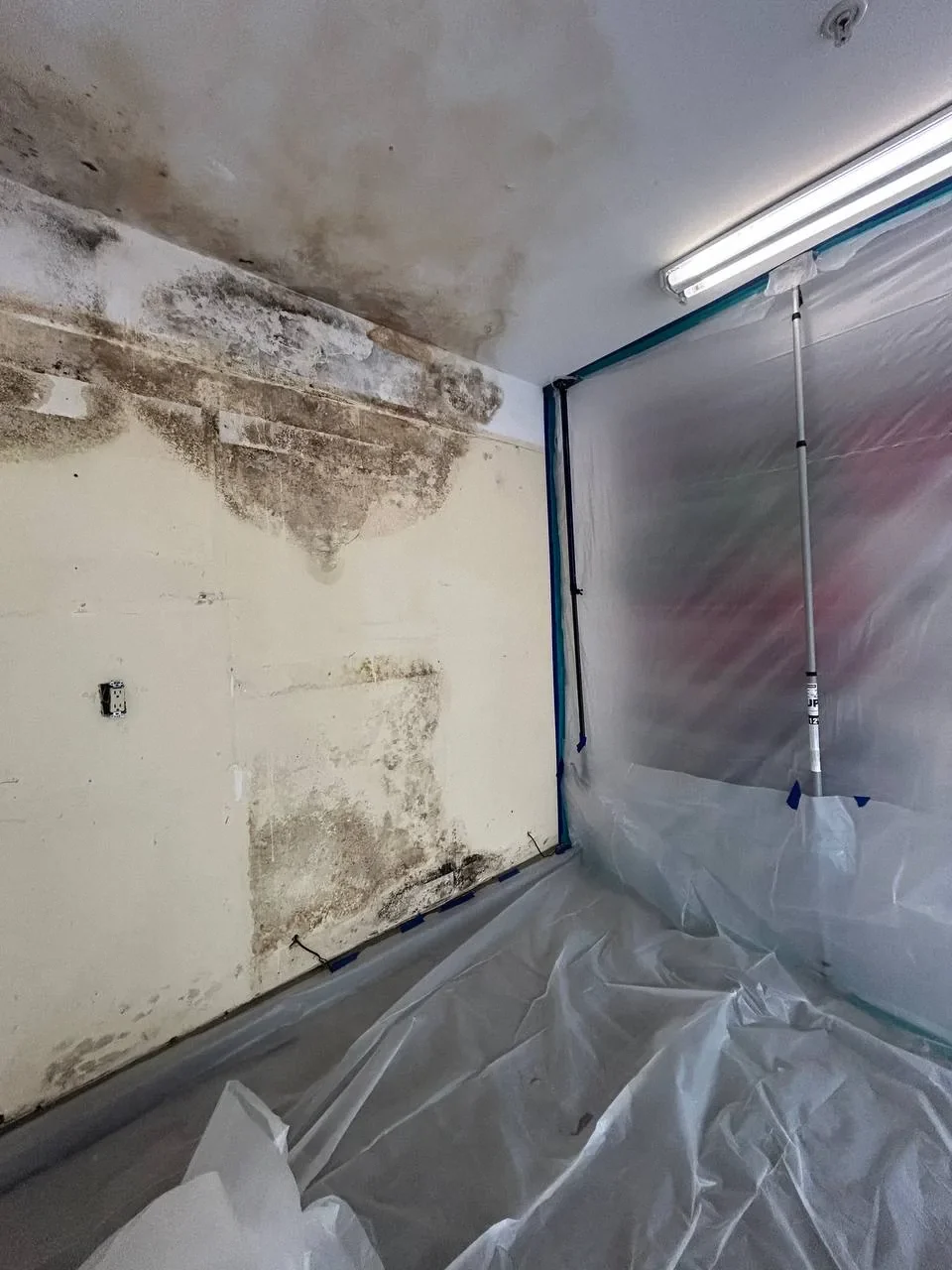
Investigate the source of dampness
When visible growth, damp material or a persistent musty odor appears, the useful first question is where moisture is coming from. A stain alone does not show what lies behind a wall or under a floor. Avoid disturbing a large or inaccessible area before it is evaluated, and keep occupants away from unsafe conditions.
If a fixture is actively leaking and its shutoff is safely reachable from a dry place, closing it may limit additional water. Do not cross standing water to operate a switch or touch wet electrical equipment. A repair that stops the water and an assessment of affected materials are separate steps.
Water Damage Guard provides mold remediation in Dublin from San Carlos, taking calls at (650) 550-0619, 24/7. Describe the affected room, the suspected source, whether water continues and any access restrictions. The actual condition determines what can be inspected and the appropriate scope.
Housing conditions the City investigates
Dublin lists lack of plumbing and weatherproofing among housing conditions investigated by Code Enforcement. These conditions can be relevant when water is entering a dwelling, but the list does not mean every stain is automatically a code violation. Provide the observed facts and location so the appropriate officer can assess the situation.
If you rent, notify the owner or manager promptly and retain a dated copy of the request. Describe whether the problem is changing and whether an adjacent unit or shared wall may be involved. Do not assume that the first room with a mark identifies the source or establishes responsibility.
When a building manager coordinates access, discuss a safe route and protection of unaffected belongings. If the property is subject to an official access restriction, follow it and ask how necessary items can be retrieved safely.
Submitting a complaint and follow-up
Dublin accepts code complaints online, by phone, in person or by mail. Its instructions ask for the location and relevant verifiable details; anonymous complaints are accepted and investigated for merit. Contact information allows staff to follow up, but a person may submit an anonymous report under the City’s stated process.
The city FAQ says a site visit is generally conducted after a complaint; if a violation exists, compliance is requested and a follow-up visit checks correction. The City describes a usual process, not a guarantee of a particular finding, repair date or legal result. Keep notices and the dates of any communications.
A complaint is different from an assessment by a restoration professional. One concerns whether an agency finds a code violation; the other describes affected material and possible work. Both may be useful, but neither should be represented as automatic proof of insurance coverage.
Conditional help for eligible households
In an October 2026 notice, Dublin described a county Healthy Homes Production Grant that eligible homeowners and renters may apply for, subject to income limits. The City says possible support includes minor plumbing and ventilation improvements. The notice does not promise a mold remediation payment, and the county’s description includes additional program qualifications.
Ask the administering agency about present funding, household eligibility and whether a proposed source repair qualifies before relying on assistance. A grant is not a price reduction automatically attached to a restoration service. Keep its approval process separate from any insurance claim and city complaint.
If a leak is the suspected source of dampness, obtain a description of the proposed plumbing repair and ask which portion is eligible. The materials affected by the leak may require a separate evaluation. Do not assume one approval covers every item in a larger scope.
What an assessment should identify
Moisture can travel beneath a floor covering, behind a cabinet or into an adjoining wall. Ask the professional which areas were examined, what was inaccessible and how observations support the proposed next step. A measurement is most useful when interpreted alongside the material and exposure.
Hard surfaces, porous furnishings and concealed insulation may require different decisions. Discuss how affected items will be separated from clean belongings and how the work area will be protected. Avoid moving suspect material through unaffected rooms without a handling plan.
If an assembly is opened and the findings differ from the initial view, request an updated scope. Keep the earlier observations with the new findings, including any part of the property that could not yet be reached. This helps the owner and trades understand why the sequence changed.
Before work begins, ask how access to the area will be controlled and whether furnishings can be assessed where they are. In a shared property, the owner or manager may need to coordinate an adjoining room and the route for equipment. A plan should identify the people who can authorize access and the areas that must remain available to occupants.
Repair and drying sequence
Cleaning visible material without addressing continuing moisture may leave the source unresolved. The investigation may point to plumbing, an exterior opening, equipment or another condition; the appropriate repair depends on the actual finding. Building age alone does not identify a concealed pipe or prove the cause of a leak.
Coordinate the source repair, evaluation of affected materials and drying before finishes are replaced. Ask how remaining moisture will be checked and whether the proposed repair requires a permit or inspection. If a wall or floor must be opened, the scope can change when the concealed condition is visible.
For a shared building, identify the person who can authorize access to units and common spaces. Discuss the route for equipment and removal of affected items. Follow any instructions from the property manager and responsible authority about restricted areas.
If the moisture source is intermittent, record when the condition changes and whether it coincides with rainfall, fixture use or equipment operation. These observations can guide an investigation without proving the cause. Do not open a concealed assembly solely to confirm a suspicion if doing so may create a safety hazard; discuss access with the responsible professional.
Records and return to use
When safe, photograph the affected area and keep a timeline of the first observation, repair requests, investigation and work. Ask an insurer what documentation it requires before disposal if conditions allow. Coverage depends on the policy and the actual facts; a complaint or grant application does not guarantee payment.
Before using the room normally, discuss unresolved conditions, access limits and any needed inspections with the responsible people. Do not operate damaged equipment simply because the surface appears dry. Keep repair and inspection records for the property.
Call Water Damage Guard at (650) 550-0619 to discuss mold remediation in Dublin. The San Carlos-based company accepts calls 24/7. Explain the present conditions and any instructions from the owner, manager or agency.
Ask for a written description of the work completed and any remaining items that need attention. If a later inspection reveals additional affected material, compare that finding with the earlier scope and discuss the next step with the owner or manager. Keeping the record together helps prevent a new contractor from assuming that an inaccessible area was already assessed.
If a room cannot be used while work proceeds, discuss the handling and storage of belongings with the person responsible for the property. Keep emergency exits and common routes clear. Any temporary arrangements depend on the tenancy and actual conditions, so seek advice about the applicable rules rather than assuming that moisture alone establishes a particular payment.
Related guides and services
Common questions
What housing conditions does Dublin Code Enforcement investigate?
The City lists lack of plumbing and weatherproofing among housing conditions it investigates; an individual complaint still needs evaluation.
Can a complaint be anonymous?
Dublin says anonymous reports are accepted and investigated for merit, although contact details help staff follow up.
Does a complaint guarantee a specific result?
No. The City describes a visit, a request for compliance if a violation exists and follow-up; the outcome depends on the facts.
Does Dublin offer an automatic mold remediation grant?
No. A 2026 notice describes conditional county support that may include minor plumbing and ventilation; it does not promise mold remediation.
Why address a water source as well as visible material?
Continued moisture can undermine cleanup. The source and affected materials require separate assessment.
Sources
- Dublin common code violations Checked
- Dublin code complaint instructions Checked
- Dublin code enforcement FAQ Checked
- Dublin Healthy Homes grant notice Checked