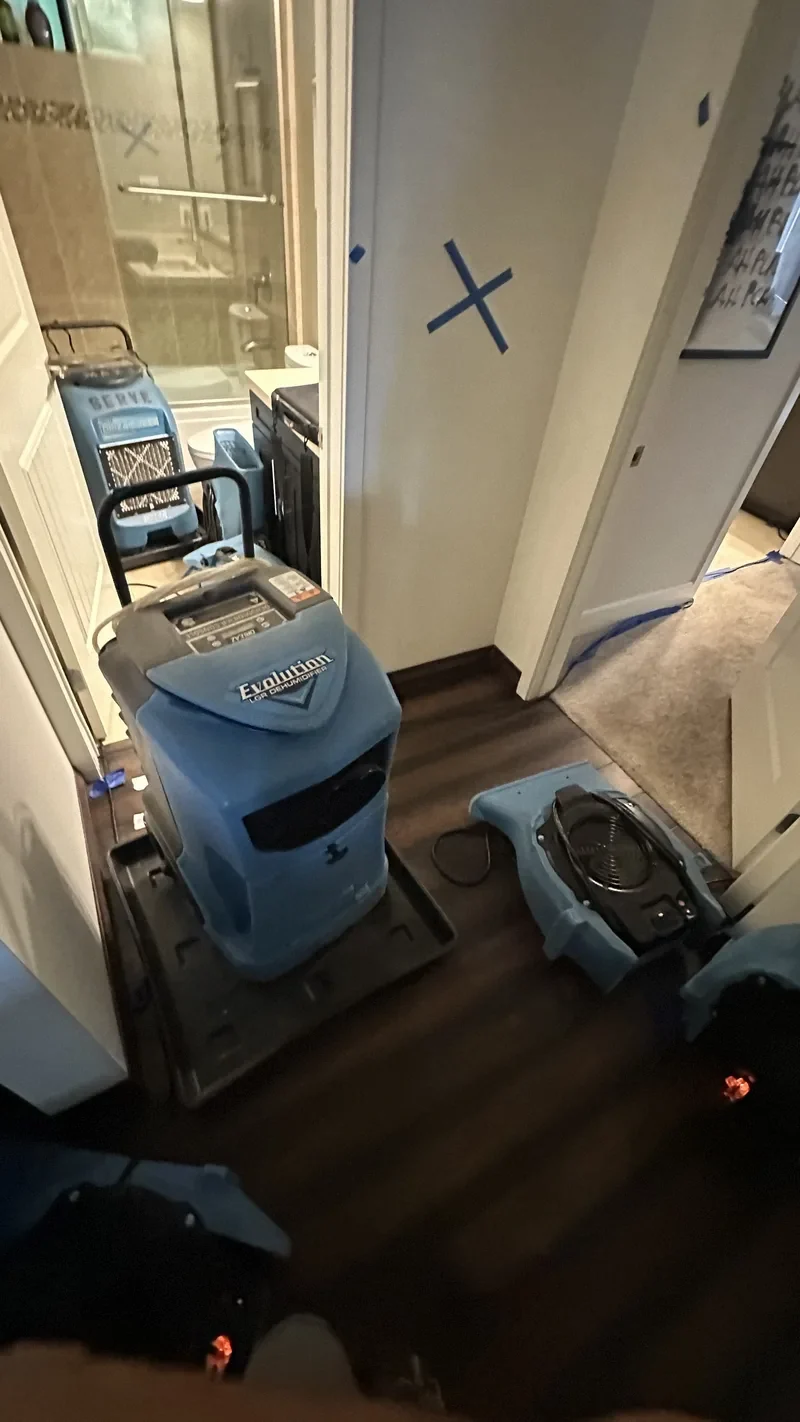
Water damage in Fremont: keep people away from hazards
A water problem can involve an active supply leak, wastewater or stormwater. Move people and animals away from the affected area. If a shutoff can be reached safely, close it; do not enter standing water to operate electrical equipment or a switch. Stay away from a sagging ceiling. Call 911 for an immediate threat to life.
Record when the problem was noticed, which rooms are wet and whether the water is still entering. The source cannot be determined solely by the color of the water. A plumber or utility may need to investigate the pipe, while affected building materials need their own assessment. Take photographs only from a safe location and follow official access restrictions.
Water Damage Guard is based in San Carlos. Call (650) 550-0619, 24/7, to discuss a Fremont property. Explain what is known and what remains uncertain. A telephone description helps identify the next step but does not establish the full extent of damage.
Drinking water and sewer systems
Alameda County Water District supplies drinking water to Fremont. The district lists (510) 668-6500 for water emergencies. Give the address and observed condition, and follow the district’s instructions. A utility response and a repair to plumbing inside a building are different responsibilities; the actual location of a leak must be established.
Union Sanitary District maintains public sewer mains in Fremont. It says owners maintain and repair their private sewer laterals from the building to the public main connection. The district offers to inspect the public main without charge when a backup occurs. That inspection addresses the public system; a private line or wet room may still require separate work.
The district lists (510) 477-7500 for sewer emergencies. Avoid using connected fixtures during a backup because additional flow can enlarge the affected area. Keep people away from sewage and ask the appropriate professionals to establish the source before work proceeds.
Creeks and flood-control areas
Alameda County Flood Control Zone 6 serves part of Fremont and identifies Laguna, Mission and Sabercat creeks among its waterways. Zone 5 also serves part of Fremont and includes Alameda Creek. These district service areas and waterways provide context for local drainage; they do not establish that every property is in a floodplain or will flood in a storm.
For a property decision, use the actual address and the current official flood information. A channel improvement or a past storm does not, on its own, determine insurance coverage or the condition of a private drain. Ask the relevant agency about the mapped designation and a qualified professional about a recurring entry path.
If outdoor water reaches the building, wait for safe access before documenting it. Floodwater can carry sediment or other contaminants. Note the route and high-water mark if this can be done without entering water or approaching damaged electrical equipment.
Housing repairs and temporary relocation
Fremont’s tenant relocation chapter addresses severe code violations that require a rental unit to be vacated for extensive repairs. The details depend on the order, the property and the circumstances. A tenant should tell the owner or manager about leaks or unsafe conditions, keep a dated copy of the request and ask the city how the local rules apply.
The need to leave a unit, an owner’s repair plan and a claim for damaged belongings are separate questions. Preserve written notices and discuss access to belongings and essential facilities. Do not assume that every water stain leads to a relocation order or that a cleanup provider decides eligibility for assistance.
When conditions present immediate danger, follow the responsible officials’ instructions. The time needed for repair cannot be determined from a description alone, particularly if water has reached concealed material or electrical equipment.
Fire hazard zones and repairs
Fremont adopted its local Very High Fire Hazard Severity Zone map under Ordinance 10-2025, approved July 15, 2025. A local map helps identify where particular requirements may apply; it is not a guarantee about an individual property. Check the current designation for the address and ask the city how it affects the proposed work.
After a fire, obey access restrictions and avoid damaged areas. Smoke, heat and water used during suppression can affect different materials. If the building requires structural or system repairs, ask the city which plans, permits and inspections apply to the specific scope.
Defensible-space work and restoration of damaged rooms address different conditions. A mapped zone can inform construction decisions, but it does not identify every damaged component or replace an inspection after a fire.
Names on the city neighborhood map
Fremont’s General Plan identifies Centerville, Niles, Irvington, Mission San Jose, Warm Springs, Ardenwood, Glenmoor, Cabrillo and Parkmont as neighborhoods. These names provide geographic context for residents; they do not establish flood depth, the material of a hidden pipe or the fire designation of a parcel.
Use the property address when speaking with a utility or city department. A building may have a private plumbing condition that differs from a nearby property, even within the same neighborhood. Records and an inspection can help narrow the question without assuming a cause from the age or location of the building.
In a shared building, describe the affected unit and any visible impact in common areas. Notify the manager and coordinate access. Water can move between rooms or levels, but the first place it appears does not necessarily identify where the leak began.
Assess the path of water
An assessment should trace where water traveled, not just where a stain is visible. Flooring can meet a wall cavity or cabinet base that remains wet after the surface appears dry. Ask what was inspected, what remains inaccessible and how the source will be controlled.
The type of water changes the work. A sewer backup, rainwater across a threshold and a broken supply line present different contamination and repair questions. The team should explain how affected material and contents will be handled and how unaffected areas will be protected.
If material must be opened to determine the extent, agree on how new findings will be documented and communicated. A moisture reading is useful evidence, but it does not independently identify the source of a leak or the condition of every concealed component.
If a slab leak is suspected, locating and stopping it helps establish which flooring and adjacent materials need assessment and drying.
Mold, moisture and the repair source
Visible growth or a damp odor calls for investigation of moisture. Color cannot reliably identify a species, and a photograph does not reveal the entire condition behind a wall. Avoid disturbing suspect material before the work area and occupants’ needs have been considered.
Stopping continuing water entry is part of an effective response. A roof, plumbing fixture, window or drainage problem may need a different professional from the person handling affected finishes. Ask for a description of the proposed work and how the source repair will be coordinated with cleanup and drying.
Health concerns should be discussed with a qualified health professional. A restoration assessment describes property conditions and work; it should not be presented as a medical diagnosis or a guarantee that moisture can never recur.
Belongings and a written record
When it is safe to enter, photograph affected spaces and list damaged belongings by room. Ask the insurer what documentation is needed before disposal if conditions permit. Electronics, documents, hard furniture and porous furnishings may need different evaluations; appearance alone does not establish whether an item is safe to use.
Keep the source diagnosis, repair estimate, communications, photographs and any permit records together. A tenant can preserve repair requests and notices. The record helps explain the sequence, but coverage and reimbursement depend on the policy and the insurer’s determination.
If a room is unavailable during work, discuss access, belongings and essential services with the person responsible for the property. In a shared building, identify who will communicate with affected residents and arrange a route for equipment and removed materials.
Coordinate drying and reconstruction
Once water entry is controlled, an appropriate drying plan depends on the building, affected materials and duration of exposure. Ask what will be checked before walls, cabinets or flooring are restored. A surface that feels dry does not necessarily prove that an enclosed cavity is ready to be closed.
Plumbing, electrical, structural and finish work may involve different trades and approvals. Describe the proposed scope to the city and the responsible utility. If an inspection is required, it should be arranged before work is concealed. Keep the approved documents and final records.
If conditions change after materials are removed, request an updated scope and explanation. After completion, report a recurrence promptly. Earlier records can assist a new investigation, but a later leak may have a different source.
Questions to ask before work starts
Ask which areas were examined, what remains unknown, how the source will be controlled and what materials are proposed for removal or cleaning. Clarify who will handle contents, protect adjacent rooms and coordinate any separate trade work.
For a sewer issue, ask whether the public main has been checked and what was found in the private line. For a stormwater concern, distinguish the mapped flood question from the actual point where water entered. Neither a map nor a phone conversation can replace examination of the building.
An agreed communication plan should explain how changes and inspection needs will be reported. The practical goal is a repair matched to the observed condition, without an unsupported promise about cost, insurance coverage or a fixed response time.
Common questions
Who supplies drinking water in Fremont?
Alameda County Water District supplies Fremont and lists a 24-hour water emergency line at (510) 668-6500.
Who maintains a private sewer lateral?
Union Sanitary District says the owner maintains the private lateral from the building to the public main connection.
Will the district check a public sewer main?
Union Sanitary District says it will inspect the public main without charge when a backup occurs.
Does a neighborhood name establish flood risk?
No. Check the current official information for the specific address.
What if a rental unit must be vacated for extensive repairs?
Fremont’s relocation chapter addresses qualifying code-ordered displacements. Ask the city how the conditions apply.
Sources
- Alameda County Water District customer service Checked
- Union Sanitary District sewer repair guidance Checked
- Alameda County Flood Control Zone 6 Checked
- Alameda County Flood Control Zone 5 Checked
- Fremont tenant relocation ordinance Checked
- Fremont local fire hazard severity zone map Checked
- Fremont General Plan Checked
- ACWD water emergencies Checked