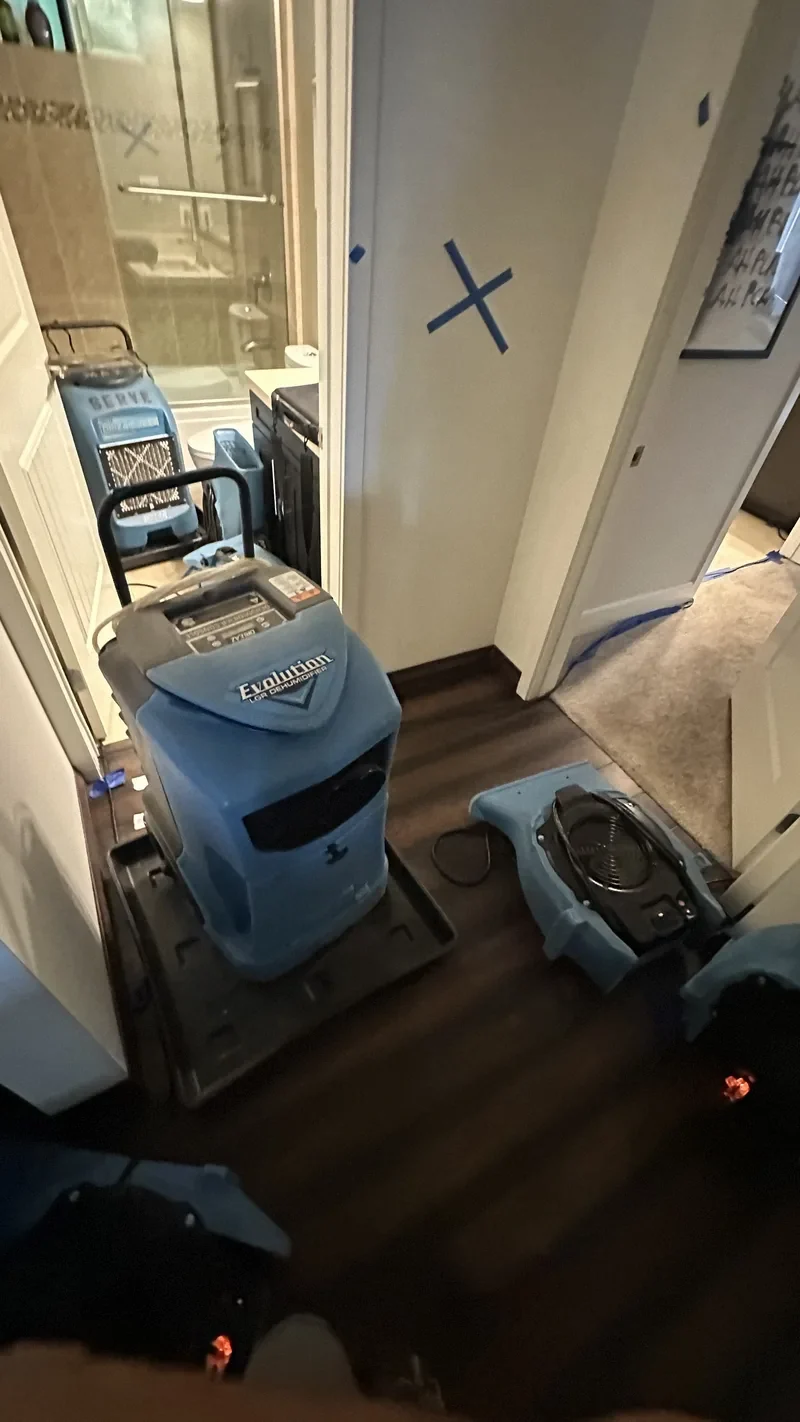
Water damage restoration in Milpitas: respond safely
Keep people away from standing water, electrical equipment that may be wet and any ceiling or floor that appears unstable. Do not cross a flooded area to reach a breaker. If a fixture shutoff is accessible without entering danger, it may stop that source; otherwise leave the area and seek qualified help. Call 911 when there is an immediate threat.
Milpitas directs water and sewer issue reports to Public Works at 408-586-2600 on weekdays from 7 a.m. to 5 p.m., and to police dispatch at 408-586-2400 after hours, on weekends and holidays. Tell the appropriate office the address, the observed condition and whether water is still entering.
Notify the owner or manager if the property is rented or shared. From a safe position, record where water first appeared, the time and any affected rooms. A suspected fixture or line is useful information for the investigation, but the cause must be confirmed at the property.
Where the water service changes responsibility
Milpitas says it owns and maintains the water service line through the meter, while the customer-owned portion extends from the meter box to the building inlet. The location of the observed water still needs investigation. Water near a meter, in a yard or inside a wall does not by itself identify the failed component.
The city says its initial service-line inventory found no lead or galvanized-requiring-replacement lines in the distribution system, including customer-owned service lines, and continues to update that inventory. This does not identify every pipe or fixture inside a particular home. Do not infer private interior plumbing material from a neighborhood or building age.
Give the utility or plumber an accurate description of the leak and ask who will inspect the relevant portion. A source repair and drying of the affected building are separate steps. If an assembly must be opened to reach a line, agree who can authorize access and how the work will be coordinated.
Sewer problems and treatment
Milpitas calls the section from the sewer main to the property line the public house lateral and the section from the property line to the building the private house sewer. These terms describe the city’s distinction between segments; an actual backup still requires investigation to locate the blockage.
If wastewater appears through a drain or fixture, keep people and pets away. Stop using affected fixtures when safe, notify the owner or manager and tell the utility or plumber which fixtures are involved. A problem at one drain does not prove whether the obstruction is in the main or a private section.
The city says its sewage is sent to the San José–Santa Clara Regional Wastewater Facility for treatment. That regional destination is separate from responsibility for locating a problem in a service line or cleaning affected rooms. Coordinate the plumbing and restoration work before normal use resumes.
Creeks and storm preparation
Milpitas identifies flood hazard areas generally near Calera, Penitencia, Berryessa, Los Coches and Tularcitos creeks. This city description is geographic context, not a determination that a particular address will flood. Check current maps and ask the relevant agency about the parcel. Water can also enter a building from a roof, an exterior opening or plumbing unrelated to a creek.
The city lists self-filled sandbags at the Sports Center and Hall Memorial Park and asks users to bring shovels. Confirm current supply and instructions before traveling. Sandbags can be useful for preparation, but they do not correct a failed pipe or guarantee protection for a home.
After a storm, record the actual path of water from a safe location. Avoid moving water, downed lines and unstable ground. A drainage professional can investigate a recurring exterior entry point while a restoration team assesses wet materials inside. The work should be coordinated before finishes are replaced.
What a restoration assessment considers
Water can travel beneath flooring, behind baseboards and into a cabinet or wall cavity. A visible stain is a starting point, not a complete map of affected materials. The assessment should explain which areas were inspected, where additional moisture was found and what remains inaccessible.
The source and duration of wetting matter. Outdoor runoff or wastewater is not handled in the same way as an ordinary clean supply leak. A hard surface, insulation and personal belongings can require different cleaning or removal decisions. Ask the team to explain the proposed scope and what findings would change it.
If the building is occupied, discuss a safe route for occupants and workers, equipment placement and access to essential rooms. The owner or manager may need to coordinate a common area or adjacent unit. Photograph belongings and keep a record when it is safe, and clarify who can approve any change in the work.
Extraction and drying
After the source is controlled and the area is safe, extraction can remove liquid from accessible surfaces. Drying may then address wet materials that remain. Measurements over time can help guide decisions when interpreted with the material and surroundings; an inaccessible space should be recorded as unexamined rather than assumed dry.
If a wall or floor needs to be opened, coordinate with the person repairing the source. An active leak can re-wet a room, and a repaired pipe does not by itself prove that adjacent finishes are ready to close. Ask how the team will check progress and communicate an unexpected condition.
Before finishes are restored, confirm that the source repair and any required inspections have occurred. Keep photographs and invoices with the project record. If water returns, note whether it appears at the same location and under the same conditions; another event needs its own investigation.
Rental coordination and local help
Milpitas refers tenants and landlords to Project Sentinel for housing assistance at 408-720-9888. A resident can describe the situation and ask the provider about its services and the tenancy. The referral does not automatically determine an owner’s responsibility, the outcome of a dispute or eligibility for relocation.
Keep a dated record of reports to the owner or manager and identify who can authorize access. In a shared building, a common pipe or neighboring unit may need attention. The restoration team can document affected materials while the responsible owner and trade address the source.
If a room is temporarily unavailable, discuss the practical schedule and who will receive updates. Ask the insurer about documentation and coverage where applicable. The insurance decision depends on the policy and circumstances, while the physical work depends on the conditions at the property.
Repairs, access and permits
A wet surface may need drying, while the underlying repair may involve plumbing, electrical or building work. Describe the proposed scope to the city and the responsible trade before assuming which permits apply. If an opening reveals damage not included in the initial work, ask whether the scope and inspections need to be updated.
Clarify who is obtaining required permits, arranging inspections and restoring finishes. A plumber may address a failed line while another trade repairs framing or flooring. Keeping the stages distinct helps prevent an assembly from being closed while a required inspection or source repair is outstanding.
For a business, identify safe routes for employees, customers and deliveries while rooms are unavailable. For a residence, discuss the needs of occupants and pets. A schedule is useful only when it reflects safe access and the actual extent of the damage.
Questions before closing an affected area
Ask the person repairing the source where the problem was found and whether additional evaluation is needed. A leak that stops temporarily does not necessarily identify the failed component. If the cause remains uncertain, agree on the next investigation before replacing a finish that would make the area difficult to reach.
The restoration team should identify the areas inspected, the material removed and any space that could not be accessed. A built-in cabinet or a closed floor assembly can conceal moisture. The person authorizing work should know what opening is proposed and what will happen if conditions differ from the initial estimate.
For a shared property, identify a contact who can coordinate entry for each trade and keep occupants informed about use of common spaces. A plumber may need a different access route from the drying team. Confirm any required inspection before a line, wall or floor is covered, and retain the relevant project records.
When an insurer is involved, ask which photographs and invoices are needed. Record the date of the source repair and the affected rooms. Coverage depends on the policy and circumstances; the physical restoration plan should describe the materials observed and any limits on the assessment.
Serving Milpitas
The city describes Sunnyhills as a Milpitas neighborhood. This name helps identify the service area; it does not establish a particular property’s flood risk, foundation or plumbing. The age or location of a home is not a diagnosis of the present condition.
Water Damage Guard is based in San Carlos, CA 94070 and serves Milpitas. Call (650) 550-0619, 24/7, to discuss water damage restoration. Describe the affected rooms, any active source and access limitations. The appropriate work depends on a property assessment.
- Milpitas Sunnyhills neighborhood information
- Mold remediation in Milpitas
- Flood cleanup in Milpitas
- Fire damage restoration in Milpitas
- Water under washing machine
- Flood damage restoration process
- Water heater leaking what to do
- Flash flood facts and safety
- Santa Clara County flood zones and creek flooding: checking your address
- Santa Clara County sandbags: finding supplies and protecting a home
Common questions
Who handles a Milpitas water or sewer issue after hours?
The city lists police dispatch at 408-586-2400 after hours, weekends and holidays; Public Works is listed for weekday service.
Where does the customer-owned water service start?
Milpitas describes the customer-owned portion as extending from the meter box to the building inlet.
What is the public house lateral?
The city uses that term for the section between the sewer main and the property line; it calls the section to the building the private house sewer.
Does living near a named creek prove a home will flood?
No. Milpitas identifies areas generally near several creeks; check the current map and conditions for the parcel.
Where are Milpitas sandbags listed?
The city lists self-filled sandbags at the Sports Center and Hall Memorial Park, with users asked to bring shovels. Confirm current supply.
Where can a tenant or landlord ask about housing assistance?
Milpitas refers tenants and landlords to Project Sentinel at 408-720-9888.
Sources
- Milpitas water and sewer contact information Checked
- Milpitas water service-line inventory Checked
- Milpitas sewer lateral FAQ Checked
- Milpitas sewer rate information Checked
- Milpitas flood hazard information Checked
- Milpitas property protection and sandbags Checked
- Milpitas assistance for tenants and landlords Checked
- Milpitas Sunnyhills neighborhood information Checked