Locate the source of moisture
A visible patch, recurring stain or musty odor can indicate a moisture problem. Note whether the surface is currently wet and whether the condition changes after rain or fixture use. It does not establish the species or the extent of affected material. A leaking roof, plumbing issue and condensation need different corrections. A useful assessment explains what is visible, what remains inaccessible and how an active water source will be addressed.
Avoid disturbing suspect material before it is assessed. A fan aimed at a dusty area can spread particles into other rooms. Keep people away from unsafe conditions and seek appropriate health advice for individual concerns. Record when the condition appeared and whether it changes after rain or plumbing use.
In a shared or rented building, tell the owner or manager promptly. A common roof or neighboring unit may be involved, and the person authorizing access may differ from the occupant who first noticed the problem. Photograph from a safe place and retain a dated record of the report.
Milpitas property-maintenance requests
Milpitas Code Enforcement says it responds to public requests concerning residential property maintenance. The city describes reporting through MyMilpitas or by email. These pages do not promise mold sampling, a particular inspection result or an immediate visit. Ask the office about the condition and the property’s jurisdiction.
Provide the address, affected rooms and any known ongoing leak. A code-enforcement request and a cleanup assessment serve different purposes. The city can address applicable property-maintenance questions, while the restoration team describes the materials and work needed at the property.
Keep copies of communications and identify who can arrange access to shared areas. If a repair is required, coordinate the source correction and any inspection before the affected wall or ceiling is closed.
Plumbing work may have a separate permit
Milpitas’ building FAQ says plumbing permits are required for installation, reconstruction, replacement or relocation of specified fixtures and sewer, water or gas lines. The statement concerns that work, not every act of cleaning or drying. If a failed pipe is the source of moisture, ask the Building Safety office about the specific repair and inspection sequence.
An owner should know who is obtaining a permit and who will schedule inspection before the line is covered. If an opening reveals additional damage, discuss whether the planned scope must change. Correcting the pipe and evaluating adjacent wet materials are connected but separate tasks.
Local housing program information
Milpitas describes a rehabilitation loan program for qualified low- and very-low-income homeowners undertaking extensive home repairs. Its linked housing page describes a separate senior repair referral, so ask the city about current funding, enrollment and whether a particular moisture-source repair qualifies. The published program description is not a promise of assistance for every mold project.
The city’s 2023–2031 Housing Element also describes intended replacement or relocation assistance for qualified households displaced by code enforcement. This is a plan commitment, not proof that a specific condition requires displacement or that current funds are available. Contact the city about implementation and eligibility if a household must leave.
An assistance inquiry does not stop an active leak. Coordinate immediate safety and source repair while determining which programs, if any, apply. Keep the owner and occupants informed about access to the affected room.
Examining accessible and hidden materials
A patch at a wall base may be connected to water behind a cabinet or beneath a floor. An assessment can examine adjacent surfaces and use moisture readings to guide further access. A reading must be interpreted with the material and conditions; it does not identify every hidden area or prove the source.
Ask why an opening is proposed and who can authorize it. If wet insulation, deteriorated framing or another failed line is found, pause and update the work plan. A trade qualified for the source repair may need access before the assembly can be dried or rebuilt.
Independent review or sampling may be useful in some cases. Clarify the question the test will answer and how results affect the work. A test does not repair the leak or dry a material that remains wet.
Containment and contents
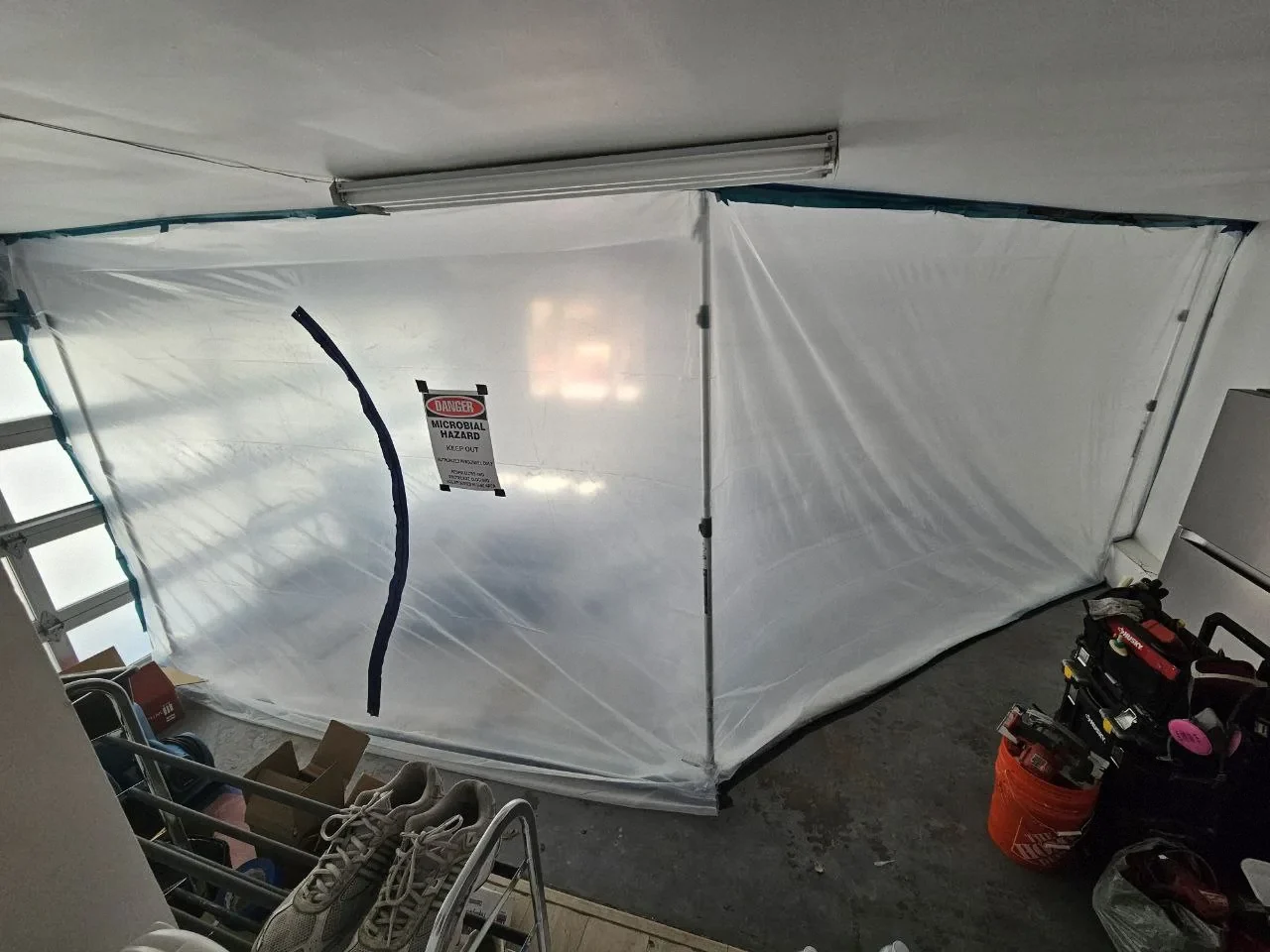
The cleanup plan should distinguish material that can be cleaned effectively from porous material that is damaged or inaccessible. The appropriate decision depends on the source, the duration of wetting and the condition of the item. It is not useful to assume that everything in a room must be discarded or that all material can be saved.
Agree on a path for equipment and debris, and protect unaffected spaces. Discuss occupants, pets and essential belongings before work begins. In a shared property, a manager may need to coordinate a corridor or adjacent unit. Keep an inventory and photographs where safe, and ask the owner or insurer how disposal decisions should be recorded.
If the source repair is being completed by another trade, share the location and timing of openings. The contractor should know which areas must remain accessible for repair or inspection. The owner should receive updates when a hidden condition changes the scope.
Plan access before work starts
Identify the person who will receive the assessment and can approve changes. The person who reports a wet room may not be the person responsible for the roof, common plumbing or adjoining space. In a shared building, establish how the manager will contact other occupants if access is necessary.
Ask which belongings can remain protected in place and which need to be moved for inspection. A paper item, an appliance and a fabric covering may each require a different decision after water exposure. The team should identify items it has not examined rather than guaranteeing an outcome for everything in the room.
For an occupied property, discuss equipment locations and a path around the work area. A business may need a separate route for staff and deliveries. The schedule should allow the source-repair trade to reach the affected area and the inspector to see any work that must remain open.
Keep the scope, photographs and repair records together. If a contractor discovers a second moisture source, the owner can compare the new work with what was originally authorized. A clear record also helps distinguish the condition that was corrected from a new issue that appears later.
Before new finishes are installed, ask whether the source has been repaired and which materials have been checked. If a cabinet or cavity remains inaccessible, the owner should understand that limitation. A surface treatment cannot substitute for an evaluation of an active leak behind it.
Drying and follow-up
After the source is corrected, affected materials may need drying and checks over time. A dry-looking surface can conceal moisture below it. Ask which locations were measured and which remained inaccessible. Before finishes return, confirm that the relevant source repair and any required inspection are complete.
If the symptom reappears, note the time and conditions. Staining after rain may suggest a different path from moisture associated with a fixture in use. Keep the earlier records, but investigate the present condition rather than assuming the first repair failed.
Water Damage Guard serves Milpitas from San Carlos. Call (650) 550-0619, 24/7, to discuss the observed condition and any active water. The appropriate scope depends on the property assessment.
Common questions
Does a musty odor identify the source?
No. It can prompt an investigation, but the source and affected materials need assessment.
Can a resident report a property-maintenance concern?
Milpitas describes reporting Code Enforcement concerns through MyMilpitas or email.
Is a plumbing permit required for every cleanup?
No. The city FAQ describes permits for specified plumbing installation, replacement, relocation or reconstruction work.
Is rehabilitation assistance guaranteed?
No. Ask the city about current funding, eligibility and whether a specific repair qualifies.
When can I call Water Damage Guard?
Call (650) 550-0619, 24/7, to discuss the condition.