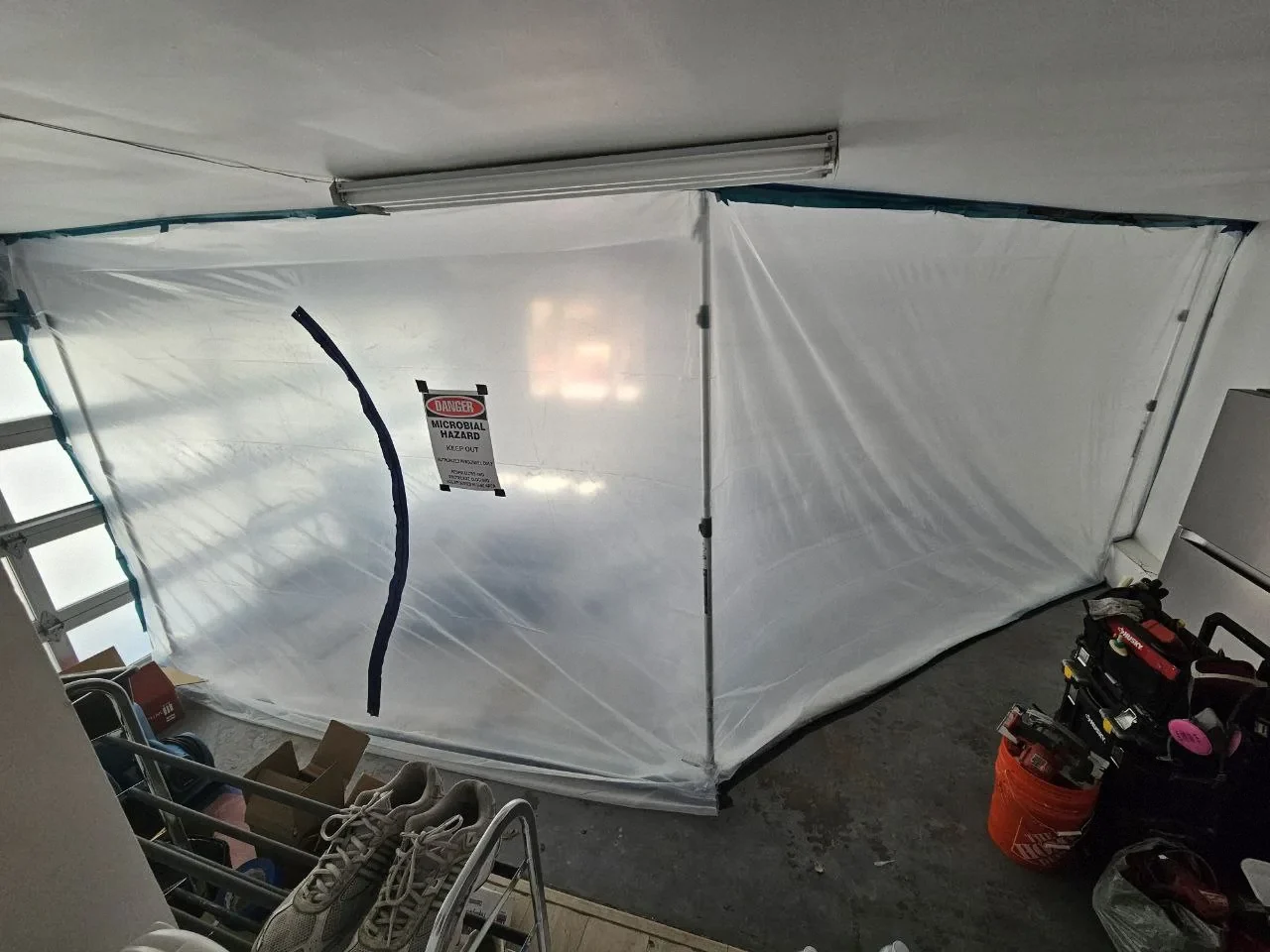
Begin with the source of moisture
A damp smell or visible growth is a reason to investigate water entry. Its color does not reliably identify a species or reveal the extent behind a wall. Record where the condition appears and whether a roof, pipe, window or appliance has recently leaked. Avoid disturbing suspect material while deciding how to assess it.
If water is still entering, arrange for the source to be stopped safely. Keep occupants and pets away from the affected space. Do not walk through standing water to reach electrical equipment. A plumber, roofer or other trade may need to address the cause separately from cleanup of damaged materials.
Water Damage Guard provides mold remediation from San Carlos. Call (650) 550-0619, 24/7, to discuss the Fremont property, the moisture history and any access restrictions. The scope depends on the observed conditions and cannot be established from a phone description alone.
What the Fremont housing record says
Fremont’s 2022 draft Housing Element reported that mold was the most common category among substandard-housing complaints addressed from 2014 through 2021. This is a historical account of complaints handled during that period, not a measurement of mold prevalence across current homes or proof of a condition at a specific address.
If a renter notices a leak or damaged surface, notify the owner or manager and keep a dated record of the request. Describe the room and the observed water entry. A written history helps explain what has happened without assuming that every stain represents the same condition.
An assessment should separate the visible observation from an unconfirmed cause. A previous roof leak, a current plumbing leak and condensation may require different repairs. The person evaluating the property should explain what is known, what remains inaccessible and how the source will be checked.
Repair assistance for qualifying owners
Habitat for Humanity East Bay/Silicon Valley describes a home-repair partnership with the City of Fremont for low-income homeowners, including mobile-home owners. The operator lists roofs and plumbing among eligible repair categories. The program may help with a moisture source, but its listing does not promise payment for mold remediation or a particular contractor.
Ask the program operator about current eligibility, the application process, covered work and available funding before relying on assistance. The documented repair scope and any approval conditions should be kept with the property record. Insurance, a city-supported program and a contractor’s estimate have different terms.
If the source is active, evaluate the urgency and any safety restrictions while checking the program’s requirements. A prior record can provide context, but only a current evaluation can establish whether water continues to enter.
When a rental unit must be vacated
Fremont’s relocation chapter includes exceptions, such as when an eligible comparable replacement dwelling is offered or the tenant caused the unsafe condition. Its application depends on the actual order and circumstances. The presence of a stain alone does not establish that a unit must be vacated or that an exception applies.
If an owner fails to pay required relocation benefits, the code allows the city to pay eligible benefits within budgetary limits and seek recovery from the owner. That is a conditional local process, not a guarantee of an immediate payment. Contact the city for the applicable procedure and retain notices and correspondence.
Occupants should follow any official order about access. Discuss how belongings will be handled and who will coordinate repairs. Questions about relocation eligibility or legal rights require the relevant housing authority or adviser; a restoration assessment cannot determine them from a photograph.
Define the area to be examined
Moisture may move from one surface to an adjacent cabinet, floor or wall cavity. Ask what is visible, what is inaccessible and whether a limited opening is necessary. A moisture reading helps describe a condition, but it does not identify mold species or show every affected component by itself.
If testing is proposed, ask what question it is intended to answer and how the result would change the work. Visible damage and the source of water should not be ignored while waiting for a result. EPA emphasizes correcting moisture along with cleanup; that national guidance is not a Fremont-specific rule.
People concerned about symptoms should consult a qualified health professional. An online article or restoration inspection cannot diagnose a medical condition. The property assessment should focus on the observed building materials and moisture.
Protect nearby spaces
Before disturbing an affected surface, agree on how adjacent rooms and belongings will be protected. Dust and debris can move through a shared route if material is removed without a plan. Consider the occupants, the work location and how items will leave the area.
Ask why a material is proposed for cleaning or removal. A hard surface and a porous item may require different decisions depending on the extent and condition. Painting over a damp area or masking an odor does not correct an active leak. Never mix cleaning chemicals.
If the building has multiple units, report visible moisture in neighboring or shared spaces to the person responsible for coordination. Do not assign fault to a neighbor based only on where water appeared. The actual route of water and the responsible system need investigation.
Dry and repair the assembly
When the moisture source has been controlled, assess the remaining wet materials. Flooring, framing and insulation may dry differently, and a surface that feels dry may conceal water in a cavity. Ask what will be checked before new finishes are installed.
If the work expands to plumbing, electrical or structural repairs, ask the city which permits and inspections apply to that scope. The cleanup itself and the later reconstruction may involve different trades. If new conditions appear after opening a wall, request a written update.
Keep the source-repair report, photographs, invoices and applicable inspection records together. If dampness returns, report the new observation and provide the earlier history. A previous repair does not prove the cause of a subsequent leak.
Questions before authorizing work
Ask what evidence supports the proposed scope, what remains uncertain and who will correct the water source. Request a clear description of the rooms, materials and contents included, and how the team will protect unaffected areas.
Clarify who will communicate changes if concealed damage is found and who will schedule any needed inspection. Ask how the completed work will be documented and whether another trade must return before finishes are restored.
For an owner or tenant, the useful outcome is an explanation tied to the actual property. Avoid relying on a guarantee based solely on a room name, a historical complaint statistic or an assumed pipe material.
Discuss how occupants will use the property while the work is underway. A bathroom, kitchen or bedroom may need to remain unavailable during a portion of the assessment or repair. Ask the owner or manager who will arrange access and how changes will be communicated. For an insured loss, ask the insurer what documentation it requires and whether any temporary expense is covered; the answer depends on the policy. Retain the written instructions and avoid assuming that a restoration schedule guarantees the availability of a particular room.
If a contractor recommends additional testing or replacement, ask for the specific reason and how the result will guide the next decision.
Common questions
Does a historical complaint statistic describe my home?
No. Fremont’s 2014–2021 complaint data describes cases handled during that period, not a finding for an individual property.
Should the water source be repaired?
Yes. The moisture source must be addressed along with affected materials.
Is city-supported repair assistance guaranteed?
No. The Fremont program has eligibility and funding conditions; confirm the current rules with its operator.
Does visible mold automatically require relocation?
No. Whether a unit must be vacated depends on the circumstances and any official determination.
Can color identify a mold species?
No. Color alone is not reliable identification or proof of the hidden extent.
Sources
- Fremont draft Housing Element, 2022 Checked
- Fremont tenant relocation ordinance Checked
- Fremont home repair program Checked
- EPA mold and moisture guide Checked