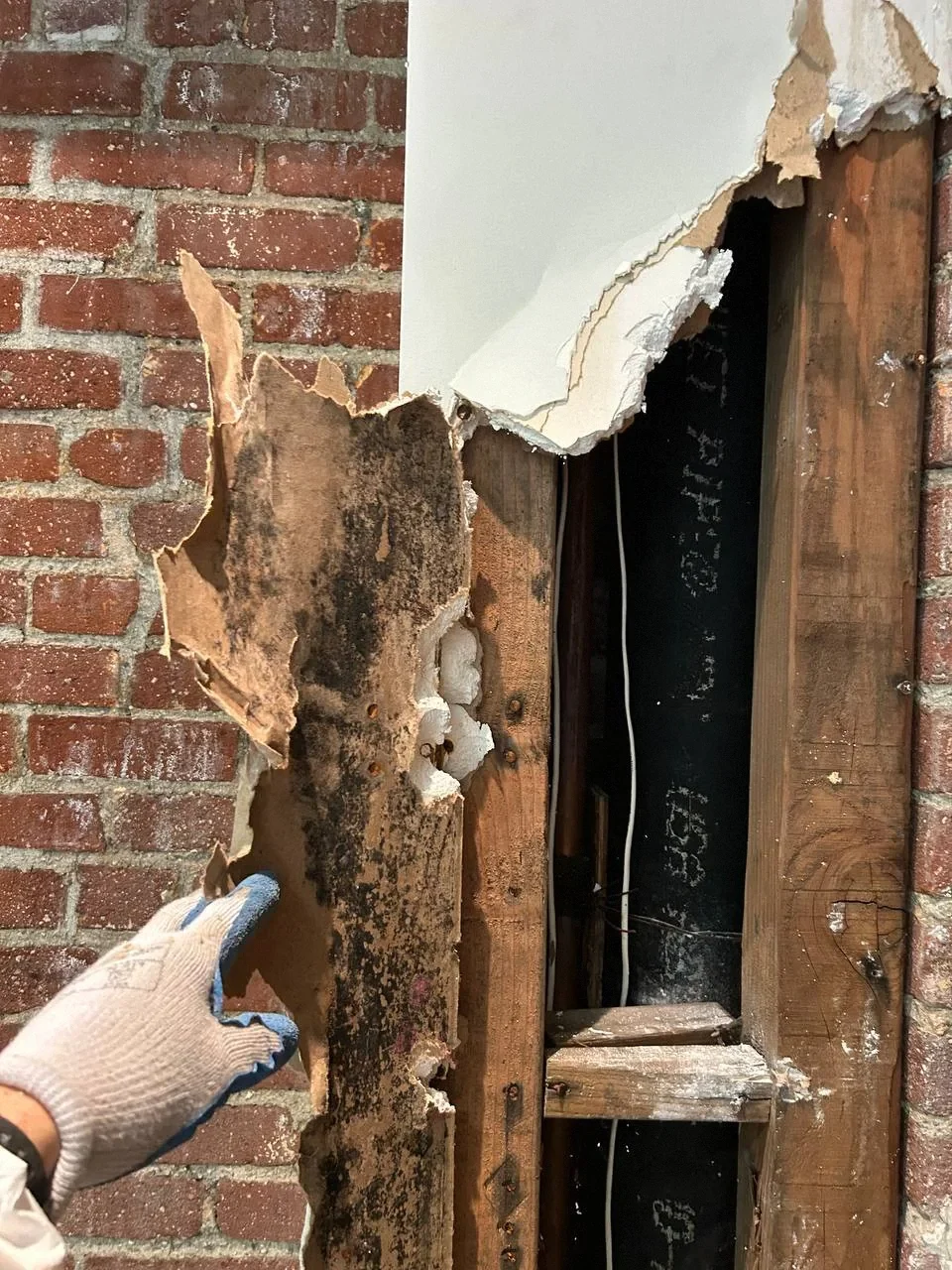
Investigate the water source
Explain where the damp area, visible growth or odor appeared, whether water is still entering and what has already been repaired. Note when the condition was first noticed and any inaccessible spaces. The source and affected materials need evaluation at the property before work is planned.
Keep people and pets away from visible growth and avoid disturbing it. A stain or odor can indicate where to investigate but does not establish the species or the extent of a condition. If a leak is active, address it safely. Do not enter standing water to operate electrical equipment or bypass an official access restriction.
Note when the area first became damp and whether the condition changes after rain or use of a fixture. A photograph taken safely can help document the pattern. Water may travel behind a wall or beneath flooring before it becomes visible; the first mark is not always the point of entry.
Moisture in a rental
Alameda County Public Health’s 2019 mold resource advises renters to notify the landlord about a moisture problem and contact the city building code office if there is no response. The county distinguishes inspection of underlying moisture or building conditions from mold testing. Confirm the current local process and contact information.
Union City’s landlord-tenant chapter prohibits specified conduct performed in bad faith, with an ulterior motive or without honest intent, including failure to perform required repairs or exercise due diligence after work begins. The chapter has applicability exceptions, and not every delay automatically meets that standard. Ask a qualified housing adviser or the city how the rules apply to a specific tenancy.
Keep a copy of the report to the owner or manager, notices and responses. Describe what is observed without assigning an unconfirmed cause. If there is an immediate danger, contact the appropriate emergency service rather than waiting for a routine complaint process. A housing determination and the physical remediation plan answer different questions.
A bathroom repair may require review
Union City’s owner or authorized-agent over-the-counter application lists water or gas line repair or replacement among projects eligible for its email or mail-in permit process. That listing does not mean every leak repair requires a permit. Ask the Building Division about the actual work and who may apply.
For permitted work, the city asks for inspection requests before 3 p.m. the preceding day and says to call again if no confirmation is received. Confirm which inspections apply before an assembly is covered, and coordinate access with the person responsible for the permit.
A fan can help remove normal humidity but does not stop an active supply leak. Likewise, replacing a finish will not correct water entering behind it. Coordinate the source repair, assessment of affected backing and reconstruction so that the new surface is not installed over an unresolved problem.
For a separate, narrow situation, the City’s 2025 checklist for legalizing qualifying unpermitted ADUs or JADUs built before 2020 and outside a flood zone examines dampness and visible mold, with an exception for minor mold on surfaces that normally accumulate moisture. A third-party licensed contractor completes the checklist, and violations lead to proposed repair, remediation or reconstruction in submitted drawings. This process does not apply to every home.
Assess the materials
The appropriate treatment depends on the water source, the material and the condition found. A hard surface, porous insulation and a personal item may need different handling. Ask for a written description of the proposed containment, cleaning, removal and disposal and how unaffected rooms will be protected.
Moisture can remain beneath flooring, behind a cabinet or inside wall backing after the surface appears dry. The assessment should identify accessible areas, where further examination is planned and any space that could not yet be checked. An inaccessible area should not be described as unaffected without evidence.
If the underlying leak is not corrected, replacement materials can become wet again. Ask the person responsible for source repair what was found and how the repair will be verified. The people addressing the pipe or building opening and those treating wet materials may be different.
A floor assembly can contain a finish, an underlayment and structural support. The assessment should explain which layers are affected and whether any can remain in place after appropriate treatment. If a portion is inaccessible, ask how the limitation will be addressed before the area is rebuilt. The decision should be based on observed conditions, not simply on the color of a surface or an estimate of how old the building is.
Protect adjacent spaces and contents
Air movement should be planned around the affected material so that dust is not spread through the building. If a heating or cooling system may have been exposed, arrange an appropriate evaluation before operating it. The decision about individual components depends on their condition and the system involved.
If belongings are affected, prepare an inventory only when the area is safe to enter. Ask the insurer what photographs, estimates or receipts it needs and whether it wants to examine items before disposal. Coverage is a policy question and is not established by a stain or odor alone.
In a shared property, identify who can authorize access to common areas and arrange any interruption of shared services. The source of moisture may be outside the room where it is visible. Communicate the location and timing of the problem to the person coordinating the investigation.
Coordinate the repair sequence
A written scope can distinguish source correction, assessment, treatment, drying and reconstruction. Ask who will coordinate plumbing, electrical or structural work if those trades are needed. A permit inspection and evaluation of remaining moisture serve different purposes and should both be completed when applicable.
If additional deterioration is found after a wall or floor is opened, request a description of the new finding and its effect on the work. Keep the revised scope and approvals together. This helps an owner, manager or insurer understand why a particular step was proposed.
Before new finishes are installed, ask what has been checked and whether the source is controlled. A new surface can conceal an unresolved condition. A clear handoff between source repair and reconstruction is especially important when separate contractors are involved.
For an occupied home, agree on a safe route around the work and a way to communicate changes in access. If a required inspection or a source repair delays closure, the exposed area may need temporary protection. The property owner or manager should identify who will maintain it and arrange the next visit. Keep notices and approvals available to the people performing the work.
Discuss your property
Provide the safest contact for the building, the affected spaces and any restriction on access. Share a previous plumber’s report or official notice if one exists. If the source is still unknown, say so; the next step should follow an assessment rather than a guess.
Call Water Damage Guard at (650) 550-0619, 24/7, to discuss mold remediation in Union City. The condition of the materials and the source of moisture determine the work appropriate to the property.
Keep a timeline of the event and the decisions made as work progresses. If a room cannot be examined until another repair or official clearance is complete, record that dependency. This makes it easier to plan the next visit and to explain why the scope may change.
Common questions
How can a renter report persistent moisture?
Alameda County’s 2019 resource advises notifying the landlord and contacting the city building code office if there is no response. Confirm current procedures.
Does every repair delay violate Union City’s ordinance?
No. The cited anti-harassment provision has a bad-faith, ulterior-motive or lack-of-honest-intent condition and applies subject to the chapter’s exceptions.
Can a bathroom alteration require a permit?
Union City says homeowners planning remodeling or improvements need the appropriate permits. Ask the Building Division about the particular repair.
Are inspections needed before a remodel is finished?
The city says to request the inspection before 3 p.m. on the preceding day and to call again if confirmation is not received.
Does a stain establish the full extent of moisture?
No. Water can be concealed beneath flooring or behind a wall and may require further assessment.