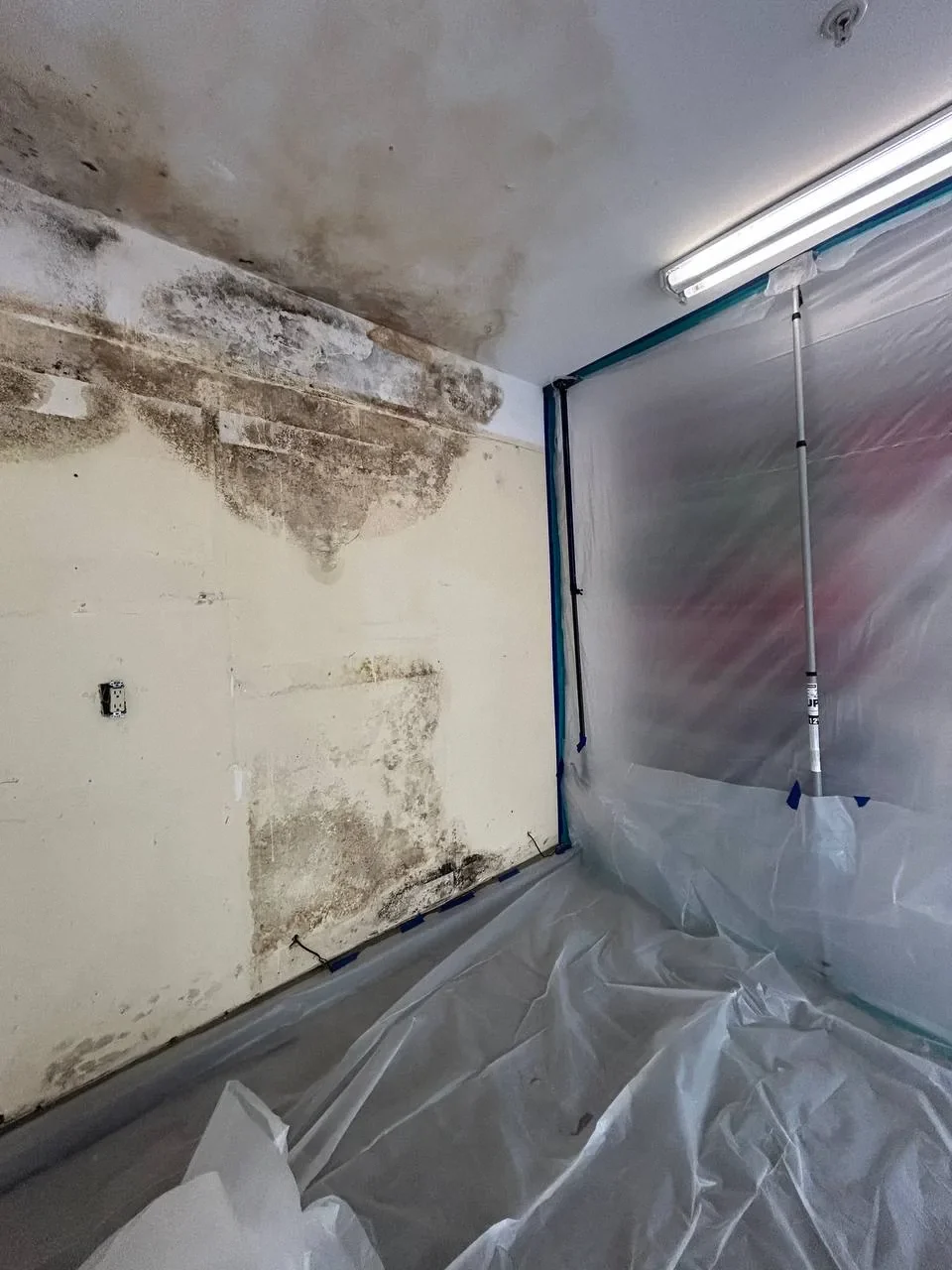
Find and stop the moisture
Mold remediation begins with the moisture problem. A recurring leak, damp enclosure or condensation can leave materials wet long enough for growth to develop. Water Damage Guard provides mold remediation in Newark from San Carlos. Call (650) 550-0619, 24/7, to discuss where moisture or suspected growth has appeared and what is known about the source.
Keep people and pets away from affected material and avoid disturbing a patch of visible growth. A stain or odor alone does not establish the species or full extent of a problem. If water is still entering, address the source safely and arrange an appropriate evaluation. Do not enter standing water to operate a switch, and follow any official restrictions on access.
A useful initial description includes the room, the first date the condition was noticed, any recent leak or overflow, and whether the area has been repaired before. Photos taken from a safe location can document changes. The evaluation should examine the condition of affected materials and the path of moisture rather than treating a surface stain as the entire problem.
A Newark rental housing concern
Newark’s Community Preservation handout identifies moisture intrusion, leaking roofs and hazardous plumbing among conditions that can be reported as substandard housing. It recommends that a tenant notify the owner or manager in writing, describe the problem and retain documentation. The city describes an inspection and notice process when a reported condition remains unresolved.
The handout recommends a follow-up if there is no indication of repair after ten calendar days. That recommendation is not a requirement to wait during an emergency or a substitute for the applicable law. If there is an immediate threat, contact emergency services. For an ongoing concern, provide the city with the address, the history of the problem and copies of relevant correspondence.
A repair request should identify what has been observed without claiming a particular health effect or hidden cause. Note when water enters, which surfaces are affected and whether access to the area has changed. Keep a record of the owner’s response and any inspection notice. The city, owner and tenant each have distinct roles; a restoration company does not decide a housing complaint.
Bathroom repairs and ventilation
If a moisture investigation leads to a bathroom remodel, Newark lists like-for-like and minor reconfiguration without structural work among the permit types eligible for its eTRAKiT submission route. The listing identifies how an eligible application may be submitted; it is not a declaration that the work is exempt from a permit. More extensive work can require a different review.
The city’s bathroom remodel handout describes mechanically venting a bathroom with humidity control and directing exhaust through ductwork to the exterior. Its guidance also calls for a nonabsorbent surface in a shower enclosure. These are different decisions: the fan removes humid air, while the enclosure surface addresses water at the shower. Neither alone proves that hidden material is dry or that a leak has been corrected.
The handout and the applicable building standards should be checked against the edition and project scope in effect when the work is submitted. Ask the Building Inspection Division which details apply to the specific repair. Replacing a damaged finish, changing a fan and altering plumbing are not automatically the same scope; coordinate the proposed repair before closing walls.
Assess materials before rebuilding
Moisture may extend behind a vanity, below flooring or into a wall cavity. A plan should identify accessible wet surfaces and explain how concealed conditions will be investigated when there is reason to do so. An area that looks dry at the surface may still contain wet backing or framing. Opening an assembly can reveal additional work that could not be assessed beforehand.
Treatment depends on the material, the extent of growth and the source of the water. A nonporous surface and a saturated porous material present different decisions. Discuss the proposed cleaning or removal method, protection for adjacent spaces and how affected material will be handled. Avoid spreading dust or debris through unaffected rooms.
The underlying leak must be addressed before finishes are restored. If water continues to enter behind new material, a cosmetic repair can conceal the problem rather than resolve it. Ask how drying or other preparation will be verified and what must happen before the area is enclosed. The amount of work should follow the actual conditions found at the property.
Air movement and affected contents
Airflow is useful only when it is planned around the condition being addressed. A fan directed at contaminated material can move particles into other spaces. If a heating or cooling system may have been affected, ask a qualified professional to evaluate it before operating it. System condition, accessible components and the manufacturer’s instructions all matter.
Keep personal belongings in place until their condition and safe handling can be assessed. Some items may be suitable for cleaning, while porous or damaged contents may need a different decision. Separate the inventory of belongings from the assessment of the building itself. Photograph and document items only when access is safe.
If an insurer is involved, ask what documentation it needs and whether it wants to inspect particular items. A policy determination is separate from a technical assessment of moisture and materials. Keep notes, correspondence and estimates together so that the sequence of events is clear.
Coordinate the repair scope
Ask for a written explanation of the proposed work: where the moisture source will be corrected, which materials will be evaluated or removed, how adjacent areas will be protected and how the space will be prepared for reconstruction. When different contractors handle plumbing, electrical or structural work, identify who will coordinate their sequence.
Permit requirements depend on the actual work. If the repair changes a bathroom layout, piping or building components, describe those changes to the city rather than assuming that a cleanup task covers all subsequent construction. Ask which inspections must be completed before finishes are installed and who is responsible for requesting them.
A revised scope may be necessary if previously concealed damage is found. Request an explanation of the new finding and its effect on the plan before approving additional work. A good record distinguishes the observed condition from assumptions, and it leaves a clear account of the source repair and the restoration that followed.
Discuss a Newark property
Tell Water Damage Guard whether the property is occupied, where the moisture is visible and whether the owner, a plumber or an inspector has already assessed it. If access is restricted, share the notice or the official’s instructions. These details help organize the discussion while leaving the final scope to the actual assessment.
Call (650) 550-0619, 24/7. A reported odor or spot is a reason to investigate, not a basis for promising a particular result or identifying the conditions behind a wall without examination.
Common questions
What should a Newark tenant do about a persistent leak?
Newark recommends written notice to the owner or manager and keeping records. Its housing handout describes contacting the city and an inspection process if a concern remains unresolved; its suggested follow-up is not an emergency waiting period.
Does a Newark bathroom remodel need city review?
Newark lists certain like-for-like or minor nonstructural bathroom remodels as eligible for its online permit submission route. Check with the city for the permit and review appropriate to the actual work.
What does Newark say about bathroom ventilation?
The city’s remodel handout describes mechanical exhaust with humidity control and ducting to the exterior. Confirm the current code and the requirements for the proposed project.
Can a shower finish prevent every moisture problem?
No. Newark’s remodel guidance calls for a nonabsorbent shower surface, but a finish does not by itself resolve a concealed leak or prove that backing materials are dry.
Should I cover a stain before the source is found?
A covering can hide the condition. Identify and correct the source and assess affected materials before restoring finishes.