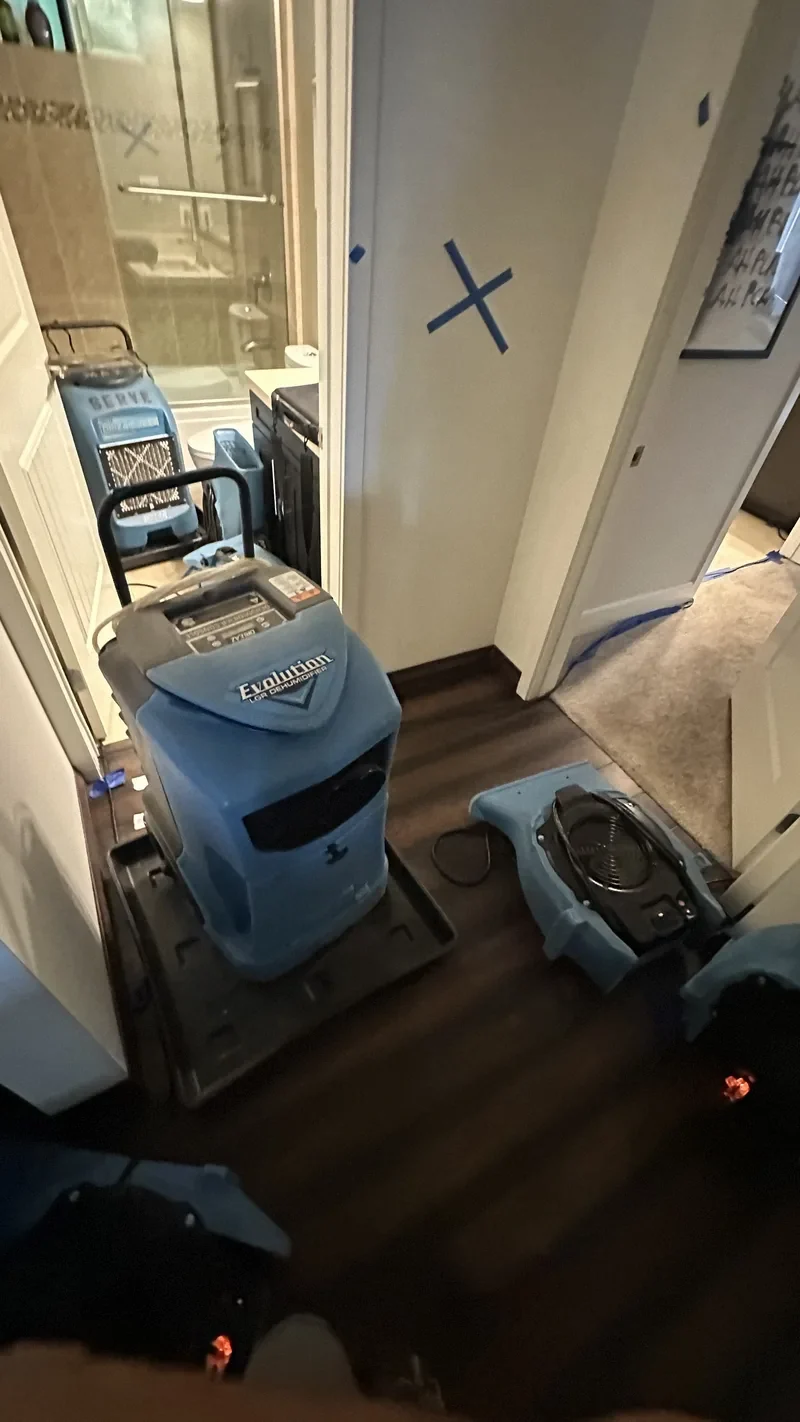
Water restoration in Newark: safety and the source
Water Damage Guard provides water damage restoration in Newark from its San Carlos base. Call (650) 550-0619, 24/7, to discuss a leak, sewage backup or water intrusion. Describe where the water appeared, whether it is still entering and any access restrictions. The information helps begin a conversation; the affected materials and the source still need to be evaluated at the property.
Keep people and pets away from standing water, damaged ceilings and electrical equipment. If the water shutoff is accessible without entering a hazardous area, closing it may limit a supply leak. Do not wade through water to reach a breaker or touch a wet appliance. An immediate threat to life calls for 911. Follow any instructions from emergency personnel or the utility before returning to a restricted area.
Water at the base of a wall can come from more than one direction. A supply line, a drain, rain entering around an opening or water moving across the ground can produce a similar visible mark. Record what happened before the moisture appeared and whether fixtures were in use. Those details help distinguish the source investigation from the subsequent work on wet materials.
Which system is involved?
Union Sanitary District provides wastewater collection, treatment and disposal to Newark, Fremont and Union City. Its public sewer main is a different system from the drinking-water supply. If a toilet or floor drain backs up, note which fixtures are affected and avoid adding water to connected drains until the cause is understood. A backup confined to a building can still require investigation of both the private line and the public system.
The district explains that Newark property owners maintain the lateral from the building to its connection with the public main, including the part beneath a sidewalk or street. The location of the cleanout alone does not settle where a blockage lies. When the source of a backup is unclear, the district says it will inspect the public main. That inspection helps assess its own system; it does not establish that the private lateral or water-damaged interior needs no further attention.
The distinction matters when arranging work. A crew dealing with wet flooring needs to know whether wastewater can return while the lateral is being examined. A plumber can identify the line and discuss repairs, while the district determines the condition of the public main. Keep the district’s findings and photographs with the rest of the property record.
A suspected slab leak needs professional source identification. Water at a floor edge or a higher bill does not establish which line is leaking, and the age of a house does not identify the pipe material or its condition. Once the source is located, coordinate its repair with assessment and drying of the affected flooring and surrounding material.
Lateral repairs and work in public space
Union Sanitary District requires a permit for lateral repairs, including work on private property. If the work involves excavation in the public right-of-way, the district also identifies an encroachment permit for Newark. These are related decisions with different purposes: the sewer permit addresses the lateral work, while the additional permission concerns the public space affected by excavation.
Ask whoever is planning the repair to explain the proposed excavation limits, the permits and the inspection sequence before surfaces are restored. A repair that reaches a sidewalk or street can affect access and require coordination beyond the immediate building. The location of the failure and the planned method determine the actual scope. A wet room does not by itself prove that excavation will be necessary.
Where an entire structure is being demolished, the district has a separate demolition and sewer-capping permit process for Newark. This is not a requirement to cap a sewer for ordinary water extraction or removal of a small portion of damaged finishes. If a project really includes building demolition, confirm the requirements with both the district and the city before scheduling the work.
Rain, drainage and the property
Alameda County Flood Control Zone 5 serves Newark. The district’s inventory for the zone includes Newark and Mowry sloughs and pump stations J2 and J3. The zone covers a larger area than the city, so the inventory should not be read as locating every named feature on a particular property. It also does not establish the flood designation or flood history of an individual address.
After water enters from outside, document its apparent path only when it is safe to do so. A high-water mark, sediment at a doorway or water collected against a wall can help an investigator reconstruct the event. A photograph taken later may not show how quickly the water rose or whether the drainage condition was temporary. Keep weather and timing notes alongside the photos rather than relying on a single mark.
Check the property’s current official flood information and consult the responsible agency when a floodplain decision is relevant. A mapped hazard, a clogged private drain and a leak through an opening are different questions. A drainage professional may need to examine grading, downspouts and the route of surface water before a permanent correction is selected. Do not treat the location of a nearby channel as proof of why a particular room became wet.
Plan the work after the water stops
Once it is safe to enter, an assessment can separate wet contents from affected building assemblies. The visible edge of a stain may not show the full extent of moisture inside a wall or beneath a floor. The material, duration of wetting and whether the source is clean supply water, wastewater or outdoor floodwater all affect the next decision. Keep contaminated items separate and avoid moving debris through unaffected rooms.
Drying is a process to verify rather than a date to guess from a phone call. A practical plan identifies which surfaces can be observed, where concealed areas may need further assessment and how conditions will be checked before finishes are closed. If the source remains active, drying alone will not prevent the same area becoming wet again. Repairs to a pipe, roof or drainage route may need coordination with the restoration work.
Some materials may be cleaned and dried while others need removal or replacement, depending on contamination and condition. Do not assume that a floor is salvageable just because its upper surface looks dry, or that all materials must be discarded because one area was wet. Discuss the proposed scope and the reasons for each decision before authorizing replacement. Keep photographs and written notes as the work progresses.
Permits for plumbing and repairs
Newark’s eTRAKiT information lists repiping and storage or tankless water-heater work among permit types eligible for that submission route. Eligibility for an online route is not a blanket exemption from a permit. The city notes that staff must accept the submittal, and a signed permit document is needed before the permit is valid. A tankless application may require gas-line calculations.
A repair that combines structural, electrical or plumbing work may need a different submission than a single equipment replacement. Describe the actual proposed work to the Building Inspection Division: the material being opened, the piping to be replaced and any changes to electrical equipment. An emergency cleanup and the permanent reconstruction following it are related but not necessarily the same permit decision.
Coordinate inspections before work is concealed. If a wall must remain open for a pipe repair or other inspection, closing it too early can cause delay and additional disturbance. Ask which contractor is responsible for the application, the inspection request and final sign-off, and keep a copy of the approved scope. The applicable requirements depend on what is repaired, replaced or altered.
Mold, insurance and communication
Mold is a concern when moisture remains in or on suitable materials. The first step is to address the water source and evaluate the affected area; covering a stain does not correct an active leak. A musty smell can guide an assessment but cannot establish the type or extent of contamination. Keep people away from visibly affected material and avoid disturbing it while the situation is being evaluated.
If you are a tenant, notify the owner or property manager promptly and keep a copy of the message. Describe the location, the date you first noticed water and whether the condition is changing. Ask how access and repairs will be arranged. A landlord’s responsibilities, insurance coverage and the practical restoration scope are separate matters; the facts of the tenancy and the condition of the unit matter.
For an insurance claim, ask the carrier what documentation it needs and keep a record of conversations, estimates and photographs. Coverage depends on the policy and circumstances, not simply on the name of the affected room. Discuss urgent steps with the insurer when possible, but do not wait in an unsafe area to gather evidence. Keep receipts and damaged-item records according to the carrier’s instructions.
Preparing for the next visit
Before a contractor or inspector arrives, make a short list of the spaces affected and the steps already taken. Include any known shutoff, plumbing work, utility visit or temporary protection. Identify a safe route to the affected area and let the visitor know about pets, access restrictions and any notice posted on the building. If the cause has not been confirmed, say so rather than assuming it was a pipe or sewer.
Ask for a written scope that distinguishes water removal, assessment, drying, disposal and reconstruction. If additional damage is found after finishes are opened, request an explanation of how that changes the work. The goal is a clear sequence: stop further water, evaluate affected material, complete applicable repairs and inspections, and restore the space after conditions support it.
For a property with planning constraints, ask the city about proposed exterior work. For the restoration itself, provide the actual address and describe the observed problem when calling Water Damage Guard at (650) 550-0619. A clear description of the affected rooms and safe access can help organize the discussion before anyone starts opening finishes.
Common questions
Who maintains a sewer lateral in Newark?
Union Sanitary District says the property owner maintains the lateral through its connection to the public main, including the portion beneath public space. The district maintains its public main.
Will the sewer district check its main after a backup?
The district says it will inspect the public main when the location of the problem is unclear. A separate examination of the private lateral or interior damage may still be needed.
Does sewer repair in a Newark street need another permit?
Union Sanitary District identifies an encroachment permit as well as the sewer repair permit when work requires excavation in the public right-of-way. Confirm the scope and permits before excavation.
Can a Newark repiping permit be submitted through eTRAKiT?
The city lists repiping among eligible eTRAKiT permit types. Staff must accept the submittal and the permit is not valid until the signed document is received.
Does Zone 5 mean my property is in a floodplain?
No. Zone 5 serves Newark and a broader area. Its inventory alone does not determine an individual property’s flood designation; check current official information for the address.