When floodwater enters a building
Follow evacuation and access instructions from the responsible authorities. Do not enter moving water or a room where standing water may contact electrical equipment. Floodwater can carry debris and contaminants; avoid contact and keep people and animals out of the affected area. Call 911 for immediate danger.
When the property can be approached safely, identify the rooms reached by water and whether water is still entering. Note the level on surfaces and photograph conditions from a safe position. An assessment should describe accessible areas and areas that cannot yet be examined.
Substantial damage in the mapped floodplain
Milpitas states that a structure in a Special Flood Hazard Area with repair costs at least 49% of its pre-damage value must meet the floodplain requirements for new buildings. The rule is tied to the structure and its location; it is not a general requirement for every wet room in Milpitas.
Ask the city how the determination is made for the property and proposed work before assuming that replacing materials exactly as before will satisfy the applicable rules. Keep the estimate and information about the structure available for review.
Improvement costs and the review period
The city also describes a substantial-improvement threshold of 49% of structure value in its Special Flood Hazard Area and tracks improvements cumulatively for ten years. This concerns proposed improvements, a different decision from determining the cost of damage repair. Check the city’s method and records for the actual project.
If an owner plans other improvements while repairing flood damage, discuss the full scope with the city rather than treating each item in isolation. An estimate should separate the work as clearly as possible and explain changes when further damage becomes visible.
Accessory dwelling unit plans in a flood hazard area
Milpitas says a pre-approved accessory dwelling unit plan for a site in a Special Flood Hazard Area must include a flood-resistant design option applicable to that site. A pre-approved plan is therefore not a substitute for checking the location and floodplain conditions.
When a damaged accessory unit is being rebuilt or a new one is proposed after a flood, ask the city which design and approvals apply to the parcel. The answer depends on the project; the city’s pre-approved plan statement does not mean every flood cleanup involves an accessory unit.
Berryessa Creek project context
Valley Water describes approximately 2,447 parcels as the intended benefit when the broader Berryessa Creek flood protection project is completed. That is the project objective, not a statement that every phase is complete or that a particular property is protected from every flood.
For a parcel near a creek, consult the current map and the responsible agencies about the actual location and project status. Flood protection construction does not replace an assessment of water that has already entered a home or business.
Finding the path of water
Water may enter through an opening, collect against a wall or move between levels. Describe what was observed without assuming that the first wet surface is the only route. Look for affected storage spaces and adjoining rooms when access is safe. A qualified person can evaluate damaged utilities or a suspected structural problem separately.
Once an active source is controlled, standing water can be removed where conditions allow. Debris, sediment and contacted belongings need an assessment that accounts for the kind of water and the materials involved. Ask which items must be moved and who may authorize disposal.
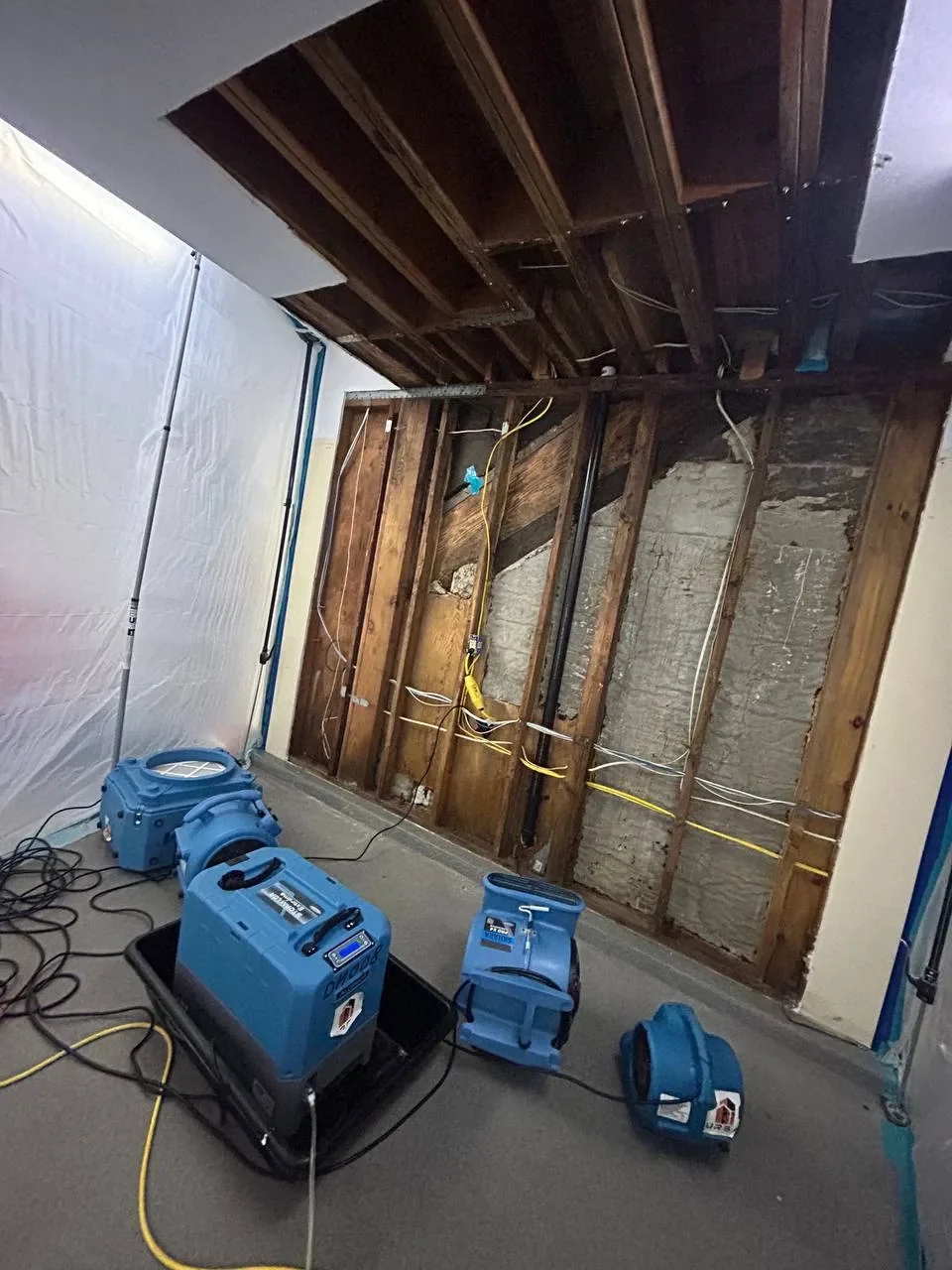
The visible water line does not establish how far moisture traveled inside a wall or floor. If an opening is needed to investigate, agree who will authorize it and how the findings will be documented. Hidden conditions can change the repair plan.
Materials, contents and drying
Different materials respond differently to prolonged water contact. A finished surface may conceal wet insulation, framing or subflooring. The team should explain what it can inspect and why a particular material is proposed for removal or cleaning. Preserve records and photographs when it is safe to do so.
Drying should be monitored over time using readings appropriate to the materials and the conditions. A single measurement does not establish the condition of every concealed space. If an assembly remains closed, identify the limitation and discuss whether further access is warranted.
Arrange a contents inventory with the owner or manager. Keep potentially salvageable belongings separate from debris and ask an insurer what documentation is needed before discarding items. The insurer decides coverage under the policy; a restoration assessment does not determine that outcome.
Plan access and repairs
Flood cleanup may involve a plumber, electrician, building contractor and other specialists as well as the restoration team. Identify who is responsible for source repair, temporary protection and reconstruction. If an inspection is required, coordinate it before work is concealed by new finishes.
A shared building needs clear communication about access to common areas and the timing of utility interruptions. An occupant may see the damage first while the owner or manager controls the repair authorization. Record the decision maker and the rooms each party has been able to inspect.
If water enters again, reassess rather than relying on the original drying plan. A temporary barrier or covering can reduce additional exposure while a permanent repair is arranged, but it is not the completed repair. Follow official instructions about safe access and any occupancy restrictions.
Documentation for the next decision
Keep a dated record of the water level, visible affected materials and the sequence of cleanup and repair. Include contractor observations and permit communications that apply to the property. A clear record helps the owner discuss the scope with the city and the insurer without treating an estimate as a final determination.
Ask for an explanation of materials removed, surfaces cleaned and areas that could not be reached. When another trade opens a wall or floor, new conditions may become visible. The people responsible for the work should agree how those findings will be reported and who can approve a change.
For a business, the plan may need to account for inventory, staff access and equipment. For a household, consider essential rooms and safe access to belongings. The appropriate sequence depends on the damage and any restrictions issued for the building.
Before a space is put back together
Before arranging replacement finishes, discuss how a recurrence would be recognized and who should be contacted. The owner may need to coordinate drainage corrections outside the cleanup area, while a tenant may need the manager to arrange access. Keep the city’s parcel-specific guidance with the project record. A team can explain what it observed during its visit, but cannot infer an unseen condition or promise that future storms will follow the same path.
Confirm that the source has been addressed, the affected accessible materials have been evaluated and the applicable repair and inspection steps are understood. Review the locations that remain unexamined. A dry-looking finish does not by itself demonstrate the condition inside the assembly.
Ask the building official how the mapped flood hazard area and the specific repair scope affect the project. Keep copies of any approved plans, permit documents and inspection results. If the estimated work changes after discovery of concealed damage, notify the responsible parties.
Water Damage Guard serves Milpitas from San Carlos. Call (650) 550-0619, 24/7, to discuss flood cleanup, safe access and the property conditions. Work is determined after assessment.
Common questions
Should I enter while floodwater is present?
Follow official instructions and avoid water that could present electrical or other hazards.
Does the Milpitas substantial-damage threshold apply to every property?
The city describes the threshold for structures in a Special Flood Hazard Area; ask the city about the specific parcel and repair.
Are improvements considered separately each year?
The city describes cumulative tracking over ten years for its substantial-improvement review.
Does a pre-approved ADU plan remove floodplain review?
No. The city requires an applicable flood-resistant design option for a pre-approved plan on a site in a Special Flood Hazard Area.
How can I discuss cleanup?
Call Water Damage Guard at (650) 550-0619, 24/7.