Protect people before property
If stormwater is moving around a building, leave the affected area and follow evacuation instructions. Do not walk or drive through floodwater, which can conceal holes, debris and energized equipment. Never enter standing water to reach an electrical switch. Call 911 if there is an immediate threat to life.
Once authorities allow safe access, note how water entered, how high it reached and which rooms or contents became wet. Outdoor water can carry sediment and contaminants. A flood across a threshold, a sewer backup and a broken supply pipe need different source investigations and handling decisions.
Water Damage Guard provides flood cleanup from San Carlos. Call (650) 550-0619, 24/7, to discuss a Fremont property and any access restrictions. An initial description helps organize the response; the scope depends on a safe assessment of the building.
Laguna Creek and local drainage
Alameda County Flood Control says Laguna Creek carries stormwater from the East Bay hills through Fremont toward San Francisco Bay. The district reports that narrowing of parts of the channel and aging infrastructure increased flood risk for some nearby neighborhoods and businesses. This does not establish a risk or water depth at a specific address.
The district describes a multiphase capacity project that includes completed and ongoing channel widening, floodwalls, culverts and outfall upgrades. Project status can change. A construction update is not the same as an approved flood-map revision or a guarantee against damage; use the latest district and official map information for the property.
The Newark Slough watershed drains a portion of Fremont’s urban flatlands through culverts and engineered channels. Knowing a watershed’s general route provides context, but the path into a particular building still requires investigation. Ask the appropriate agency about public facilities and a qualified professional about private drainage.
Separate public drainage and building damage
A public channel or storm drain and a private property can have different maintenance responsibilities. Report the location and what you observed without assuming which component failed. A public agency’s inspection can address its system; it does not automatically repair an entry point or wet materials within a building.
For a recurring problem, record the date, weather conditions and direction of flow from a safe position. Ask whether the relevant agency has information about the nearby public system and have a professional evaluate openings, private drains and the site. A map is valuable for risk planning, but it cannot show the condition of a door seal or an obstructed private pipe.
If the work involves changes to drainage, a lateral, a wall or the public right of way, ask the city and responsible district about permits before construction. Describe the actual project and update the scope if an investigation uncovers additional damage.
An address-specific assessment should also consider how the building sits relative to surrounding pavement and openings. Note whether water entered at a garage, exterior door or another low point, and whether the route changed during the event. Do not attempt to redirect a flowing channel or alter a public drain yourself. A qualified professional can evaluate possible private improvements, while the responsible agency can explain restrictions on public facilities. Keep the observations separate from a conclusion about the cause until the relevant system has been examined.
Evaluate the affected interior
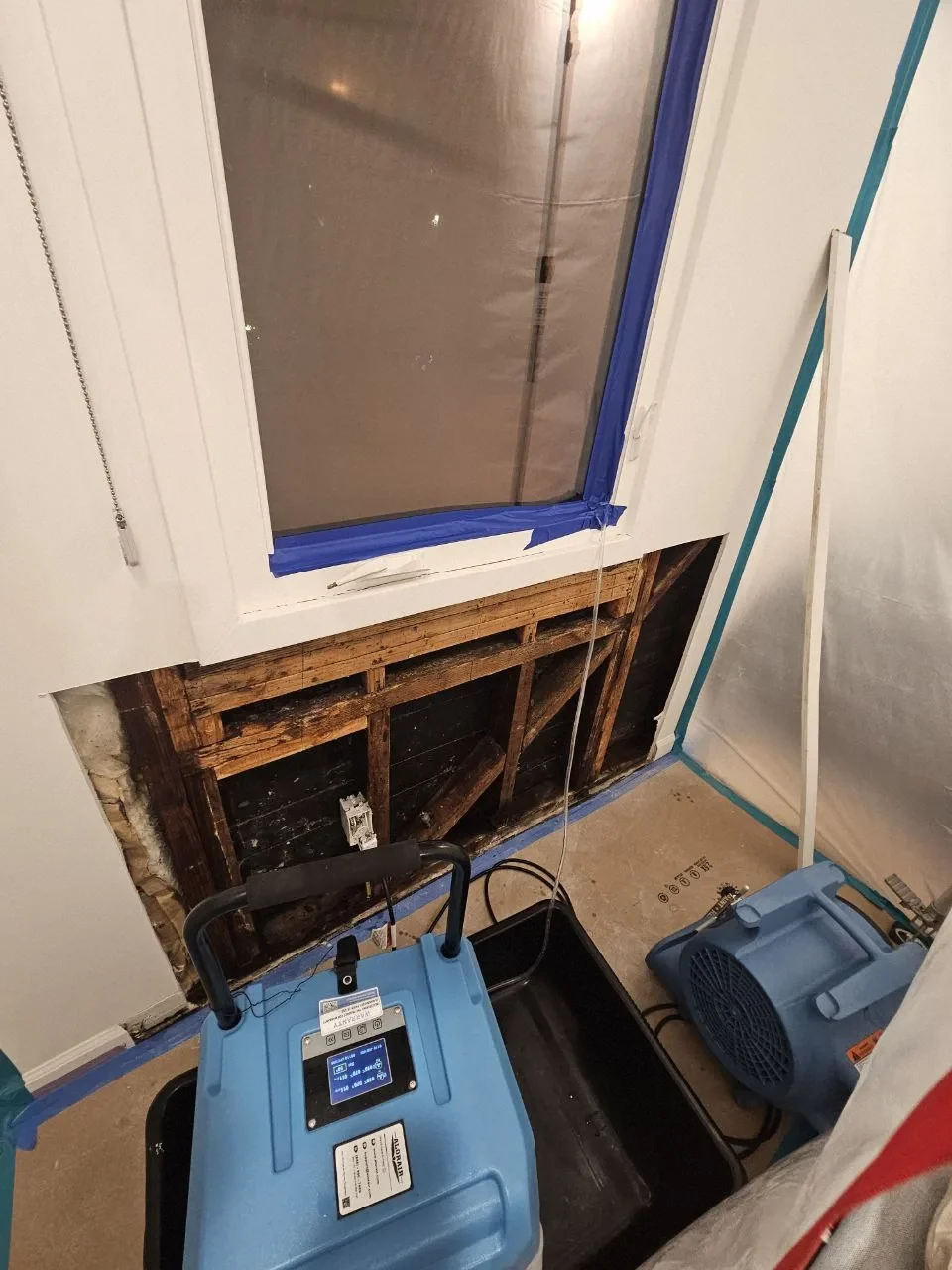
Floodwater may enter beneath flooring, into cabinets and behind lower wall finishes. The first visible stain may not show the full extent. Ask the team what was inspected, which spaces remain inaccessible and whether additional opening is needed to understand the materials.
The response should account for both contamination and moisture. A fan alone does not identify what is beneath a finish. The method for a hard surface may differ from the decision for porous insulation or furnishings. Request a written explanation of proposed cleaning, removal and protection of unaffected areas.
If electrical equipment or appliances became wet, do not restart them before an appropriate professional or utility has assessed them. Follow official instructions about power, gas and occupancy. Falling water levels do not by themselves establish that a building is safe to use.
Handle belongings with a plan
When conditions allow safe entry, make a room-by-room list of affected items and photograph them. Ask the insurer what records it needs before disposal if it is safe to wait. Coverage depends on the policy and the circumstances; no cleanup estimate guarantees payment.
Books, electronics, furniture and clothing have different materials and may require different handling. Discuss whether a specialist should evaluate a particular item. Avoid moving contaminated contents through unaffected rooms without agreeing on a route and protective measures.
For a shared building, identify a contact for access to common spaces and communication with occupants. Preserve written notices and any instructions about temporary use of the rooms. A restoration team can document the conditions it finds but does not determine every party’s legal responsibility.
Coordinate trades and inspections
An owner may need more than one professional: a plumber to diagnose a source, an electrician to evaluate affected equipment and a restoration team to assess wet materials. Ask who will coordinate the sequence and how changes will be communicated.
If opening a wall or floor reveals additional damage, request an updated description before the work is concealed. A required building or trade inspection must be arranged for the applicable scope. Keep the approval, source-repair record and completed restoration description together.
Do not rely on a broad flood-zone label to decide whether a particular repair needs a permit. Explain the location and actual work to the city or district. Site-specific rules and exceptions can matter, especially when a line extends into a street or other public area.
Prepare for a future storm
Before the next rainy period, consider where runoff approaches low openings and whether gutters and private drains are functioning. Ask a professional to investigate repeated water entry; moving a problem from one part of a property to another is not a complete drainage solution.
Check official flood information for the address and ask an insurance adviser how the designation and policy terms apply. Separate flood coverage, sewer backup and temporary housing provisions can differ. A regional infrastructure project does not automatically determine the terms of an individual policy.
Keep copies of photographs, inspection reports and invoices in an accessible place. If a new event occurs, report what happened rather than assuming it has the same cause as the previous loss. Follow emergency directions even if belongings or records remain inside.
Ask for a clear scope
Before work begins, ask which materials were inspected, how contaminated areas will be separated, and who will document contents. Clarify what will happen if hidden wet material is found and whether additional trades will be needed.
Ask what evidence will be used to decide when reconstruction can proceed, and who is responsible for required inspections. A fixed schedule cannot be established reliably without understanding the building and the extent of water entry.
After work, retain a record of the source correction, areas addressed and any remaining work. If a damp area or odor returns, ask for a new investigation. The practical aim is to address the cause and affected materials, not merely make a surface appear dry.
If an owner plans improvements after the immediate cleanup, ask the designer how those measures will be maintained and whether any drainage changes need review. A written maintenance plan can make future responsibilities clearer.
Common questions
Can I enter shallow floodwater?
Avoid entering floodwater; it may conceal debris, openings or electrical hazards.
Does a flood-control project prove my property is outside a flood zone?
No. Check the current official designation for the specific address.
Does Laguna Creek flow through Fremont?
Yes. Alameda County Flood Control describes it carrying stormwater through Fremont toward the Bay.
Can floodwater damage concealed materials?
Yes. Water may travel beneath flooring or behind wall finishes, so the affected assembly needs assessment.
Does the cleanup provider decide insurance coverage?
No. Coverage depends on the policy and the insurer’s review.