Safety and access after flooding
Follow evacuation and reentry instructions issued for the area. Do not walk or drive through moving floodwater. Inside a building, water can contact electrical equipment or conceal debris and openings. Keep people and animals away from the affected space until the hazards have been evaluated. Call 911 if an immediate emergency remains.
When entry is allowed, record the water level and the rooms reached from a safe position. Tell the assessment team whether water is still entering. Floodwater may carry sediment or contaminants, so the cleanup method should reflect the actual source and the materials contacted.
Which projects receive flood-resistant review?
San José’s residential construction inspection manual says its flood-resistant checklist applies to new or substantial-improvement projects in the identified A and V flood zones. A flooded room does not by itself establish that the parcel is in one of those zones or that the work is a substantial improvement.
Ask the city about the mapped parcel and the proposed repair. The inspection manual describes conditions for applicable construction; the city determines the requirements for the actual project. Keep the plans and any floodplain correspondence with the repair record.
Elevation information at final review
For applicable flood-resistant residential construction, the city checklist calls for an as-built elevation certificate prepared and sealed by a design professional and final approval coordinated with Public Works. Check the plans, permit and applicable requirements for the project rather than assuming every cleanup needs a certificate.
If reconstruction requires this review, identify who will prepare the documentation and when it is needed. Cleanup, design and inspection may be performed by different parties. The owner should have a clear account of each responsibility.
Enclosed spaces and flood openings
The city inspection manual checks flood vents against approved plans and engineering details for applicable construction, including at least two openings per enclosed area. The detail is relevant to a project that must meet those requirements, not a recommendation to cut openings in an existing wall without design review.
When an enclosed area has been damaged, ask the designer and city how the approved plan addresses openings. The purpose, location and construction of the space affect the decision. Coordinate inspection before covering work that needs to be visible.
Material choices below the flood elevation
For applicable residential construction below the base flood elevation, the city manual lists flood-resistant material considerations and excludes paper-faced gypsum and batt insulation in its checklist. This is a construction requirement within the stated scope, not a claim that those materials are absent from existing buildings.
If a damaged assembly must be rebuilt, ask the designer which materials the approved project requires. The decision can differ from the choice to remove wet material during cleanup. Record what was found before replacing the finish.
Tracing water through the property
Water may enter at a door, a damaged roof, a lower wall or another opening. The observed path helps guide an assessment but does not prove the source of every wet area. Identify adjacent rooms and levels that may have been affected and note any spaces that cannot be reached.
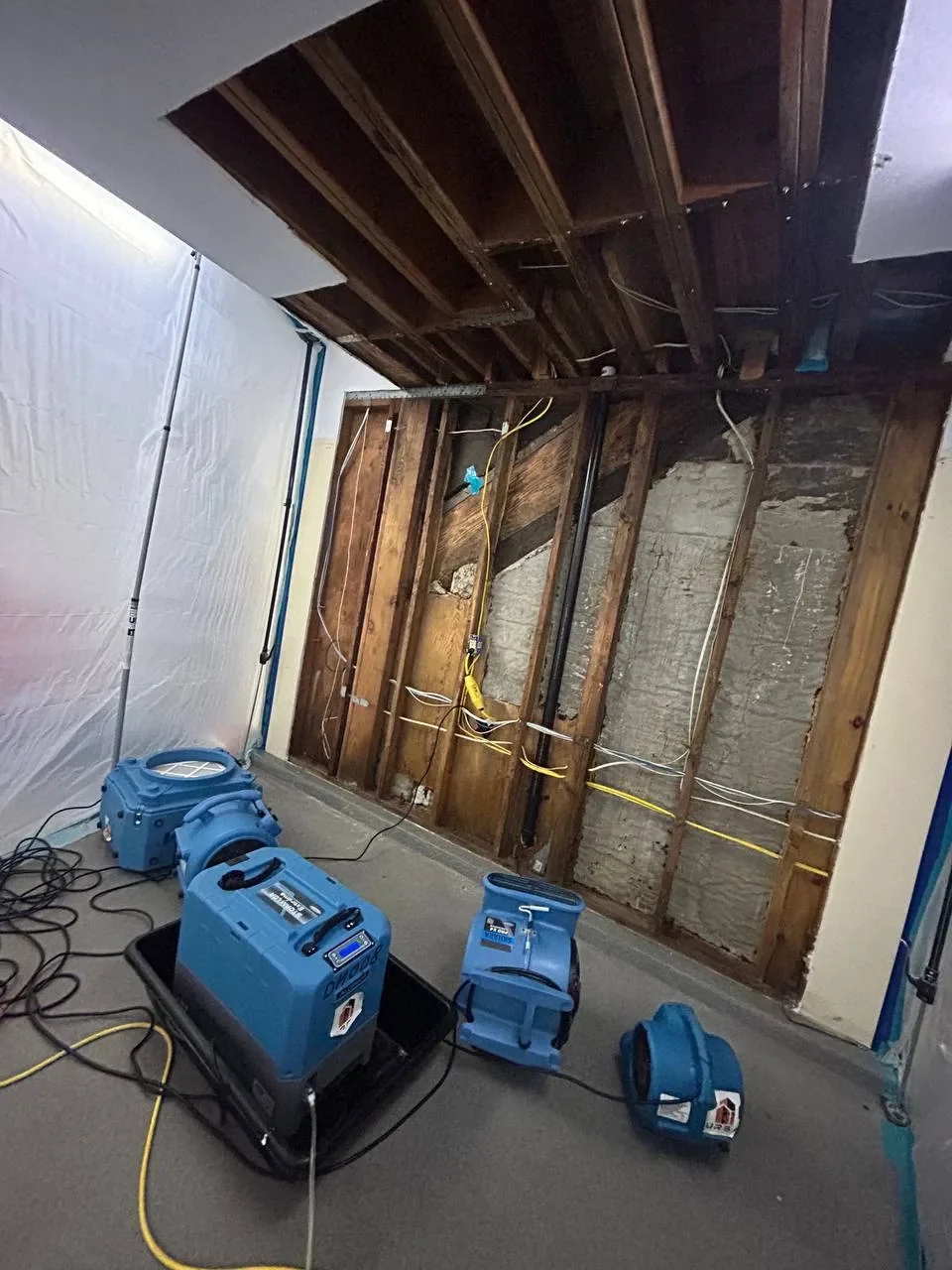
Extraction addresses water that is accessible. A wall cavity, insulation or subfloor can remain wet after surface water is gone. Discuss whether an opening is needed and who can authorize it. If the opening reveals damaged utilities or structure, a qualified trade should evaluate those components.
An owner or manager should coordinate the source correction with the cleanup plan. If water can continue entering, drying equipment alone does not resolve the problem. Ask how the team will respond if another entry point becomes visible during the work.
Materials and belongings
The condition of the water and length of contact matter when deciding how to handle an item. A sealed surface, fabric and absorbent building material may require different treatment. Request an explanation of what will be cleaned, removed or evaluated separately.
Before moving belongings, identify who will make the inventory and who may approve storage or disposal. Photograph items when safe and ask the insurer what records it needs. An insurer determines coverage under the policy; the restoration assessment describes the physical condition and proposed work.
In a business, inventory and equipment may need a separate access plan. In a residential building, ask how occupants can retrieve essential items safely. Do not enter an area that remains restricted merely to recover belongings.
Monitoring the drying process
After accessible water and damaged materials are addressed, remaining materials may need to dry over time. Ask where measurements will be taken and how they will be interpreted. One reading cannot establish conditions behind every closed surface, and the scope should identify areas that remain unexamined.
Equipment placement should account for safe routes, occupants and access by other trades. If a contractor needs to inspect a pipe or electrical component, coordinate the visit so the work area is available. Changes in conditions should be reported to the person authorizing the work.
A second water entry or a previously hidden source may require a revised plan. Record the finding and its location rather than treating the original estimate as a complete description of the building. Follow any local restrictions on reentry or occupancy.
Permit and reconstruction coordination
When the immediate cleanup is underway, discuss the proposed reconstruction with the relevant building professionals. A property may need approvals or inspections based on its location and the nature of the work. A restoration team can document its observations, but the city determines the applicable project requirements.
Keep estimates, photographs and city communications together. If the amount of repair changes when concealed material is opened, ask whether the permit or floodplain review needs to be updated. Do not cover work before an inspection that needs to see it.
Temporary protection can reduce additional exposure while a permanent repair is arranged. Identify who maintains it and when it will be replaced. The arrangement should be checked after a delay or another storm.
Discuss the next step
If several parties are involved, agree on a single contact for scheduling and changes to the work. A tenant may report the first sign of flooding while the owner arranges repairs and a property manager controls access to common areas. A written timeline can record who was notified, when the water stopped and which rooms were accessible. Keep the names of the professionals examining structural components, electrical equipment and the source of entry. If a floor must be opened, agree in advance how belongings will be protected and how the opening will be secured while work is delayed. Ask for an updated scope if materials below the visible surface require a different response. Before the property is returned to use, review the remaining limitations and the sequence for any necessary reconstruction. The correct timing depends on the condition of the building and the instructions of the responsible authorities. A visible improvement in the room is useful, but it does not replace the relevant inspection of the work.
Provide the address, current access instructions and the areas reached by water. Tell the team whether the source is still active and whether other rooms or a lower level are affected. An accurate description helps arrange the visit, while the assessment establishes the work needed at the site.
Water Damage Guard serves San José from San Carlos. Call (650) 550-0619, 24/7, to discuss flood cleanup and the observed property conditions.
Common questions
Should I enter during a flood?
Follow official instructions and avoid moving water and areas with electrical hazards.
Does every wet room require flood-resistant reconstruction?
No. The city checklist describes applicable new and substantial-improvement projects in specified flood zones.
Is an elevation certificate required for all cleanup?
No. Ask the city and design professional about the applicable plans and permit.
Should I add flood vents myself?
The applicable design and city review determine the construction details; consult the responsible professionals.
How can I discuss cleanup?
Call Water Damage Guard at (650) 550-0619, 24/7.