A safe starting point
Identify the rooms affected by the leak or backup and whether water is still entering. Share any access restrictions and the location of a known shutoff. An on-site assessment can identify the source, the materials that got wet and which further repairs may need coordination.
Keep people and pets away from standing water and sagging ceilings. If a supply shutoff is safely accessible, closing it may reduce continuing water entry. Never enter water to reach electrical equipment or operate a switch. For an immediate threat to life, call 911 and follow the instructions of responding officials.
The first visible stain does not always identify the source. Water can travel along framing or beneath flooring before becoming visible. Note whether a fixture was running, when the condition began and whether rain or a prior repair may be relevant. Preserve photographs only where access is safe. These observations can help the people investigating the source, but they cannot replace an inspection.
A private lateral and the public sewer
Piedmont says the property owner maintains the entire private sewer lateral. When a drain backs up, the location of the blockage matters: a wet room and a blocked line are related problems but need different kinds of assessment. Avoid adding water through connected fixtures while the cause is being investigated and keep people away from wastewater.
The city requires a building permit for repair or replacement of a private lateral, and a permit is also required for an EBMUD verification test. The city conducts code inspections for sewer work, while EBMUD witnesses a separate verification test. Ask the parties involved which step they are performing and keep the results together. A verification test and an inspection of the construction work are not interchangeable.
Piedmont’s inspection instructions list pipe bedding, installation, connection to the main, backfill and final restoration among the stages for sewer permits. Work may need to remain visible until the appropriate inspection is completed. A contractor should coordinate the sequence with the city and explain when access, excavation and restoration are expected. The actual scope depends on the line and the condition found.
When the lateral must be checked
Piedmont lists a property sale, remodeling above $100,000, a water-meter size change and written city notice of lateral irregularities among events that trigger inspection. The relevant event and property circumstances matter; a damp cabinet alone is not proof that any one trigger has occurred. Confirm the current requirements and the necessary test before planning a transaction or project.
When work is planned, distinguish the condition of the pipe from the condition of nearby building materials. A pipe may need repair or testing while wet flooring or wall finishes need their own evaluation. Record where water appeared and whether the line has been examined. If the problem returns after cleanup, share the earlier findings with the person investigating the cause.
An older home does not reveal its installed pipe material. Past maintenance, replacements and additions can leave different materials in one system. A qualified professional can examine accessible portions and identify what further investigation is appropriate. Do not infer a specific pipe failure or remaining service life from the age of the building.
Permit applications and repair planning
Piedmont states that building permit applications are submitted online through eTRAKiT; it no longer accepts paper or emailed applications. The application process is separate from the question of which work needs a permit. Describe the actual proposed repairs to the city, including any plumbing, electrical, structural or exterior work, and ask what review applies.
If several trades are involved, agree on who will prepare the application and coordinate inspections. A restoration assessment may uncover material that cannot be fully evaluated until it is opened. When the planned work changes, ask whether the approved scope needs revision. Keep the permit and any approved drawings available as required during inspection.
Finishing a room too early can obscure work that must be observed. Before installing a new surface, confirm that the source is corrected, any required inspection has occurred and the affected assembly is ready for closure. Those steps address different concerns; none should be assumed complete solely because a surface looks dry.
Stormwater and changes to a site
For a detached single-family project, Piedmont describes a small stormwater project as one with 2,500 to 10,000 square feet of new or replaced impervious area. For that category the city requires site-design and source controls. This classification concerns the project’s scope; it does not mean every water-damage repair automatically falls into the category.
An impervious surface does not absorb water in the same way as planted ground. If a project changes paving or other hard surfaces, ask the city how stormwater requirements apply and how the planned drainage will affect the site. A qualified designer can consider the slope, existing drainage route and proposed changes. Avoid assuming that a single visible puddle identifies the full cause of water intrusion.
After rain reaches a building, document the entry point and apparent path from a safe place. A photograph of a high-water mark can be useful, but it may not show conditions before the event or the way water moved underground. Current site conditions and the proposed work are more useful for a repair decision than assumptions about the whole city.
Drying and material decisions
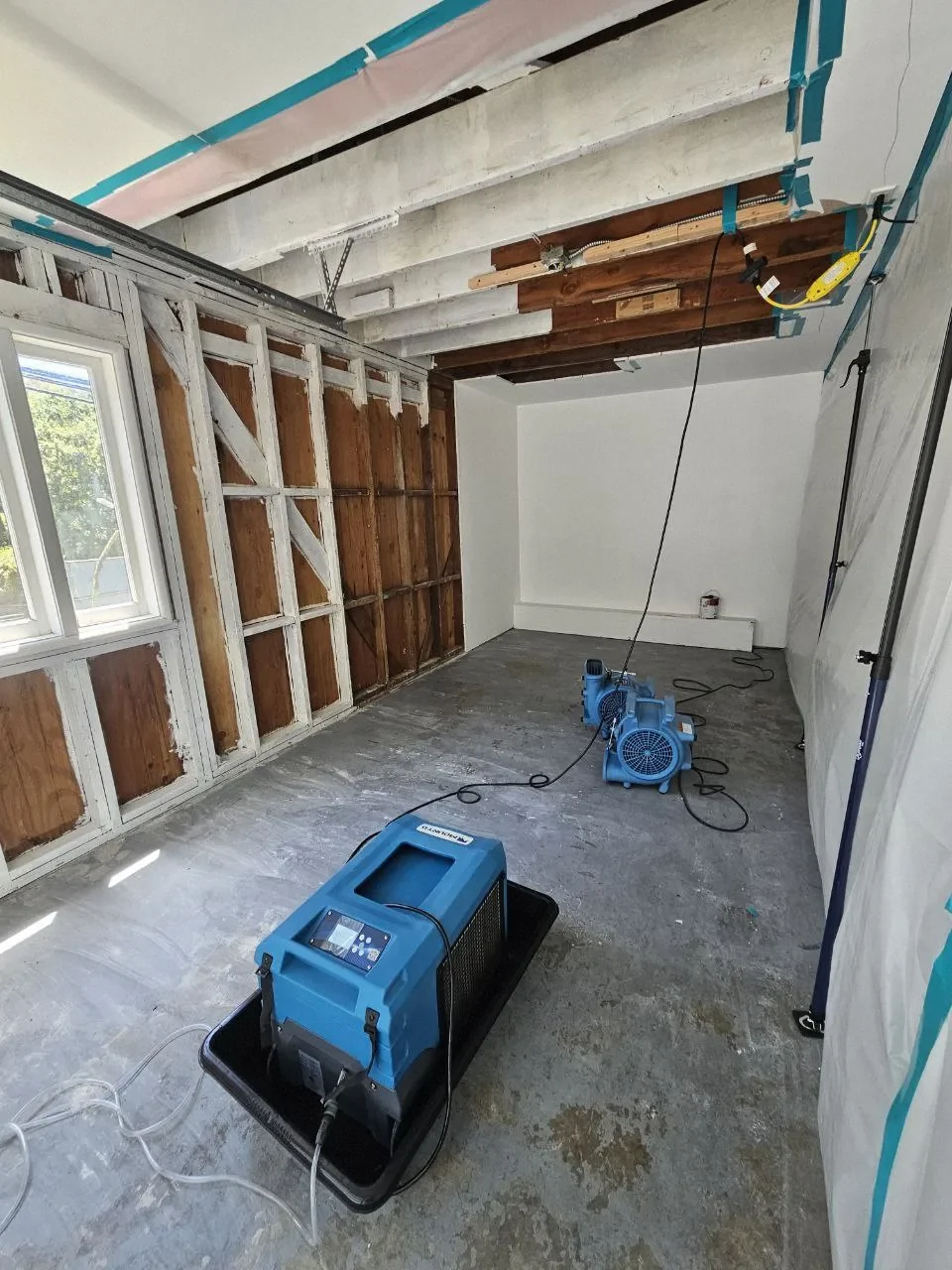
Once the source is under control, an assessment can identify affected surfaces and areas that may need further examination. Water trapped beneath flooring or behind wall finishes may not be visible. The kind of water, the length of exposure and the material all influence whether cleaning, drying, removal or replacement is appropriate.
Ask the team to explain how the work will be separated into source correction, assessment, drying and rebuilding. If the source remains active, drying equipment cannot resolve the underlying problem. Protect unaffected rooms from debris and avoid moving potentially contaminated items through clean areas without a plan.
Drying should be checked before finishes are restored. A work plan can identify where measurements or additional inspection are needed and what may change if concealed materials are found. Discuss the proposed approach and the reasons for it before authorizing repairs. A telephone estimate of damage cannot establish the condition inside a wall.
When a wet assembly contains insulation, flooring and framing, each layer can behave differently. Ask which portions are accessible to the assessment and how a decision will be made if moisture is found beyond the first opening. A repair plan should also account for safe access to adjoining rooms and for protecting belongings during work. After the source is corrected, the person responsible for reconstruction can coordinate the sequence with any required trade inspections. If an area cannot be examined immediately, record that limitation instead of treating it as evidence that the material is unaffected. Reviewing the findings together before replacement helps the owner understand what remains uncertain and why a particular next step is proposed.
Mold, belongings and claims
A persistent moisture problem can affect indoor materials even after the original event has passed. Avoid disturbing visible growth and ask for an assessment of the water source and affected area. An odor or stain can indicate where to look; it does not establish a species or prove how far a condition extends. A durable repair addresses the moisture route before the finish is replaced.
Keep a record of damaged belongings and contact an insurer about its documentation requirements. Coverage depends on the policy and event. Do not assume that every item is covered or that all contents can be cleaned in the same way. A list of the location and condition of items helps the people evaluating them, provided it can be prepared safely.
If you rent, report the problem to the owner or manager and keep a copy of the message. Describe the date, the affected area and whether the condition is continuing. Access, habitability, insurance and the repair scope are separate questions; relevant officials or housing advisers can explain how the rules apply to the particular tenancy.
Arrange the next steps
Before a visit, list the rooms involved, the location of any known shutoff and the work already performed. Include previous reports from a plumber, utility or inspector. If a building is restricted or a utility has been shut off, share the notice and do not restore access or service until the responsible authority permits it.
Water Damage Guard can discuss the water-damage condition at (650) 550-0619, 24/7. Ask for a written scope that identifies responsibilities and explains how new findings will be handled. A clear sequence supports coordination among source repair, inspection, treatment of affected materials and reconstruction.
Keep copies of photographs, communications and approvals as the project progresses. If an unresolved issue remains behind a finished surface, raise it before the area is closed. A documented handoff is useful when the people who investigate the source are different from those who repair the building.
Where more than one party participates, designate a person to receive updates and keep the documents together. Record the date of each inspection and any condition that remains to be addressed. That record can help prevent a repair from being covered before a required review or a persistent leak from being mistaken for a new event.
Common questions
Who maintains a Piedmont sewer lateral?
Piedmont says the property owner maintains the entire private sewer lateral. Identify the problem location before deciding what work is needed.
Are city inspection and EBMUD verification the same step?
No. Piedmont describes city code inspections and a separate EBMUD-witnessed verification test for sewer work.
When does Piedmont list a lateral inspection trigger?
The city lists a sale, remodeling above $100,000, a water-meter size change and written notice of lateral irregularities. Confirm the current rule for the property.
How are building permit applications submitted?
Piedmont directs applicants to submit building permit applications online through eTRAKiT and says paper and emailed applications are not accepted.
Does every repair trigger Piedmont stormwater controls?
No. The city’s small-project category is based on the area of new or replaced impervious surface for a detached single-family project. Ask the city whether the proposed scope qualifies.
Sources
- Piedmont sanitary sewer system Checked
- Piedmont inspection scheduling Checked
- Piedmont building permit applications Checked
- Piedmont stormwater requirements Checked