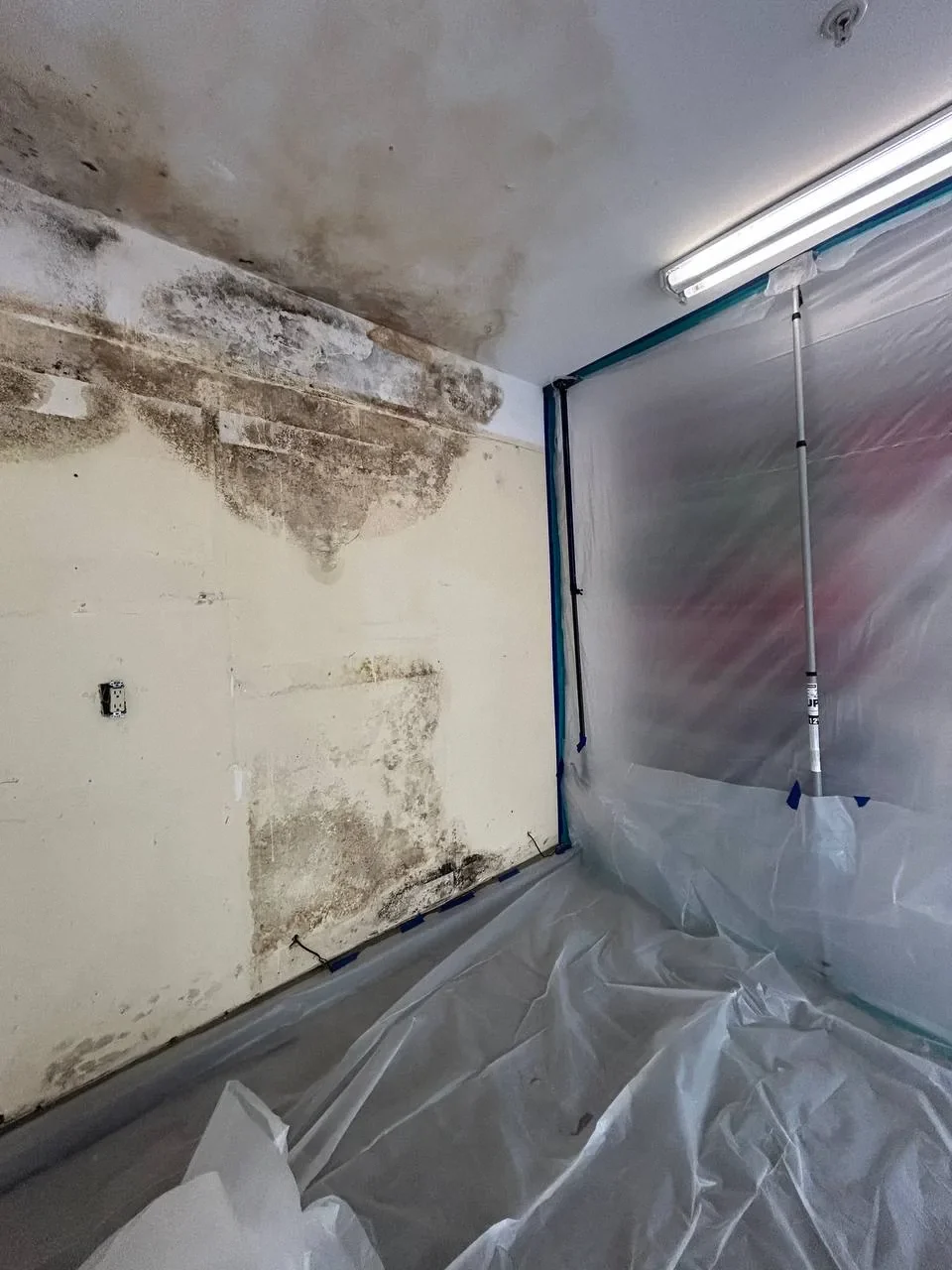
Start with the water source
Describe where growth, a persistent odor or a moisture problem appeared. Explain whether water is still entering and what repairs have already been made. The source and affected materials need assessment at the property; the visible area alone may not show how far moisture has traveled.
Keep people and pets away from visible growth and avoid disturbing it. A stain or musty odor can identify an area to investigate but cannot establish the type or extent of growth. If a leak is active, address it safely. Do not enter standing water to operate electrical equipment, and follow official instructions if access to a room or building has been restricted.
A useful record includes when the condition was first noticed, the affected surfaces and whether it changes after rain or plumbing use. Photograph only from a safe location. An investigation can then consider the water source, the material and whether moisture may extend beyond the visible area.
Moisture concerns in a rental
Alameda County Public Health’s 2019 mold resource is intended primarily for residents with rental or lease agreements. It advises notifying the landlord about the moisture problem and contacting the city building code office if there is no response. The document distinguishes inspection of underlying moisture or building conditions from an inspection for mold itself.
For a Piedmont rental, describe the location and duration of the leak or dampness to the owner or manager and retain a copy of the request. If the condition continues, contact the city about the applicable complaint process. The county document is dated, so confirm current contacts and procedures. It does not establish that a particular rental is unsafe or that every complaint has the same outcome.
If an immediate danger is present, follow emergency instructions rather than waiting for an ordinary complaint process. A housing determination, the landlord’s repair obligations and the technical scope of remediation are separate questions. Keep notices and correspondence so that each party can understand what has already been reported.
When a leak repair changes scope
Piedmont’s building code exempts stopping certain leaks from a permit, but says a permit and inspection are required if defective concealed piping must be removed and replaced with new material. The distinction matters when a small visible drip leads to opening a wall. Other project elements may require their own review, so describe the complete work to the city.
Correcting the water source is essential before finishes are restored. A newly painted surface cannot prevent water from returning through an unrepaired pipe or opening. Ask the person investigating the leak what was observed, which material may be affected and whether the planned repair changes the scope of construction.
A condition behind a wall may remain uncertain until it can be examined. The work plan should explain what will be opened, how adjacent areas will be protected and how newly discovered damage will be documented. Do not presume a particular pipe material or failure solely from the age of the building.
Piedmont renovation submissions
The city includes termite or water damage repair as a subtype of its residential renovation permit. A repair following a moisture investigation can range from a limited finish replacement to work involving several building systems. Ask the Building Division which permit applies to the actual project rather than treating the permit subtype as a rule for all cleaning.
For smaller bathroom, kitchen and interior remodels, Piedmont lists typical submittals including existing and proposed floor plans. When walls are opened or moved, it asks for framing information and structural drawings and calculations. The exact documents depend on the proposed work; the city notes that photos can substitute for existing floor plans on very minor projects.
Coordinate inspection and reconstruction with whoever is responsible for the plans. If additional deterioration is found after the first opening, the approved work may need to be reviewed. Do not close a wall before applicable inspections and before the affected materials have been evaluated for readiness.
Assess the affected materials
Water can move beneath a floor or into backing behind a cabinet. A visible spot may not show the full affected area. An assessment considers the source, the duration of wetting and the materials involved. It can identify where additional examination is needed and what remains unknown until an assembly is opened.
Treatment depends on the material and condition. A hard surface, porous insulation and personal contents do not necessarily need the same approach. Ask for an explanation of containment, cleaning, removal and disposal, including how unaffected rooms will be protected. Avoid moving dusty or contaminated materials through clean spaces without a plan.
Drying must be coordinated with source correction. If moisture continues to enter, the same materials can become wet again. Before replacement, discuss how the condition of remaining material will be checked and which findings would change the planned work. A surface that feels dry does not by itself establish the condition of concealed layers.
If several rooms share a moisture source, the assessment should consider their relationship rather than treating each stain in isolation. A supply line, window or roof detail may affect materials at different elevations. Explain which rooms became damp first and any changes since the source was stopped. Those observations can guide further investigation while leaving the cause to be confirmed.
Ventilation, contents and records
Air movement should be planned around affected materials so that dust is not spread into other parts of the building. If a heating or cooling system may have been affected, ask an appropriate professional to evaluate it before operation. The decision about individual components depends on their condition and the system involved.
Keep a list of belongings in the affected area when access is safe. Some items may be suitable for cleaning, while others may need a different decision because of their material or condition. An inventory can support the discussion with the restoration team and the insurer, but do not enter a restricted area just to make one.
Ask the insurance carrier which photographs, estimates and receipts it needs. Coverage is determined by the policy and circumstances; it cannot be established from the presence of a stain alone. Keep communications with the owner, contractor and insurer together so that changes in the scope can be understood later.
Plan the handoff to rebuilding
A written scope should identify the source repair, the areas to be assessed, the proposed handling of affected material and the responsibilities of each contractor. If plumbing, structural or electrical work is involved, establish who will coordinate it and which inspections are required. The people drying a room and the people repairing a pipe may not be the same.
When additional work is proposed, ask what was found, why the original plan needs to change and how the change will be recorded. Keeping the decision separate from assumptions makes it easier to evaluate the repair and communicate with an insurer or property manager.
Call Water Damage Guard at (650) 550-0619, 24/7, to discuss a Piedmont property. Share any access restrictions and the findings already available. The next step should reflect the actual condition of the building and the source of moisture.
Common questions
What can a Piedmont renter do about persistent moisture?
Alameda County’s 2019 resource advises notifying the landlord and contacting the city building code office if there is no response. Confirm current contacts and the process for the property.
Does a concealed pipe replacement need review?
Piedmont’s code distinguishes stopping certain leaks from replacing defective concealed pipe with new material, for which it calls for a permit and inspection.
How does Piedmont classify water damage repairs?
The city lists water damage repair as a residential renovation permit subtype. The permit for a particular project depends on the scope.
What plans might a bathroom repair need?
For smaller interior remodels Piedmont lists existing and proposed floor plans and additional framing information when walls are opened or moved. Confirm the actual submittal with the city.
Can the source be identified by a stain alone?
No. A stain may guide an investigation, but the source and condition of concealed materials need to be assessed.