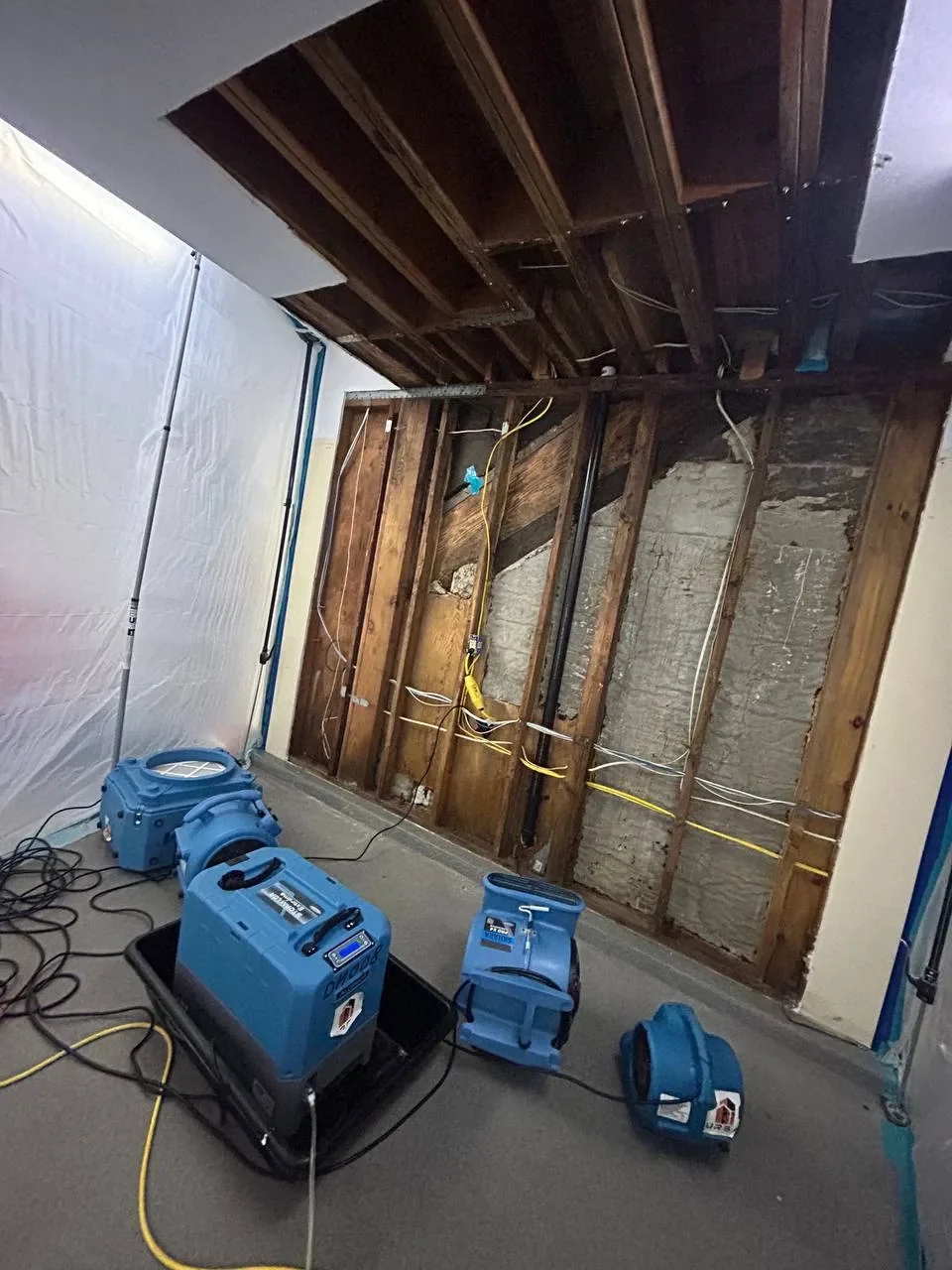
Water damage restoration in Foster City: safety and the source
When water enters a home, your first decisions are about people, electricity and stopping the flow. Move away from wet electrical equipment and do not walk through standing water to reach a breaker. If water threatens wiring or a panel, ask the utility or a qualified electrician to make the area safe. If there is immediate danger, leave and call 911. A plumbing shutoff can help only when it is accessible without crossing a hazardous area.
Once it is safe, identify whether the water is still entering, where it is collecting and which rooms or neighboring units may be affected. Close an accessible fixture valve if you can do so safely. A plumber or the responsible building manager may need to isolate the supply. Take photographs from a safe position before moving belongings. Note the time, the apparent source and any steps already taken; these details help everyone involved understand what remains uncertain.
Water Damage Guard provides restoration in Foster City and accepts calls at (650) 550-0619, 24 hours a day. Tell us whether the source is active, whether electricity or sewage may be involved, and whether the property is a house, apartment or condominium. We can discuss the next practical step and the information needed to evaluate the damage. An inspection determines the actual scope; a wet surface alone does not reveal the full extent of moisture behind it.
How Foster City manages stormwater
Foster City collects stormwater in its lagoon and pumps it into the bay. The city has also described lowering the lagoon in mid-November in preparation for winter storms. These are parts of a community drainage system, not a prediction about any particular home. Roof drainage, a blocked private drain or a plumbing failure can still cause water to enter a building when a regional system is functioning.
The city’s levee improvement project reached final completion in February 2024. A levee and a property’s drainage system address different pathways: a completed project does not mean a leaking supply line, overflowing fixture or failed roof connection cannot damage an interior. For an individual flood question, use the current property-specific map and ask the relevant agency what it shows rather than relying on a neighbor’s designation.
The county’s winter 2026–27 list identifies self-fill sandbags at the City Hall parking lot, with a limit of ten per car and 24-hour access. A seasonal listing is not a guarantee that supplies are present when you arrive, so confirm the current arrangement. Sandbags are a preparation measure; they do not make floodwater safe to enter and cannot address every route by which water reaches a building.
- The city collects stormwater in its lagoon and pumps it into the bay.
- The city reported that its lagoon is lowered in mid-November to prepare for winter storms.
- Levee improvements reached final completion in February 2024.
- The county’s winter 2026–27 list identifies a self-fill sandbag station at the City Hall parking lot, open 24 hours with a limit of ten per car.
- King tides in San Mateo County
- How flood risk is measured
- Choosing exterior flood improvements
Sewer backups and public reporting
Foster City’s wastewater division describes a collection system with more than 43 miles of sanitary sewers and 49 pumping stations. Foster City and San Mateo jointly own the treatment plant, which San Mateo operates. Those facts describe public infrastructure; they do not establish whether a particular backup started in a private line or a public main. The location and cause need to be determined for the property involved.
For a sewer overflow or backup, the city lists 650-286-8140 during business hours and police dispatch at 650-286-3345 after hours. The city asks residents not to report these events by email. Report what you can see safely and whether water is still rising. Avoid contact with sewage or floodwater, keep children and pets away, and avoid spreading contaminated material into unaffected rooms. The responsible agency and a plumber can help determine the source.
Cleaning after a backup is different from drying clean water from a supply line. The response depends on what the water contacted, how long materials stayed wet and whether porous contents can be cleaned. Do not assume an apparently dry floor is clean beneath its surface. Document disposal decisions and coordinate with the property owner or insurer before discarding important items when it is safe to do so.
Inspection, drying and repair
A useful inspection follows the water rather than stopping at the most visible stain. Water can move along the back of baseboards, under a floor finish or into the space between a ceiling and the room above it. We look at affected materials and practical access, identify areas that need closer assessment and discuss the drying and repair sequence. The extent of opening or removal depends on the actual conditions and cannot be settled reliably from a photograph alone.
Extraction removes standing water; drying addresses moisture remaining in materials and air. The approach may include moving contents, controlled air movement and dehumidification, with checks as conditions change. Equipment placement must account for electrical safety and the condition of the affected space. A drying plan is not simply a promise to run fans for a fixed number of days: the location, material and measured progress matter.
After moisture is addressed, repair decisions can include replacement of affected finishes or coordination with other trades where the damage involves plumbing, electrical or structural components. A clean-looking surface may conceal damage, while not every wet material automatically needs replacement. The evaluation should explain what was observed, which areas were inaccessible and why a proposed step is needed. Keep the inspection notes and photographs with the claim and repair records.
Apartments, condominiums and shared spaces
In a multi-unit building, the visible damage and the source may be in different places. Tell the building manager promptly and record when notice was given. A leak above a ceiling may require access to another unit, a common wall or a shared shutoff. Ask who can authorize access and keep a single timeline of calls, photographs and repair visits. Do not enter another residence or open a shared assembly without permission.
Ownership and insurance arrangements vary. A condominium association’s documents, the location of the failed component and the actual circumstances can all matter; the fact that water crossed a boundary does not by itself determine who pays. Residents can document their own belongings separately from building materials and ask their insurer what information is needed. The property manager can help coordinate access and communication among affected units.
For a rental, give the owner or manager written notice describing the water and any loss of essential use. Save a copy and request a clear plan for access and follow-up. If an area cannot be used during work, ask the parties involved about scheduling and temporary arrangements. Rules and coverage depend on the circumstances, so the general guides below are a starting point rather than a determination of responsibility.
Mold, fire and reconstruction questions
Dampness should be addressed at its source. If visible growth or a musty area follows a leak, avoid disturbing it while the extent is assessed. Painting over a stain does not correct moisture behind the surface. The appropriate response depends on the area, material and cause; a separate inspection may be needed to determine what can be cleaned and what needs removal. Keep unaffected belongings away from the affected space when possible.
San Mateo Consolidated Fire says Foster City is not within a mapped fire hazard severity zone. That mapping statement concerns wildfire hazard classification; it does not mean that a building cannot experience a structure fire or smoke damage. After a fire, wait for the fire authority to allow entry and avoid damaged utilities. Water used in suppression can affect materials alongside soot and odor, so a post-fire assessment may need to address more than one type of damage.
For alterations and additions, Foster City says it keeps permits issued after 1972 on microfilm. Existing records can help establish what was approved, but they do not replace an inspection or an answer about a new repair. Before concealing changed work, check with the Building Division about permit and inspection requirements for the proposed scope. Different trades may have separate requirements.
Planning the next conversation
Before a restoration visit, write down the affected rooms, the suspected source and when it was stopped. List materials that are wet, any areas you cannot access, and whether a resident has health or mobility needs that affect access. If you rent or share a building, identify the manager or association contact. This information helps coordinate an assessment without requiring you to enter an unsafe area or diagnose hidden damage yourself.
Ask for the work sequence in plain language: how the source will be addressed, which materials will be inspected, how moisture will be monitored, and which decisions need approval. Discuss where contents can be moved and who will coordinate any necessary licensed trade or inspection. Keep invoices, photos and correspondence together. If coverage is involved, contact the insurer promptly and ask what documentation it requires; a restoration assessment does not decide the claim.
Water Damage Guard is based in San Carlos, CA 94070 and serves Foster City. Call (650) 550-0619 any time to discuss water, flood, mold or fire damage. For an immediate threat to life, call 911. For non-life-threatening public flooding, use the city’s published reporting channels; a private restoration company does not replace the public agency responsible for a street or public system.
Common questions
What should I do first after a water leak?
Move away from electrical hazards, stop the source only if it is safe to reach, and notify the owner or manager. Photograph from a safe place and arrange an assessment of wet areas.
What does Foster City do with stormwater?
The city collects stormwater in its lagoon and pumps it into the bay. Its published seasonal management also describes lowering the lagoon in mid-November before winter storms.
Who should I call for a sewer backup?
Foster City lists 650-286-8140 during business hours and police dispatch at 650-286-3345 after hours for sewer overflows and backups. Keep away from sewage and do not report the event by email.
Does the completed levee prevent every water leak?
No. The levee improvement project reached final completion in February 2024, but plumbing leaks and other property-specific entry routes still require their own assessment.
Can you coordinate with a condominium manager?
Yes. Tell us who controls access and authorizes work. The manager or association can help arrange access to common areas or another unit when needed.
Are you available outside normal business hours?
Water Damage Guard accepts calls 24/7 at (650) 550-0619. Describe the active source and any safety concerns when you call.
Sources
- Foster City or responsible agency source Checked
- Foster City or responsible agency source Checked
- Foster City or responsible agency source Checked
- Foster City or responsible agency source Checked
- Foster City or responsible agency source Checked
- Foster City or responsible agency source Checked
- Foster City or responsible agency source Checked
- CDC electrical hazards Checked
- EPA mold cleanup Checked