A local response begins with the source
Water Damage Guard helps Colma property owners and occupants address water damage from plumbing failures, appliance leaks, stormwater and other sources. We begin by asking what happened, whether the water is still entering, and what areas are accessible. The answer determines whether the immediate need is to stop an active supply, keep people away from a hazard, arrange an inspection, or protect belongings from further contact with water.
Colma Creek flows through Colma on its way to San Francisco Bay. The broader watershed also includes parts of several neighboring cities. That regional setting can help explain where stormwater travels, but a watershed map alone does not establish that a particular home will flood. Check the individual property and the actual path of water before choosing a response.
Sterling Park is identified as a residential neighborhood in the Town’s 2023 draft housing element. Homes there and elsewhere in Colma still need an individual assessment: a street name or neighborhood boundary cannot identify the source, depth, contamination or extent of damage inside a building.
Keep people safe while water is active
If water is approaching an electrical outlet, appliance, panel or extension cord, stay out of the affected area and arrange for the power to be made safe by a qualified person. Do not touch wet electrical equipment. If there is an immediate danger to life or a fire, leave the area and call emergency services. A ceiling that is bulging or leaking may conceal accumulated water and damaged material; keep people below it away until it is assessed.
When the source is a pressurized supply line and the shutoff can be reached safely, closing the appropriate valve can limit continuing damage. A shutoff is not a repair. Arrange for the plumbing fault to be diagnosed, and tell the people using the building when water is off. If the leak comes from an appliance, avoid moving or operating it through standing water. Photograph the area only from a safe position.
Cal Water lists Colma in its Bayshore District. A customer can confirm the provider for the address and report a suspected utility-side water problem to the appropriate utility. A leak inside a building needs its own diagnosis; neither a service-area listing nor a wet floor establishes where a pipe failed.
Understand the public sewer and a building backup
Colma’s 2023 sewer system management plan describes a Town-owned gravity collection system with approximately 33,600 feet of mains and 165 manholes. It also states that the Town does not operate its own treatment plant and describes arrangements with North San Mateo County Sanitation District and South San Francisco for maintenance and treatment. These are system arrangements documented in that plan, not a determination of responsibility for an individual backup.
The same plan describes northern connections to the North San Mateo County Sanitation District system and southern connections to South San Francisco. A property owner should identify the affected location and seek a diagnosis instead of assuming that every blockage has the same source. Backflow in a drain can involve a building line, a connection or a public main, and the appropriate next call depends on what is observed.
The 2023 plan describes periodic cleaning and camera inspection arrangements for the collection system. These activities address the public network; they do not show whether a particular private pipe is clear. If sewage has entered a room, stop using fixtures that may add flow, keep people and pets away, and arrange for assessment and cleanup. Avoid spreading contaminated water with household tools.
How drying and repair fit together
The first task is to identify how far water traveled, including the spaces beside and below the obvious wet surface. Water can pass through a floor joint, collect under a finish or enter a wall cavity. Surface appearance alone cannot establish that a concealed assembly is dry. A restoration assessment considers the material, the duration of wetting and whether the source has been controlled.
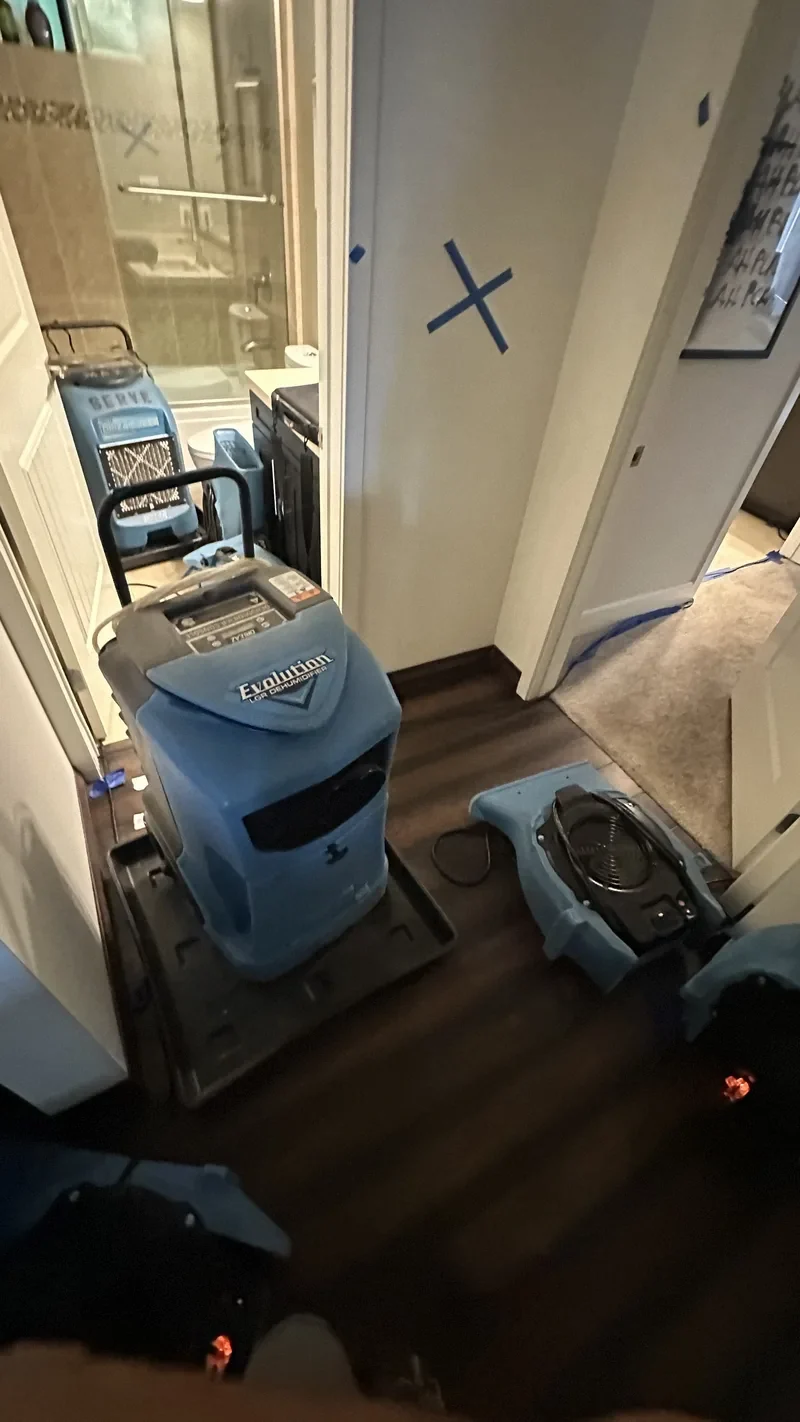
Extraction removes accessible water; drying addresses moisture remaining in materials and air. A plan may involve moving contents, opening limited areas for inspection or removing material that cannot be cleaned or dried appropriately. The scope should be explained before work proceeds, with attention to occupied rooms, access and belongings. Some materials require specialist evaluation or regulated handling, so avoid disturbing suspect material just to look behind it.
Repairs follow once the affected assembly is sufficiently dry and the cause has been addressed. Replacing a finish over an unresolved leak can hide the same problem rather than resolve it. Keep records of the affected areas, decisions and measurements so the repair contractor and property owner understand what was opened and why.
Moisture, mold and occupied homes
A musty smell or a stain calls for investigation of the moisture source; neither alone identifies the amount of mold or its effect on an occupant. If visible growth or prolonged dampness is present, limit disturbance and ask for an assessment suited to the size and condition of the area. Cleaning a surface without stopping the moisture pathway can leave the underlying problem in place.
Colma’s 2025 checklist for people seeking to legalize certain previously unpermitted accessory dwelling units includes checks for dampness in habitable rooms and visible mold, with a stated exception for minor growth on surfaces that normally accumulate moisture. That checklist is specific to the described ADU and JADU process. It does not show that any particular Colma unit has mold.
For a rented or shared building, tell the property manager promptly and describe the affected room and any continuing leak. A clear written record of notice and access arrangements can help the people responsible coordinate inspection and repair. Do not promise a completion date until the source, affected materials and access have been assessed.
Planning the work and documenting decisions
Colma’s January 2026 municipal code adopts the 2025 California Residential Code by reference as the Colma Residential Code. Whether a particular water-damage repair needs a permit depends on the actual work and applicable exemptions. Before closing a wall or replacing regulated building components, describe the scope to the Town Building Division and ask which approvals and inspections apply.
Keep a simple timeline: when water was first noticed, when the source was stopped, what rooms were affected and who was notified. Save photographs and relevant invoices in a safe place. If insurance may apply, ask the insurer what documentation it needs and what temporary measures it expects. Coverage, deductibles and approval are matters for the individual policy and insurer.
When a building cannot be used normally, plan access, temporary storage and a safe route through the property. Keep receipts for any temporary arrangements and ask the appropriate insurer or housing provider about eligibility rather than assuming those costs are covered. A careful record helps each party discuss the same scope, even when the cause or extent changes as concealed areas are inspected.
Working through common sources of damage
A washing machine or dishwasher can release water from a hose, fitting or internal component. The wet area may appear in a room next to the appliance or below it, especially when water has passed under a floor finish. After the supply is safely stopped, the appliance and its connections need diagnosis. The restoration scope is separate from the appliance repair: both the source and the materials affected by the leak need attention.
A water heater can leak from a connection, valve, tank or nearby pipe. Do not assume the source from the location of a puddle. Keep away from electrical equipment and do not operate the heater through standing water. A qualified trade can identify the failed component and determine whether it needs repair or replacement. Once the source is controlled, inspect adjacent walls, flooring and stored items for water that has traveled out of sight.
A roof or window leak presents a different sequence. Temporary protection may be necessary while weather continues, but it must be installed safely and should not be mistaken for a lasting repair. Trace the route of water into the building, examine the affected interior materials, and coordinate the exterior repair and interior drying. A ceiling stain can appear away from the entry point, so the visible mark alone may not identify the defect.
Keeping a shared project organized
A property owner, occupant, building manager, restoration team, plumber and insurer may each have a different role. Identify the person who can authorize access and record which rooms need inspection. In a shared building, tell the manager if water may have crossed into another unit or a common space. The source may be elsewhere, so do not limit the inspection to the first visible stain.
Before work begins, discuss access to possessions, pets, utilities and rooms needed for daily life. Ask which materials can remain in place and which need further assessment. If the scope changes after opening an area, request an explanation of what was discovered and how the repair plan changes. Keep estimates, inspection information and photographs together so the next contractor can understand what was done.
What to expect when you call
Call Water Damage Guard at (650) 550-0619 at any hour. We are based in San Carlos and serve Colma. Tell us the address, whether water is still entering, whether anyone is exposed to electrical or structural danger, and whether the water may contain sewage. If you know which rooms and materials are affected, that information helps us discuss the next step.
You do not need to know the technical name of the failure before calling. A description such as water beneath a washing machine, a ceiling stain below a bathroom, or water returning through a drain is useful. If the property is occupied by tenants or managed by an association, let us know who can provide access and authorize work. Keep the immediate safety of occupants separate from the later decisions about restoration and repair.
Every loss has its own scope. The amount of water visible at the beginning does not reliably reveal what lies behind a finish, and a dry-looking room does not establish that the assembly underneath is dry. The plan can be adjusted when the affected materials and source are better understood.
Common questions
Who supplies water in Colma?
Cal Water lists Colma in its Bayshore District. Confirm the provider for the particular address and report a suspected utility-side problem to that provider.
Does a Colma Creek location mean my home will flood?
No. OneShoreline describes the creek and its watershed, but a specific property requires its own flood-hazard check.
Where does Colma’s wastewater go?
The Town’s 2023 sewer plan describes northern connections to North San Mateo County Sanitation District and southern connections to South San Francisco. A backup at a property still needs an individual diagnosis.
Does the Town own and inspect the sewer mains?
The 2023 sewer plan describes a Town-owned gravity collection system and periodic cleaning and camera-inspection agreements. That does not establish the condition of a private line.
Does Colma’s ADU checklist establish mold in my home?
No. The 2025 checklist addresses conditions including dampness and visible mold for a specified unpermitted ADU or JADU legalization process; it does not establish the condition of an individual home.
Will my Colma water damage repair need a permit?
It depends on the scope. Colma’s municipal code adopts the 2025 California Residential Code; ask the Town Building Division which permits and inspections apply to the proposed repair.
Sources
- OneShoreline Lower Colma Creek Resilience Projects Checked
- OneShoreline Colma Creek Flood Zone Checked
- Town of Colma draft housing element, 2023 Checked
- Cal Water Bayshore District Checked
- Town of Colma sewer system management plan, 2023 Checked
- Town of Colma 2025 ADU housing checklist Checked
- Town of Colma 2026 building and construction code Checked