Keep the response safe
Water entering a room can come from a supply pipe, a fixture, a sewer or the outdoors. Move people and pets away from the affected area first. Do not step into standing water to reach a switch, touch wet electrical equipment or stand beneath a sagging ceiling. If a fixture shutoff is safely reachable from a dry place, closing it may stop additional flow.
Note where the water appeared, when it started and whether it is still moving. A visible mark may be some distance from the source because water can travel under flooring or behind a wall. Take photographs only when access is safe, and report a shared-building problem to the manager so access to adjoining spaces can be coordinated.
Water Damage Guard provides water damage restoration in Albany from San Carlos. Call (650) 550-0619, 24/7, and explain the affected rooms, suspected source and any restrictions on entry. The initial assessment identifies what can be examined and what needs a separate repair or further investigation.
Upper and lower sewer laterals
Albany says the owner maintains the upper sewer lateral from the building to the curbside cleanout, with different arrangements possible for condominiums and homeowners associations. The city maintains and repairs lower laterals, sewer mains and manholes. Ask Public Works about the actual location and component rather than assuming that an overflow inside a room identifies where the blockage lies.
A sewage backup requires attention to the materials it reaches as well as investigation of the pipe. Stop using connected fixtures if it is safe to do so and keep people away from the affected space. A lateral repair may stop the release, but it does not clean contaminated flooring, contents or adjacent walls.
For a public sewer backup, Albany lists Public Works at (510) 524-9543 during business hours and police dispatch at (510) 525-7300 after hours. Explain what you observe and whether neighboring properties are affected. The agency can determine the appropriate response to its system; separate private work may still be needed.
Lateral certification and property decisions
Albany lists property transfer, construction or remodeling exceeding $100,000 and a change in water meter size as events requiring upper lateral certification, subject to exemptions. The city’s program is distinct from the immediate response to a backup. Ask about the transaction and the existing certificate instead of treating every plumbing repair as the same trigger.
The city describes a seven-year certificate after a passing test without repair or replacement and a 20-year certificate after full replacement. A certificate has a particular scope and validity; it does not guarantee the present condition of every pipe inside a building or settle a claim for damage in a room.
Keep any inspection reports, permits and certificate with property records. If a defect is discovered, ask the professional to explain its observed location and the proposed repair. Do not infer the material or remaining service life of a concealed pipe from the age of the house or the neighborhood.
Storm drains, creeks and rain
Albany’s storm drain repair project describes approximately 12 miles of city-owned and maintained storm drain pipelines and culverts. The city also maintains its segments of Cerrito, Codornices, Marin, Middle and Village creeks. These public systems are different from a private building’s plumbing and drainage, and a geographic feature does not diagnose the source of water in a particular room.
When heavy rain reveals an obstruction or water entering a property, record the location and pattern when it is safe. The route through a doorway, roof, wall or floor changes the question for the person investigating. Avoid walking into a flooded road or approaching a downed wire to obtain a better photograph.
The city’s sandbag page describes up to ten bags during the rainy season with proof of Albany residence and a separate location for sand. Check current supplies and instructions before traveling. Sandbags are preparation, not a reason to remain in a dangerous area or to disregard official directions.
Rentals and shared buildings
Tell the owner or manager where the leak or damp area is located, when it began and whether it is continuing. Keep a dated copy of the request and arrange access to the affected room. If a shared wall or floor is involved, the manager may need to coordinate inspection with another occupant without assuming that either unit caused the loss.
Albany’s rent review overview describes conciliation for qualifying rent increases over 5% and identifies ECHO Housing as the administrator. This program concerns rent increases; it is not an automatic repair order or a promise of relocation payments after water damage. Ask the program or an appropriate adviser which issue and procedure apply to the tenancy.
If a room is unavailable, discuss access, belongings and any temporary arrangements with the person responsible for the property. A condominium association may have its own documents governing shared components. Identify the source and obtain the relevant records before deciding who should perform a particular repair.
Permits and inspection planning
The repair scope can change after a wall or floor is opened. Ask the building department which permits and inspections apply to the actual plumbing, electrical, structural and finish work. A repair that stops a leak and a later replacement of concealed components should be described accurately rather than grouped together under the word cleanup.
Before an assembly is covered, coordinate the source repair, any required inspections and the assessment of remaining moisture. Retain the permit records and a description of the completed work. If new damage is discovered, ask the responsible professional whether the scope or inspection sequence needs to change.
An older building may contain several generations of repairs. Age does not establish whether a specific pipe is galvanized, cast iron or another material. A plumber can inspect accessible components and explain what remains unknown before the owner chooses a repair approach.
Places and address-specific conditions
City planning materials identify Albany Hill as a local landmark and University Village as a residential area. These names help describe a location but do not define precise neighborhood boundaries or establish the condition of a home. Give the address to the responsible agency when asking about public infrastructure, permits or property records.
Two buildings near the same landmark can have different drainage, construction and maintenance histories. An inspection should follow the actual path of water and identify what can and cannot be seen. A location label alone is not evidence of a flooded basement, a damaged lateral or a particular pipe material.
If water moves between units, identify a contact who can arrange access while respecting any restrictions. Keep observed conditions separate from suspected causes so that the people investigating the leak can compare information from both sides of a shared assembly.
Assessment and drying
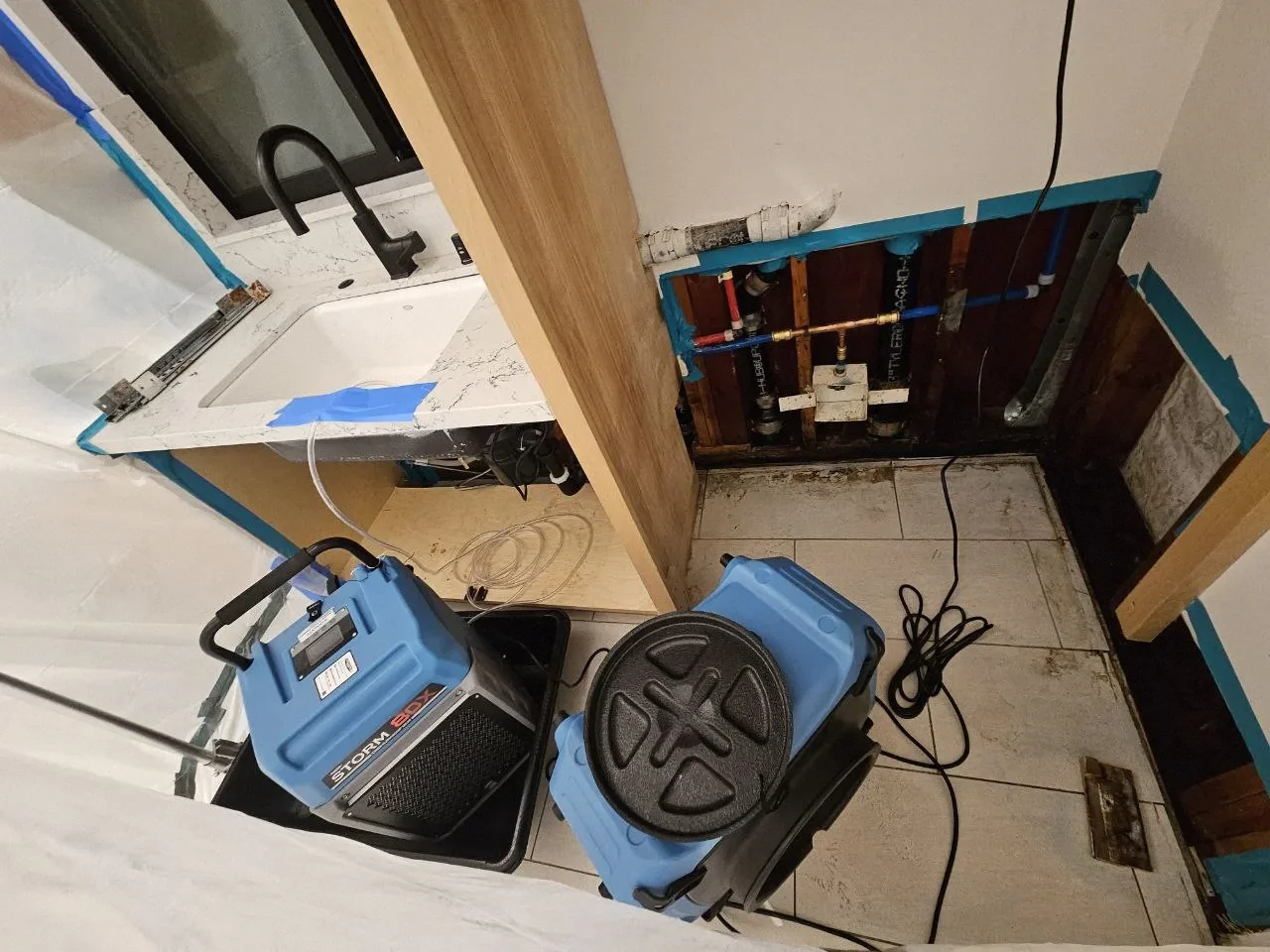
Wet material can extend beyond a visible edge. Flooring, wall bases and built-in cabinets may hide moisture or make access difficult. Ask what was checked, what is inaccessible and how the team will protect unaffected areas while it investigates. A measurement is meaningful only when interpreted in relation to the material and the exposure.
The type of water matters. A sanitary backup, outdoor floodwater and a supply leak require different handling considerations. Do not judge safety from the color or clarity of water. Separate unaffected belongings only if doing so is safe, and ask how contaminated items will be moved without spreading residue through clean rooms.
Drying should be coordinated with the work that stops water entering. Before finishes are replaced, ask how the condition will be evaluated and what remains unresolved. If the scope changes, retain the initial findings and the revised description so the sequence is understandable.
Belongings, insurance and records
When safe, photograph affected areas and make an inventory of belongings. Ask the insurer what information it needs and whether it has instructions before items are discarded. Electronics, documents, hard surfaces and upholstered furniture may each need different handling. Coverage is determined under the policy and the facts, not by a city certificate or a restoration call.
Keep communications, estimates, photographs and inspection results together. A short timeline can show when water first appeared, when a source repair occurred and when the affected area was assessed. Record what you observed separately from a cause that is still being investigated.
For a rental or condominium, ask who can authorize work in common spaces and where belongings may be stored safely. Follow any access restrictions issued by a responder or building authority. Clear coordination helps avoid moving material through unaffected rooms without a plan.
Complete the repair in the right order
A practical recovery plan separates source control, evaluation of affected materials, cleaning or removal where appropriate, drying and reconstruction. The order can change if an investigation reveals a concealed defect or an unsafe condition. Ask each professional to explain the scope and the points at which another trade or an inspection is needed.
Before returning a room to use, discuss unresolved access limits and any systems affected by water. Do not restart damaged equipment merely because a surface looks dry. Keep the completed repair records for future maintenance and any later questions about what was inspected.
Call Water Damage Guard at (650) 550-0619 to discuss water damage restoration in Albany. The company is based in San Carlos and accepts calls 24/7. Explain the present conditions and any safety directions already given by the agency or property manager.
Related guides and services
- Asbestos Survey Before Demolition Bay Area Alameda County
- Tenant Rights Water Leaklifornia
- Mold In Rentallifornia
- Repair And Deductlifornia
- Condo Leak Responsibilitylifornia
- Alameda County
- Old House Plumbing Pipe Replacement
- Rental Water Leak Responsibilities
- Additional Living Expenses Water Damage
- Sewermera Inspection
- Condo Upstairs Leak Hoa Insurance
- Asbestos Checks Before Water Damage Demolition
- Neighbor Water Damage Evidence
- Clogged Sewer Line Signs And Response
- Water Damage Restoration
- Water Damage Repair
- Emergency Water Removal
- Structural Drying
- Flood Cleanup
- Albany
- Burst Pipe Leak Cleanup
- Ceiling Wall Floor Water Damage
- Crawl Space Basement Drying
- Albany
- Mold Inspection Testing
- Albany
- Smoke Soot Odor Removal
- Commercial Water Damage
- Berkeley
Common questions
Who maintains Albany’s upper sewer lateral?
The City says the property owner maintains the upper lateral from the building to the curbside cleanout; condominium and association arrangements can differ.
Where do I report a public sewer backup?
Albany lists Public Works at (510) 524-9543 during business hours and police dispatch at (510) 525-7300 after hours.
When is upper lateral certification required?
The City lists property transfer, remodeling above its stated threshold and a change in water meter size among triggers, subject to exemptions.
Does Albany provide sandbags?
The City describes seasonal supplies and up to ten bags with proof of residency. Check current availability and instructions.
Does the rent review program automatically order leak repairs?
No. Albany describes conciliation for qualifying rent increases; repair and habitability concerns require the appropriate separate process.
Can a home’s age identify its pipe material?
No. The installed material and condition must be checked for the particular property.
Sources
- Albany upper sewer lateral program Checked
- Albany sanitary sewer system Checked
- Albany storm drain repair project Checked
- Albany parks and creek maintenance Checked
- Albany sandbag information Checked
- Albany rent review overview Checked
- Albany general plan environmental report Checked