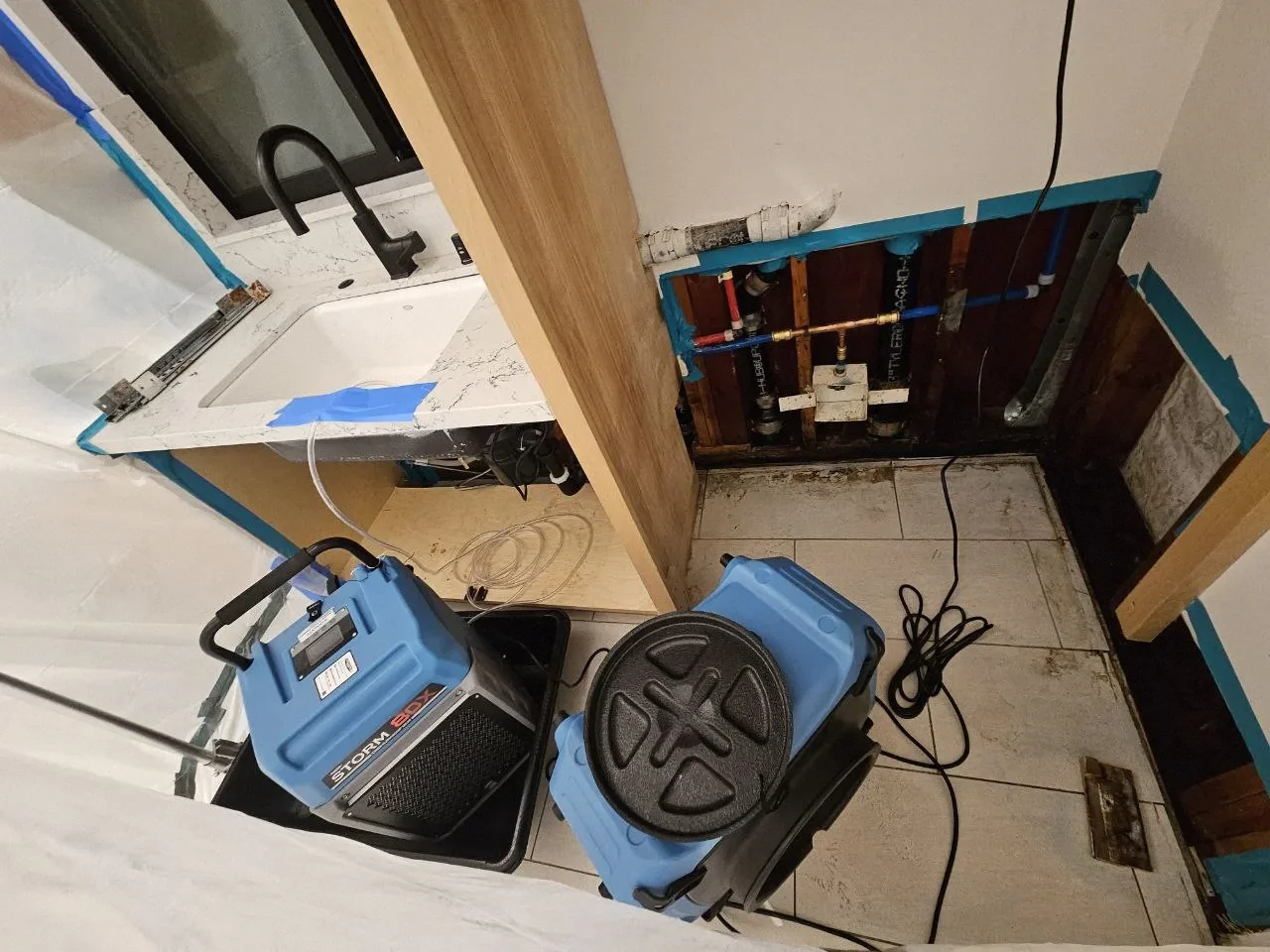
First decisions after water enters
When a pipe fails or water appears on a ceiling, move people away from the affected area. If the source is a fixture and its shutoff is safely accessible, close it; otherwise contact the water utility or a plumber. Do not enter standing water to reach electrical equipment, operate a wet switch, or handle a damaged appliance. Leave a sagging ceiling alone because concealed water and damaged material may fall.
Photograph the condition from a safe position before moving possessions, when that can be done without delaying a necessary response. Note the room, approximate discovery time and any change in the water level. Tell the person helping you whether the water appears to come from a supply line, a drain, rain or an unknown source. That distinction matters: water that has touched sewage or outdoor floodwater calls for a different handling decision from a small supply leak.
Call Water Damage Guard at (650) 550-0619. The company is based in San Carlos and takes calls around the clock. Give the address, the rooms affected, whether the source is still active and whether power equipment or a vulnerable occupant may be involved. If the immediate situation threatens life, call 911. A restoration discussion does not replace the utility, a plumber, emergency responders or a building official when their involvement is needed.
Work out where the water is coming from
A wet floor is a symptom, not necessarily the location of the leak. Water can travel under flooring or through a ceiling before becoming visible. Look for the earliest known sign: a running fixture, a wet cabinet, water rising at a drain, or rain entering at an exterior wall. If the source is not apparent, avoid cutting open a wall on your own merely to follow a stain. Record where water appears and let the appropriate trade investigate the source.
For a leak from a water line, stopping the flow comes before decisions about drying and finishes. A plumber can identify and repair the line; the restoration scope addresses the water that reached surrounding materials. A repair to the pipe does not by itself establish that the subfloor or the wall cavity is dry. Conversely, moving air over a visible surface does not fix a continuing leak. Coordinate the two tasks so the affected area can be assessed after the source has been controlled.
For a drain or sewer backup, limit use of sinks, toilets and appliances connected to the affected line. Keep children and pets away from the contaminated area. The city or a qualified drain professional can help establish where a blockage is located; cleanup and the decision to keep or remove affected materials depend on what the water contacted. Do not assume an outdoor overflow is harmless simply because it did not enter the living room.
What the city lateral test does
Burlingame's sewer lateral procedure applies when a property is transferred and includes a structure built more than 25 years before the transfer. The city calls for the lateral to be tested for infiltration and necessary repairs or replacement to stop it. An owner preparing a sale should check the applicable rules and any exemptions with the city rather than assuming that a recent transaction or a clean-looking drain removes the obligation.
The city describes both a water exfiltration test and an air test. Its procedure specifies an air test in hillside areas where the pressure from a water test could damage the pipe. This is a defined municipal test, not a blanket statement about the condition of every part of a plumbing system. A contractor and the city can explain the procedure for the actual lateral and the records needed for the property.
Burlingame's test information says a passing test on existing piping, or piping that required repairs, is excused from retesting under the ordinance for ten years. Keep the test result and any related repair records with the property documents. If you are preparing a sale, ask the city whether the particular test and records meet its requirements and whether another inspection is due. A test record is part of the property history; discuss any separate plumbing concern with a qualified professional.
Backwater protection and fixture levels
A sewer backup can enter through a low fixture before a problem is obvious elsewhere. The city lateral test procedure says an approved backwater valve must be installed when plumbing fixtures are below the city cleanout. This is a reason to identify the actual fixture and sewer elevations before assuming a particular basement, lower bathroom or laundry is protected. A property's configuration matters more than a neighborhood name.
The city also describes a separate certificate process when a drainage fixture is added. The owner must submit a written certificate by a qualified professional evaluating whether a fixture has an inadequate height differential. The city's certificate page explains the definition and review process. Ask the city and the person designing the work how that process relates to the proposed fixture; do not use a general explanation in place of a site-specific determination.
If wastewater has already backed up, restoration and prevention are separate steps. The contaminated area needs assessment and cleanup, while the cause of the backup and any valve or lateral work need their own investigation. Keep photographs, the plumber's findings and any city paperwork together. A device that is present also needs appropriate access and maintenance; an owner should ask the installer what the particular device requires.
Rain, drainage and the shoreline
A storm can create more than one path for water. Ponding beside a building, a blocked gutter or water coming up through a drain are different observations and deserve different responses. Keep a record of whether water appeared during rain, continued after the rain stopped, or came from a plumbing fixture. If water is approaching an entrance, follow local emergency instructions and avoid driving or walking through flooded areas.
The city identifies the Burlingame Avenue Storm Drainage Improvement Project as intended to reduce ponding and improve storm drain capacity for Oak Grove Manor, Lyon Hoag and Victoria Park. A public drainage project is useful context, but it cannot tell an owner whether a particular lot is safe from flooding or whether private drainage is functioning. Look at the property's own entry points and ask the city about public infrastructure questions.
The city's sewer system guidance says rain runoff and underground spring water should not be connected to the sanitary sewer main. If an owner is considering a drain or pump connection, ask the city and the relevant professional where that water may lawfully go. Redirecting water without understanding the receiving system can transfer a problem rather than solve it. Keep stormwater questions separate from work on a private sanitary lateral.
For winter 2026–27 the county lists a self-fill sandbag station at 600 California Drive, stocked on weekdays from 7:30 a.m. to 3 p.m., with a limit of 15 bags. Hours, stock and seasonal arrangements can change, so check the city or county before making a trip. Sandbags are a preparation measure; they are not a reason to remain in an area subject to an evacuation order.
Drying walls, floors and belongings
After the source has stopped, identify which materials were wet and how long they may have remained wet. A ceiling stain, a swollen baseboard and a damp carpet pad can represent different conditions behind their visible surfaces. The practical question is whether moisture remains in the material or in an adjoining concealed space. A restoration assessment can map accessible affected areas and establish a drying plan before new finishes conceal them.
Older plaster, wood flooring and newer board assemblies do not all respond to water in the same way. Avoid assuming that every wet material must be removed or that every stained surface can simply be painted. The decision depends on material condition, water source, access and whether it can be cleaned and dried. Ask which areas will be monitored, what will be protected and how any proposed removal will be documented.
Do not disturb suspect older coatings or building materials without considering lead and asbestos. The age of a home is a reason to ask appropriate questions; it does not identify a material or establish that a particular room contains a hazard. Discuss assessment and any required precautions before demolition. The contractor repairing a damaged finish can then use the drying and inspection information to plan the work.
Renters, owners and shared buildings
In a rental, notify the owner or manager promptly and describe the location and continuing source if known. Put the notice in writing when practical, retain a copy, and report changes such as water entering another room. Ask how access, drying equipment and repairs will be coordinated. If belongings are affected, document them separately from the building and review coverage questions with the appropriate insurer or adviser.
In a condominium or other shared building, the visible damage and the cause can fall on different sides of a unit boundary. Notify the association or management as well as the unit owner, and ask who can authorize access to adjoining spaces. A leak from an upstairs unit, common pipe or roof may require coordinated entry. Responsibility depends on the actual property documents, source and circumstances; do not assume that the location of a stain resolves the question.
Burlingame directs rental mold and similar interior health complaints to San Mateo County Environmental Health. The county limits its housing complaint jurisdiction by property type, so ask whether it handles the particular building. A complaint is distinct from arranging urgent help to stop an active leak. Keep notices, photographs and dates, and avoid entering unsafe spaces to collect documentation.
Burlingame neighborhoods and nearby communities
The city’s 2024 street-sweeping map labels Easton Addition, Burlingame Park, Lyon Hoag, Ray Park, Mills Estates, Burlingame Terrace and Burlingame Gardens. These are the map’s service-area labels, not a guarantee of formal neighborhood boundaries or a description of any individual property. Tell us the address and where water entered so the discussion can focus on the building and the appropriate utility jurisdiction.
Burlingame borders Hillsborough and San Mateo. The unincorporated Burlingame Hills sewer district is a separate county-served area; the correct contact depends on the address.
Who to contact and what to keep
For a Burlingame water or sewer emergency, the city lists Public Works at (650) 558-7670 during regular weekday business hours and (650) 692-0604 between 4 p.m. and 7 a.m. Its information includes sewer backups, flooding and excessive flow from a leak. City pages also list another emergency number, so check the current city contact page if the first number does not connect. The unincorporated Burlingame Hills sewer district is a different jurisdiction; the county lists (650) 363-4100 for district general inquiries day and after hours.
For a restoration call, record which areas were assessed and ask for a clear description of the next steps. If a plumber opens a wall or repairs a lateral, request the relevant work and inspection documents. When an insurance claim is involved, ask the insurer what documentation it needs and retain the records yourself. Coverage and payment depend on the policy and circumstances, not simply on whether water is visible.
Before closing a wall or replacing a floor, make sure the underlying cause has been addressed and that the person responsible for the repair understands what was wet. If the work involves a fixture, pipe or structural change, ask the Building Division what permit and inspection requirements apply to that particular scope. A restoration assessment, a plumbing repair and a city approval answer different questions; keep the paperwork for each.
- City utility emergency contacts
- County sewer district
- Burlingame building permit guide
- San Mateo County king tides and bay flooding: protecting a shoreline home
- Asbestos and lead before demolition in San Mateo County
- Wildfire smoke in San Mateo County homes: cleanup after a smoke event
- Tenant rights water leak california
- Mold in rental california
- Water damage after fire
- Old house plumbing pipe replacement
- Flood facts measurement and risk
- Wildfire smoke damage in house
- Sewage backup cleanup decisions
- Additional living expenses water damage
- Burlingame old house plumbing
- Burlingame defensible space
Common questions
Who should I call for a sewer backup in Burlingame?
Call the city Public Works emergency line at (650) 558-7670 during regular weekday hours; the city lists (650) 692-0604 for overnight water and sewer emergencies. A plumber can investigate a private line, and contaminated areas need appropriate cleanup.
Does Burlingame require a sewer lateral test when a home is sold?
The city procedure applies to transfers involving structures built more than 25 years earlier, subject to its rules and exemptions. Ask the city about the property and retain the test and repair records.
How long does a passing lateral test remain valid?
Burlingame says an existing or repaired lateral that passes is excused from retesting under its ordinance for ten years from the test date. Ask the city about the property’s records and any exceptions.
When is a Burlingame backwater valve required?
The city test procedure calls for an approved valve when fixtures are below the city cleanout. The city also has a separate certificate process when a drainage fixture is added; the actual elevations and project scope matter.
Where can I find sandbags in Burlingame?
The county winter 2026–27 list identifies a self-fill station at 600 California Drive with a 15-bag limit. Check current hours and stock before visiting.
Can a renter report a wet wall or suspected mold?
Tell the owner or manager promptly, preferably in writing, and retain a record. If the concern is not addressed, ask the relevant city or county housing authority which complaint process applies to the property.
Sources
- Burlingame or San Mateo County official information Checked
- Burlingame or San Mateo County official information Checked
- Burlingame or San Mateo County official information Checked
- Burlingame or San Mateo County official information Checked
- Burlingame or San Mateo County official information Checked
- Burlingame or San Mateo County official information Checked
- Official service contact Checked
- Official service contact Checked
- Official city information Checked
- Official city information Checked