Stay out of floodwater and follow local instructions
Floodwater can carry sewage and other contaminants, conceal sharp objects or be in contact with electrical equipment. Do not walk or drive through it. If water has reached a building, stay away from wet electrical equipment and do not enter standing water to reach a switch. If a building may be damaged, wait for appropriate safety clearance before reentering. Follow evacuation and road-closure instructions from public officials.
When it is safe to communicate, call Water Damage Guard at (650) 550-0619 to discuss flood cleanup in Burlingame. The company takes calls 24/7 from its San Carlos base. Describe where the water entered, whether it remains in the property, whether an official has restricted access and whether people or pets need assistance. Do not delay an emergency call if a situation threatens life.
For flooding, clogged catch basins or other water and sewer emergencies, Burlingame lists Public Works at (650) 558-7670 during regular weekday hours and (650) 692-0604 between 4 p.m. and 7 a.m. Report public flooding to the city, but do not assume that a report to the city automatically arranges cleanup inside a private building.
Coastal water and inland runoff are different paths
OneShoreline, the San Mateo County Flood and Sea Level Rise Resiliency District, describes two types of flooding in its Millbrae and Burlingame shoreline project area. One is coastal flooding from high Bay tides and storm surge. The other is inland flooding when heavy rainfall overwhelms creeks and storm drains; high tides can make it harder for that water to drain. These are project-area conditions, not a prediction that a particular home will flood.
This distinction helps when reporting what happened. A person who saw water rise outside a Bay-facing property may have different information from an owner who saw runoff collect beside a doorway during a downpour. In either case, the observation is not a substitute for an inspection of the actual water path. Note the time, where water first entered and whether it receded with the rain or tide, but only from a safe location.
A property's exposure is specific to its location, elevation and drainage. Consult the official flood map and the city for the current designation of the address. A mapped designation informs planning and insurance questions; it does not guarantee that a property outside a mapped area cannot experience water entry. Ask an insurer about the actual policy rather than assuming that standard homeowners coverage includes a flood.
What the shoreline project does and does not establish
The Millbrae and Burlingame Shoreline Resilience Project is being planned to address sea-level rise and extreme storms along the Bay shoreline. OneShoreline describes a long-term project that also considers public access and habitat. Planning or environmental review is not the same as a completed protective structure. Do not assume that a proposed measure is built, that it protects a specific property or that an existing insurance requirement has changed.
The district identifies four creeks and two lagoons draining to the shoreline within the project area. A design must address two competing needs: limiting the movement of high Bay water upstream and allowing inland water to drain toward the Bay. For a resident, that is useful context for why water can accumulate during a combination of heavy rainfall and high tides. It does not determine where water entered a particular building.
If a property has flooded, keep the observed damage and any public project information separate. Record the actual affected rooms and the approximate time. Ask the city or the district about public flood protection and a qualified professional about the property's own drainage. Those answers serve different purposes and should not be inferred from a map label or from an unrelated property nearby.
Before anyone starts cleanup
Reentry comes first. Flooding can damage floors and walls or make utilities unsafe. If officials or the owner have restricted access, wait until the appropriate person says the building can be entered. CDC advises that damaged homes be examined for safety and that electrical systems be checked before power is restored. Use a safe route and do not touch a wet appliance or electrical panel.
Once access is permitted, document the high-water line, the rooms affected and any belongings that were submerged, provided doing so does not expose anyone to danger. Keep notes about outdoor water, sewer odors and any water that remains trapped. This information helps the restoration provider distinguish the apparent entry path from areas reached after water moved through the building.
Do not start by removing material at random. Water can pass beneath a floor, behind baseboards and into wall cavities, and floodwater may have contacted material that is not visibly stained. An assessment should identify which spaces are accessible, where water traveled and whether potentially hazardous building materials need evaluation before demolition.
Water removal and contaminated materials
The response depends on the source and the surfaces the water touched. Outdoor floodwater can contain sewage; it should not be treated as equivalent to water from a clean supply line. The team assessing the building needs to know whether water rose from outside, entered through a drain, or mixed with wastewater. Limit movement between contaminated and unaffected areas until a cleanup plan is in place.
Ask which contents and building materials can be evaluated, cleaned or dried and which may require removal. A porous furnishing can retain contamination in places that are not easy to reach. A hard surface may be handled differently from a carpet pad, insulation or paper-faced wallboard. The decision depends on actual conditions and the cleaning method, not on a promise that every item can be saved.
Items should not be carried through unaffected rooms without a plan. Keep a safe inventory of damaged property and ask how it will be documented. If an insurer is involved, explain the situation promptly and ask what records it needs. Emergency conditions may require immediate action, but retaining photographs and written descriptions can help explain what was encountered.
Dry the assembly before rebuilding
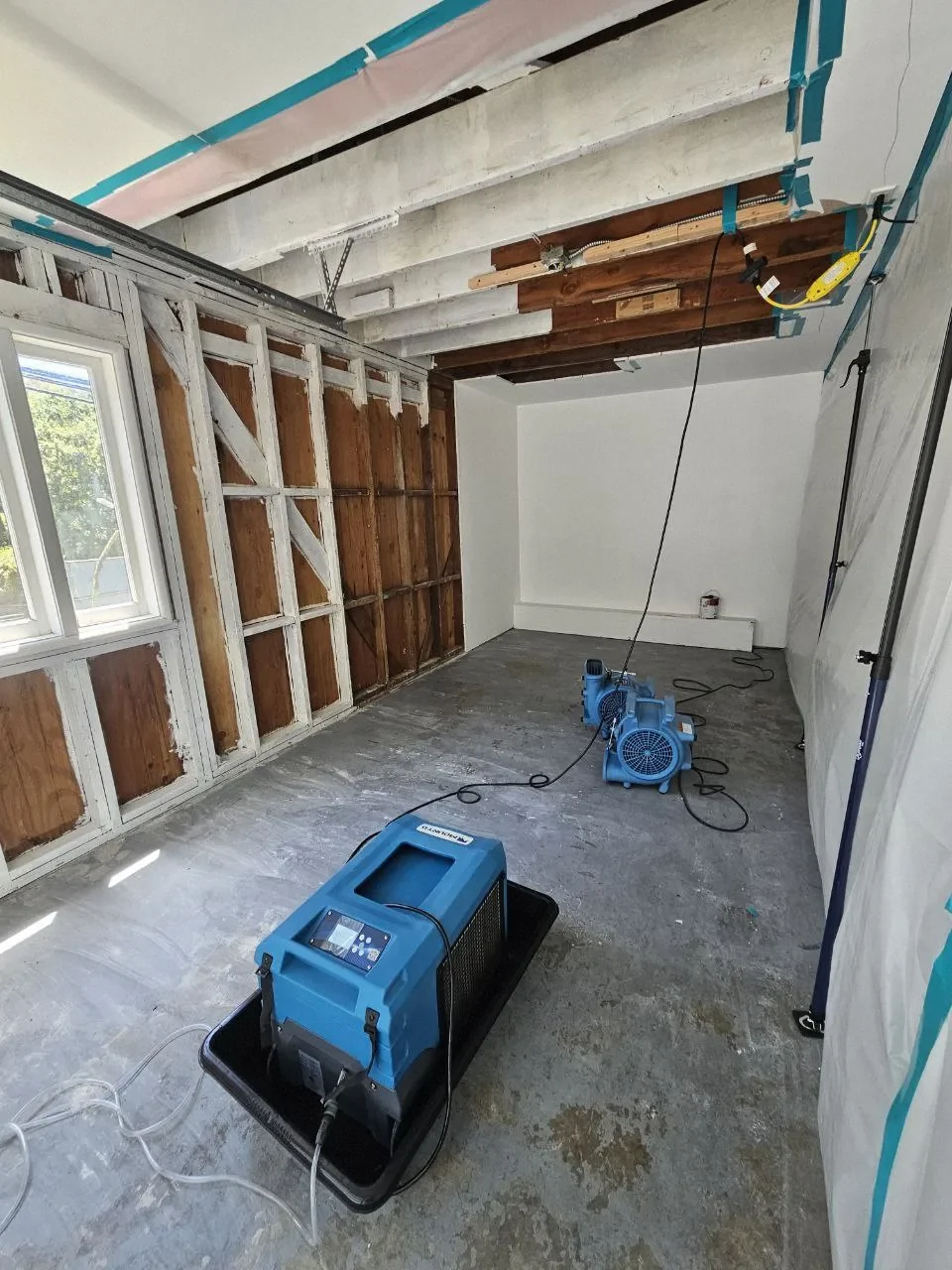
Removing standing water is only one stage. Moisture can remain within a wall, subfloor or other assembly after the surface looks dry. Ask how the remaining materials will be assessed, which spaces cannot yet be seen and what conditions must be met before new finishes are installed. The work plan should identify whether a source of water remains active and who is responsible for correcting it.
If the heating or ventilation system was flooded or may be contaminated, do not run it as a drying shortcut. CDC recommends professional evaluation of a flooded system, and EPA warns that operating a mold-contaminated system may spread mold. Electrical equipment also needs appropriate assessment before being returned to service. These are separate decisions from removing wet furniture or floor coverings.
Restoration and reconstruction can involve different people and permits. If opening a wall reveals a damaged pipe or structural element, ask the responsible professional and the city what additional work and inspections are needed. Keep the sequence clear: safe access, source control, cleaning and drying, then repair and any required inspection. The exact sequence and scope depend on the building's condition.
Prepare for the next storm while planning repairs
A flood cleanup is also a chance to record how water entered. Was it through a door, a low exterior opening or a drain? Was a gutter disconnected, or was the entry path still unknown? Ask the professional inspecting the property to distinguish observed facts from possible causes. A repair can then address the identified pathway without assuming that one product or barrier will solve every type of flooding.
The city, county and state may provide warnings and sandbag information when storms approach. Check current locations, limits and supplies rather than relying on an old seasonal notice. Make an evacuation plan and keep important contacts available. Sandbags and other preparations do not replace official evacuation instructions or make it safe to stay in moving or rising water.
For a rented or shared property, notify the owner, manager or association early and agree on who can authorize access and repairs. Keep records of requests, inspection findings and related expenses. Insurance questions depend on the actual policy, the source of water and the claim facts. A separate flood policy may be relevant, but only the insurer or a qualified adviser can explain the policy that applies.
Common questions
Is Bay flooding the same as runoff flooding?
No. OneShoreline identifies coastal high tides and storm surge as one hazard and inland rain-driven flooding as another; high tides can make drainage harder.
Does the shoreline project protect my address?
The project is being planned. Its description does not establish completed protection for a particular property. Check current information with the city or district.
Can I enter my home to turn off a wet electrical panel?
Do not enter standing water to reach electrical equipment. Arrange a qualified electrician and wait for appropriate safety clearance.
Can flooded belongings always be saved?
No. The decision depends on contamination, material and condition. Ask for an assessment and document affected belongings safely.
When can damaged finishes be replaced?
After the source is controlled and the remaining materials have been assessed, cleaned and dried as appropriate, with any required inspections coordinated for the repair.
Sources
- OneShoreline Checked
- CDC flood reentry Checked
- EPA mold guide Checked
- Burlingame contacts Checked