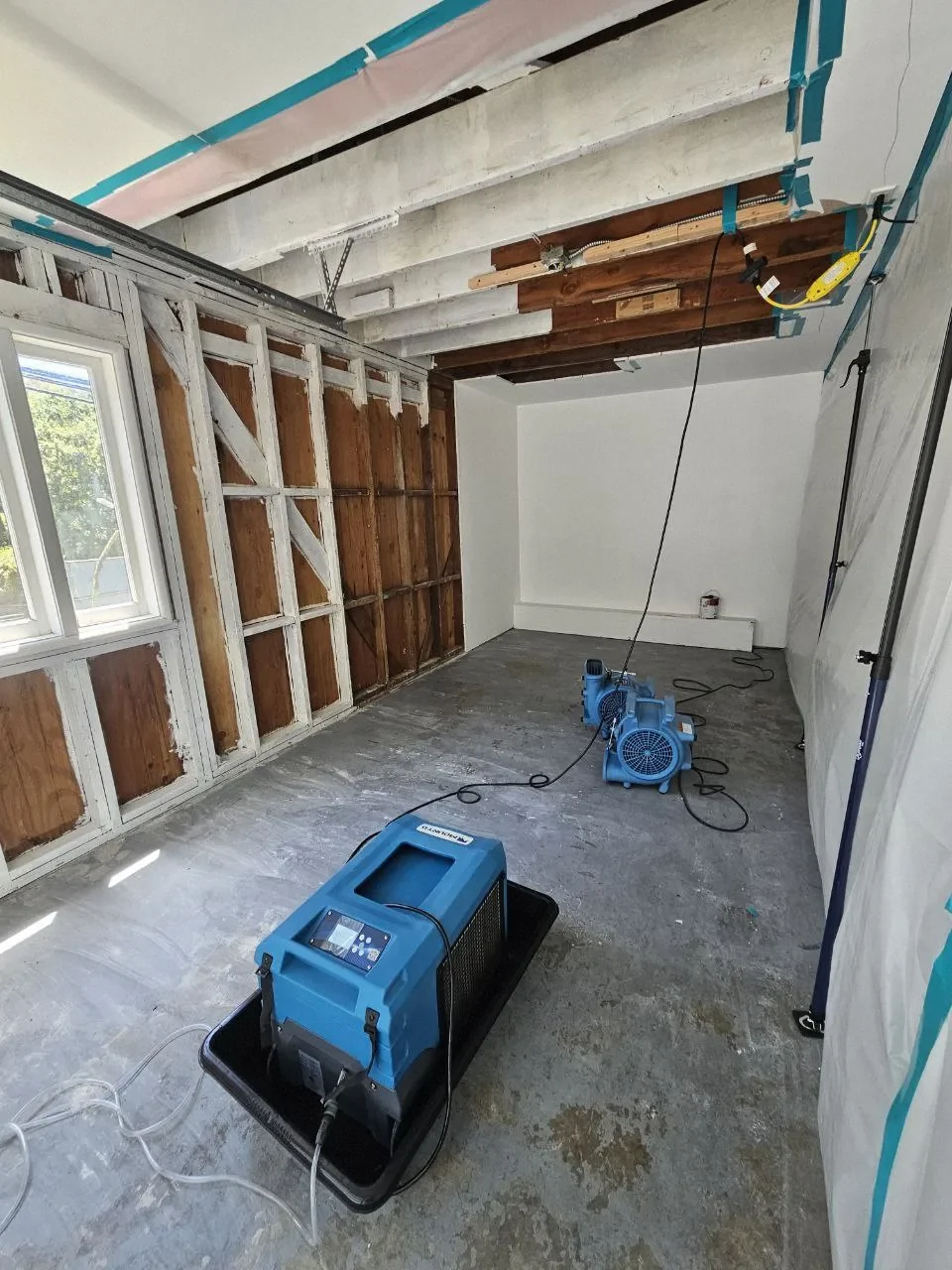
Respond safely to water from outside
Keep away from moving or standing floodwater. It can conceal hazards and may contain sewage. Follow road closures and evacuation instructions; do not drive through water to reach a property. A flooded building may also have damaged electrical equipment or structural components. Wait for appropriate safety clearance before entering and never cross standing water to operate a switch.
Water Damage Guard provides flood cleanup in San Mateo and accepts calls at (650) 550-0619, 24/7. When it is safe to communicate, describe the rooms involved, whether water is still present, and any official access restriction. If a situation threatens life, call 911. The city lists (650) 522-7300 to report flooding or a clogged public drain and (650) 522-7700 after hours.
The first visible wet area may not be the point where water entered. Note whether the water came through a doorway, rose at a drain or appeared beneath a floor, but do not enter an unsafe room to collect information. That initial description helps the people investigating distinguish a public drainage concern from an interior cleanup scope.
Several local sources of residual flooding
San Mateo identifies possible spill from San Mateo Creek near El Camino Real as one source of residual flooding. Its flood overview also identifies capacity restrictions and local drainage at the 19th Avenue Channel. These descriptions concern system-level conditions; neither establishes that a particular building was flooded by a particular creek.
The city also identifies capacity and drainage improvements at Laurel Creek near the Glendale Village area among its remaining projects. Local runoff toward the Coyote Point and Poplar Avenue pump stations is another source in the city's overview. A resident reporting water should give the actual location and conditions to Public Works instead of assuming which system caused it.
A property may have its own entry path even when a broader drainage system is involved. Once safe, record where water appeared, its approximate depth and whether it remained after the rain. A professional can examine the opening or drainage route. This is distinct from asking the city about a public creek, channel, pump station or storm drain.
A project is not a property-specific prediction
The city maintains information about completed and remaining flood protection work. Consult the current official map for the actual address and ask the city about any local flood protection question. A map is important for planning and insurance discussions, but it does not make a property immune to water entry or replace an inspection of the building.
Do not assume that a public drainage project corrects every private condition. A blocked gutter, low doorway, window well or internal drain may create a path into a building even where public improvements have been made. Equally, a wet wall does not prove that a private owner caused the problem. Keep observations separate from the conclusions of the people who inspect the property.
If future work is proposed, ask who controls the affected infrastructure and whether a permit is needed. The person assessing a private drainage change should consider where the water will go, including any effect on neighboring property. The city can explain the requirements for work affecting public facilities or the right-of-way.
Reentry and documenting the loss
Floodwater may have contacted electrical systems, appliances, building materials and personal belongings. CDC advises having a damaged house examined for safety and an electrician check the electrical system before power is turned on again. Do not operate a wet appliance. If the building remains closed by an official or owner, wait for the restriction to be lifted.
When safe access is allowed, photograph the affected rooms and mark down the approximate high-water level and the date. Record what you can observe without moving through contaminated water. Keep the initial record even if the scope changes after a wall or floor is opened; the later findings can be added to the same timeline.
Ask an insurer what documentation it needs if a claim will be made. A standard homeowner policy and flood coverage may treat events differently, and the answer depends on the actual policy and cause. Save communications and receipts. The restoration provider can document its work but cannot determine coverage.
Assess contaminated contents and materials
Outdoor floodwater can carry sewage. Tell the provider where the water came from and whether a sewer backup may have mixed with it. Limit movement between affected and unaffected rooms and keep children and pets away. A cleanup plan should account for the water source and all materials touched, including spaces beneath a floor or at the base of a wall.
Ask which belongings can be assessed or cleaned and which may need disposal. A porous furnishing can retain contamination differently from a hard surface. If an item is to be discarded, ask the insurer about inspection and documentation first when it is safe and practical to do so. Photographs do not require carrying a contaminated item through the rest of the property.
If the building contains older coatings or insulation that may be disturbed, discuss whether lead or asbestos evaluation is appropriate before demolition. The age of a building is a reason to ask, not proof that a particular component contains either material. The repair scope should identify which parts were accessible and which remain concealed.
Drying is not the final repair
Removing visible water reduces one part of the problem. Moisture may remain in subflooring, wall cavities or other assemblies after the surface appears dry. Ask how the remaining material will be assessed and what must happen before finishes are replaced. If water is still entering, a drying plan also needs a source-control plan.
CDC recommends professional attention to a flooded heating or ventilation system; operating a contaminated system can spread material through the building. Electrical equipment needs appropriate evaluation before it is returned to service. Do not rely on a room's appearance as a determination that those systems are safe.
A separate repair contractor may address a damaged pipe, opening or structural component. Ask San Mateo's Building Division which permits and inspections apply to the actual work, and coordinate inspections before work is covered. Keep the cleanup, plumbing and city records together so that the person rebuilding understands what happened in the affected area.
Plan for another storm
After the immediate cleanup, review what was actually observed. Where did water first appear? Was it connected to rain, a blocked drain or a different source? Ask the professional investigating to explain what is known and what remains uncertain before choosing a permanent remedy. Different water paths call for different work.
Check current city information about sandbags and warnings ahead of a storm. Supplies and hours can change. A preparation measure does not override an evacuation instruction, and a person should not remain in a dangerous area to protect belongings. Keep the relevant emergency contacts available to everyone who needs them.
A tenant or condominium resident should notify the owner, manager or association. Shared walls, roofs or drainage may require access to multiple spaces. Keep notices and inspection findings, and ask who can authorize the repair. Water Damage Guard can discuss the cleanup, while the city, utility, owner, insurer and any design professional address their respective responsibilities.
Common questions
Which local waterways can contribute to flooding?
The city identifies San Mateo Creek near El Camino Real, the 19th Avenue Channel and Laurel Creek among sources of residual flooding. That does not establish the cause at a specific address.
Who should I call about public flooding?
San Mateo lists (650) 522-7300 and the after-hours number (650) 522-7700 for public flooding and clogged drains.
Can floodwater contain sewage?
Yes. Treat outdoor floodwater as potentially contaminated and explain the source to the cleanup provider.
Can I turn on a flooded appliance to test it?
Do not operate wet electrical equipment. Arrange qualified evaluation before returning it to service.
Does a map designation establish insurance coverage?
No. Check the current map for the property and ask the insurer or adviser about the actual policy and requirements.
Sources
- City flood overview Checked
- City storm contacts Checked
- CDC flood reentry Checked