Wait for safe access
Do not enter moving floodwater or touch electrical equipment exposed to water. Debris, holes and unstable materials may be hidden below the surface. Follow evacuation and reentry instructions from officials, and call 911 for immediate danger. A property may need a safety assessment before cleanup can begin.
When entry is authorized, describe where water appeared, which rooms it reached and whether water is still present. Note the time and take photographs from a safe position. A visible water line helps document an observation but does not establish the moisture inside a wall or the source of the water.
For a rental or shared building, notify the person responsible for the property and coordinate access. The person reporting damage may not be authorized to approve removal of finishes. Identify an appropriate contact for updates if the assessment reveals additional affected areas.
Two shoreline-area flood mechanisms
OneShoreline describes two hazards in the Millbrae–Burlingame shoreline project area: Bay flooding from storm surge and high tides, and inland flooding when major rain overwhelms creeks and storm drains, worsened by high tides. This describes the project area, not a finding that any particular home will flood.
For a specific property, describe where water entered and the conditions at the time. A plumbing leak, fixture backup and outside runoff may each need a different source repair. A regional description is context for an investigation, not a substitute for examining the actual building.
Follow current storm alerts and official road or evacuation directions. Do not drive through moving water to reach the property. Once the immediate hazard has passed, the appropriate city agency or qualified drainage professional can help identify questions about the public system or private site.
Public Works storm preparation
Millbrae says its Public Works crews clear storm drains and catch basins year-round and before storms. It also says it tests pump stations and equipment and monitors them during storms. These are separate city preparation activities; they do not guarantee that a drain will never be overwhelmed or identify the cause of water entering a particular property.
If a public drain appears blocked, report the observed location to the city using its current storm or Public Works contact. Do not enter a flooded street or remove a cover to investigate. A private drainage assessment and a public maintenance report may both be useful, but they concern different responsibilities.
Keep the report, photographs taken safely and the time of the event with the property record. A description of the direction of water flow can help an investigator, but do not assume a single public feature caused all the damage without examining the site.
A proposed drainage connection
OneShoreline’s fall 2024 presentation describes a proposed shoreline project intended to keep higher Bay water out of creeks and canals while allowing them to drain areas including Landing Lane. Landing Lane is a location in that project discussion, not a neighborhood designation or a guarantee of protection for an individual parcel.
The presentation describes a proposal. Ask OneShoreline or the city for the project’s current status and use current maps and alerts for decisions about a property. The project’s goals do not establish that construction has been completed or that future flooding cannot occur.
After a flood, the immediate work still depends on safe access, the water path and the materials affected. A regional infrastructure plan and an interior cleanup scope operate at different scales. Neither replaces the other or establishes insurance coverage.
Assess and document the affected property
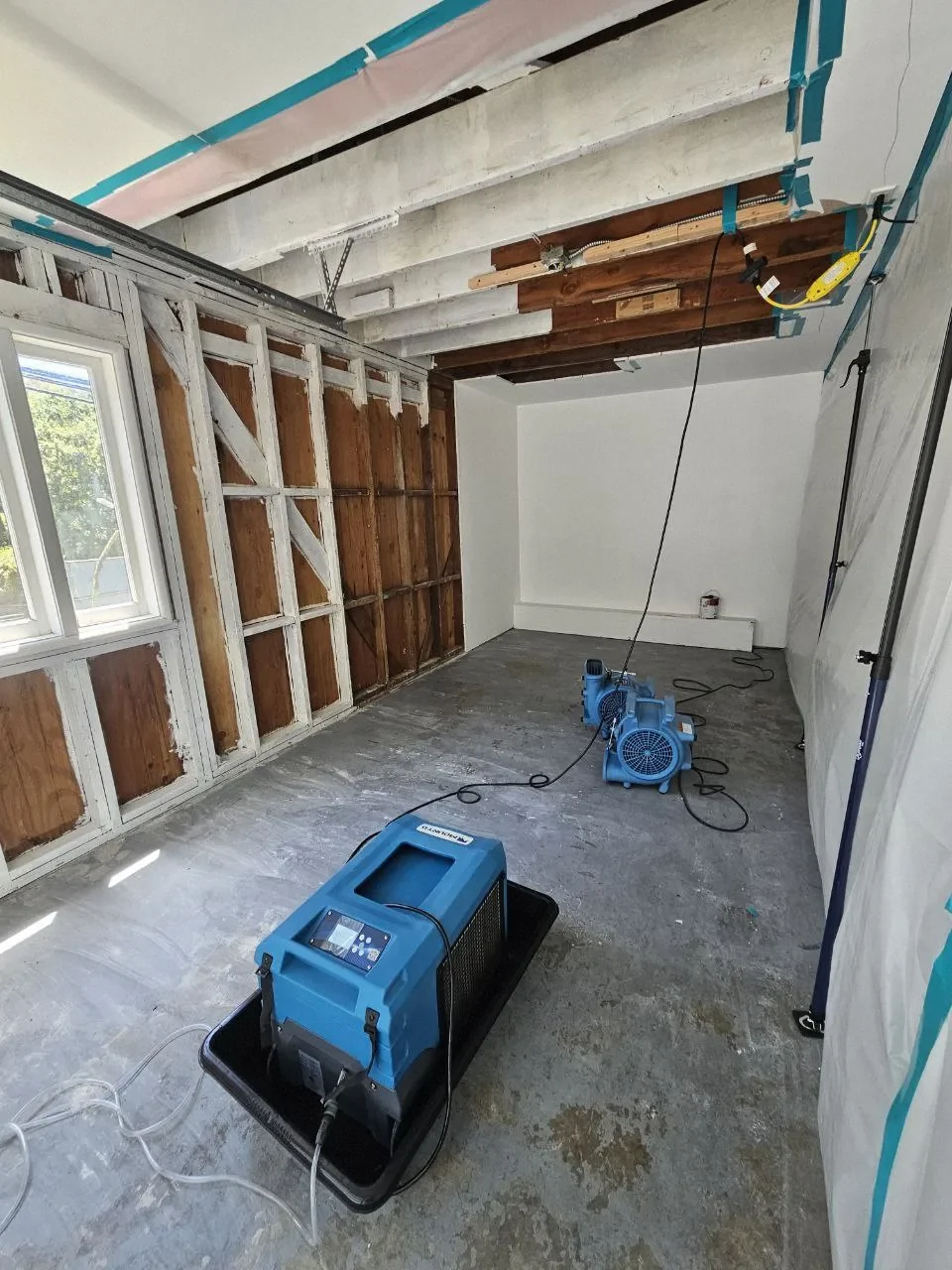
Ask the assessor to identify accessible wet material, any continuing source and spaces that could not be examined. Water may move beneath flooring or behind finishes. A dry-looking surface does not establish that an assembly is dry throughout, and the written scope should describe the actual inspection limits.
Discuss the treatment of belongings separately from the building. Record original locations and visible condition when safe. A wet electrical device needs an appropriate professional assessment before use; documents and furnishings may need different handling. Ask how items will be identified if moved.
If a source repair or building work is needed, identify who performs it and who arranges any permit and inspection. Work that needs inspection should remain accessible until the responsible authority approves the next stage. A changed scope after opening a wall should be explained to the authorized decision maker.
The sequence of assessment can change when hidden materials are exposed. Ask the provider how it will communicate a newly discovered wet area and what permission is needed before expanding the work. The person approving the scope should know which surfaces are included, how adjacent rooms will be protected and what work remains for another professional. If the source remains active, arrange the appropriate repair as part of the overall plan. Replacing a finish before water entry is resolved can leave the same assembly vulnerable to further damage. Keep the initial observations and any revised scope together rather than treating the first estimate as a complete description of an unseen space.
Coordinate the return to use
Ask for a handoff listing work completed, inaccessible areas and repairs assigned to another trade. If water reappears, note the time and location and arrange another investigation. A later entry point may have the same source or a different one.
If insurance is involved, ask the insurer about photographs and disposal before discarding items where safe and practical. Coverage depends on the policy and the claim. Retain estimates, authorizations and any repair and inspection records so the sequence can be understood later.
For a shared property or business, agree on a contact for access and updates. Discuss which entrances and rooms are needed and how occupants will be notified if the work boundary changes. The assessment and cleanup must follow conditions at the actual property.
Call (650) 550-0619 to discuss a Millbrae flood loss. Explain whether water is active, any official access restriction and who can authorize work. A scope and schedule depend on the conditions found.
A property may also need a separate evaluation of its drainage or building systems. Explain whether the water entered through an opening, rose from a fixture or appeared after an appliance failure, but do not rely on the location of a stain as proof of its cause. If a professional recommends grading, plumbing or other reconstruction, ask the city about requirements for that actual work. A permit or inspection decision depends on scope and jurisdiction. A cleanup record can describe the affected materials while the responsible trade documents the source repair. Keeping both records helps an owner understand what has been done and what still needs a decision.
If an area was inaccessible during the first visit, ask when it can be examined and who is responsible for arranging that access. The final record should make the limitation clear.
Common questions
Can I enter while floodwater is moving?
No. Follow evacuation and reentry instructions and stay away from moving water and wet electrical equipment.
What flood mechanisms does OneShoreline identify?
For the shoreline project area it describes Bay flooding from surge and tides and inland flooding when rain overwhelms creeks and storm drains.
Does Millbrae maintain public storm drains?
The city says crews clear storm drains and catch basins year-round and before storms.
What does the city say about pump stations?
Millbrae says it tests pump stations and equipment and monitors them during storms.
Is the Landing Lane project already a guarantee of protection?
No. OneShoreline’s fall 2024 presentation described a proposed drainage benefit; check the current project status and the specific property.