Safety comes before cleanup
Floodwater can conceal debris and electrical hazards. Do not enter a flooded room near energized equipment, cross moving water or approach a damaged slope. Follow official evacuation and reentry instructions. If an immediate threat to life exists, leave the area and call emergency services.
Water Damage Guard serves San Bruno from San Carlos and takes calls at (650) 550-0619, 24/7. Tell us where water entered, whether it is still flowing and whether mud or sewage may be involved. A cleanup scope depends on the actual source, materials and access after the building is safe to enter.
If officials have restricted entry, share that information when arranging help. A damaged ceiling or wall may remain unstable after standing water recedes. Photograph or inventory belongings only from a safe location, and avoid operating wet appliances or switches.
A drainage problem near Cupid Row
San Bruno reports that backflow from the Cupid Row drainage canal has flooded the 7th Avenue area. The City describes a combination of heavy rain and high tide or high channel water levels that can make drainage more difficult. This is a documented local mechanism, not proof that a particular property flooded or will flood.
For an affected building, identify whether water arrived from outside, through a drain or from a damaged opening. More than one pathway can occur during a storm. Do not enter flowing water to trace the source; record observations after conditions are safe and provide them to the people evaluating the property.
If a retaining feature or embankment has moved, keep clear and seek a site-specific professional assessment. A temporary barrier may redirect shallow water in some circumstances, but it does not establish that the underlying drainage issue has been resolved.
Maps and local infrastructure
San Bruno says FEMA’s coastal analysis identified numerous Belle Air residential properties as potentially subject to coastal flooding, and describes a final map determination effective in 2019. Check the current map for the individual address; a neighborhood description is not a parcel determination.
OneShoreline says it operates two pump stations and a tide gate that convey stormwater from San Bruno Creek to the Bay. It also reports targeted sediment removal in the creek in October 2025 under its bayside creek maintenance permits. Infrastructure and dated maintenance actions are not a guarantee of protection for any individual home.
A project, map or past repair supplies context while the cleanup plan must follow present conditions. Ask the City or appropriate agency about current local drainage information and official warnings. If water has entered, investigate the actual route into the building and the materials it reached.
Water, mud and affected materials
Outdoor floodwater can carry soil and contaminants through doorways and across flooring. The affected materials, time wet and building use influence what can be cleaned and what may need removal. Tell the people assessing the property where the water reached and avoid moving affected belongings through clean rooms.
After accessible water and debris are removed, moisture can remain in layers below a floor or inside a wall. A surface that appears dry is not a complete evaluation. Ask how the assembly will be checked and whether limited opening is needed before new finishes are installed.
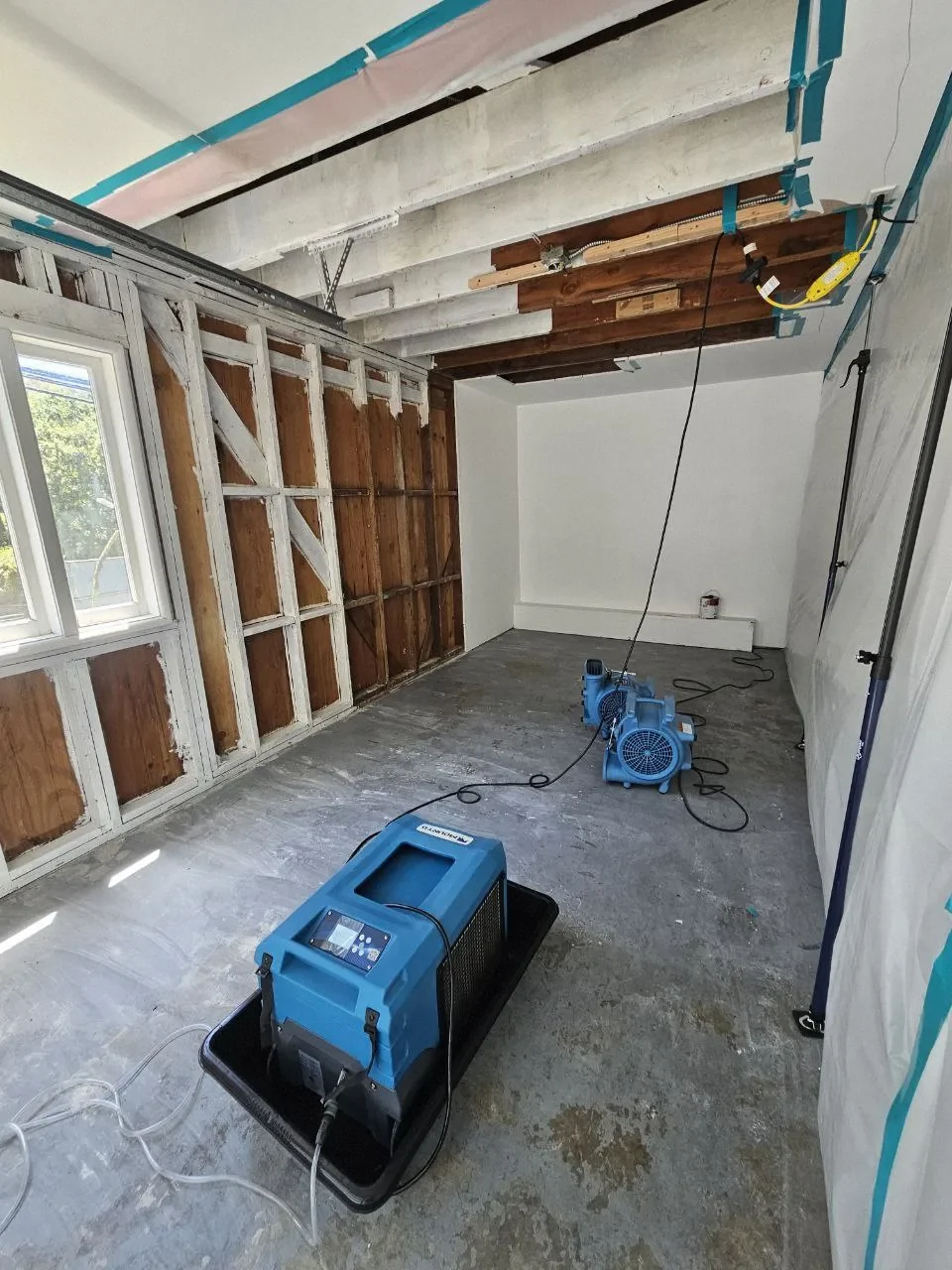
Do not use household fans as the only treatment for contaminated water or disturbed debris. Discuss separation of affected rooms, safe equipment placement and contents handling with the cleanup team. If sewage may have mixed with floodwater, say so before work begins.
Connect the cleanup with permanent repair
The source of water entry may require an exterior drainage, roof, plumbing or structural repair by another trade. Extraction removes accessible water but does not repair the pathway. Coordinate the work so that materials are not restored while the source is still active.
If a wall or floor is opened and a concealed defect is found, ask for an updated scope. Describe the proposed repair to the Building Division and arrange any required inspections before regulated components are covered. Keep photographs and a list of inaccessible areas for the people completing the next phase.
Where an exterior drainage change is proposed, seek a site-specific design and determine whether City approval is needed. Water should not be redirected onto a neighbor’s property or across a required exit. Temporary measures are not proof of a permanent solution.
Residents, contents and records
For a rented or shared building, notify the owner or manager and coordinate access to adjacent spaces where water may have traveled. Identify the person who can authorize work and provide updates. Occupants should not be asked to cross contaminated water or handle unsafe material to prepare for an inspection.
Keep a timeline of the storm, entry and repair. Photograph conditions and list belongings only when safe. If insurance may apply, ask the insurer what documentation is needed for emergency work or temporary arrangements. Coverage and reimbursement depend on the individual policy and its review.
Before discarding damaged contents, ask about documentation requirements if they can be retained safely. A specialist may be needed for documents, electronics or other sensitive items. Keep the decisions with the project record so the owner and repair contractor understand what was evaluated.
Organize the assessment and repair
Describe whether the water came from a doorway, drain, wall or roof, and whether the level changed during the storm. A useful timeline records what occupants saw without assuming the cause. If water is still entering, make that clear when requesting help so that source control can be considered alongside cleanup.
Identify the person who can provide access and authorize work. In an apartment or shared building, coordinate with the manager before inspecting an adjoining unit or common area. Keep a safe route open for occupants and emergency responders, and do not ask anyone to cross standing water near electrical equipment.
Ask the team how affected rooms will be separated from clean spaces, where equipment can be placed and how debris will be removed. The answer depends on the source and layout. A room that appears unaffected may still need examination if water traveled beneath a floor or through a shared wall.
When a plumbing or exterior drainage contractor is needed, agree on how the source repair will be coordinated with drying. A temporary measure can limit further entry while a permanent repair is planned, but it should not be mistaken for that repair. Ask the City about permits or inspections that apply to the proposed work.
Retain the cleanup scope, photographs, invoices and information about any inaccessible area. If an insurer is involved, ask it what records are required and whether the policy covers the specific loss. Temporary accommodation and contents handling may require separate decisions; confirm those decisions with the relevant provider.
Before finishes are replaced, ask what materials were checked and what work remains. If conditions change or more damage is discovered, request an updated scope. The purpose of the record is to help occupants, owners and trades understand the work, not to treat an uninspected area as proven dry.
Confirm safe access before each phase.
A clear handoff after cleanup
Ask what was removed, cleaned and checked, and whether any area remains inaccessible. A persistent odor or damp surface should prompt investigation rather than a quick cosmetic cover. The cause may still require work outside the restoration scope.
Coordinate any plumbing, electrical or structural work with qualified trades. Do not restart wet equipment simply because standing water has receded. An inspection and any required City approval should precede closure of regulated work.
OneShoreline and City studies describe specific creek and drainage conditions, while the cause at an individual property may be different. The practical next step is to assess the present building, address its water pathway and retain a clear record of the completed work.
Common questions
What has the City reported near Cupid Row?
San Bruno describes canal backflow affecting the 7th Avenue area, especially when heavy rain and high water levels hinder drainage.
Does the FEMA analysis classify every Belle Air home the same way?
No. The City describes an analysis identifying numerous potentially affected properties. Check the current map for the specific address.
Who operates the San Bruno Creek tide gate?
OneShoreline says it operates the tide gate and two pump stations that move stormwater from the creek to the Bay. That infrastructure does not guarantee protection at a specific property.
Has San Bruno Creek received sediment removal?
OneShoreline reports targeted work in October 2025 under its bayside creek maintenance permits.
Can I start cleanup while water is near a panel?
Stay away from wet electrical equipment and arrange for a qualified person to make the area safe. Follow official reentry directions.