Before anyone enters a flooded room
Floodwater can conceal debris, uneven surfaces and electrical hazards. Stay out of moving water and keep away from wet panels, outlets and appliances. If a structure, ceiling or slope may be unstable, leave it alone until qualified people can assess it. Follow official directions about evacuation and reentry; call emergency services for an immediate threat to life.
Water Damage Guard serves South San Francisco from San Carlos and accepts calls at (650) 550-0619, 24/7. Describe where water entered, whether it is still flowing, and whether the water contains mud or may include sewage. A safe inspection and a source-specific plan are needed before the scope of cleanup can be determined.
If officials have restricted access, share that information when arranging service. Do not attempt to turn power back on or operate wet equipment. Once access is permitted, record the affected rooms and belongings from safe positions and identify the person who can authorize work.
Different local drainage areas
OneShoreline says San Bruno Creek collects stormwater from parts of South San Francisco as well as San Bruno before draining toward the Bay. This is separate regional context from the lower Colma Creek project. The watershed serving a particular property and the route of water into its building must be checked individually.
A 2021 San Francisco Bay Restoration Authority project description identified seven City-operated Public Works pump stations along a lower Colma Creek reach between Linden Avenue and the Bay. That figure is a historical description, not a current count or proof of protection at a property. Drainage facilities can affect the wider system while a doorway, wall or roof remains its own entry path.
For any flood, note whether water came over the ground, through an opening, from a drain or from above. A visible wet room does not establish which system failed. Do not investigate a storm drain, creek bank or roadway where current conditions make access unsafe.
Infrastructure planning and a documented storm loss
In February 2025 the U.S. Army Corps described a partnership to design and construct flood walls at the South San Francisco–San Bruno Water Quality Control Plant and Pump Station 4. This is an infrastructure project; it should not be read as a statement that work is complete or that a particular residence is protected.
South San Francisco’s record of a January 2023 storm describes a four-unit rental building whose roof was damaged, with water intrusion affecting electrical systems. The building was yellow-tagged. That incident is one documented case, not a claim that other buildings have the same damage. It illustrates why a roof opening and wet electrical equipment need separate safety decisions.
If a roof or exterior opening is damaged, arrange safe temporary protection and assessment rather than climbing onto a damaged roof. Once the source is controlled, inspect the affected interior and adjacent materials. The route of water may extend beyond the first stain.
Removing floodwater and debris
Outdoor floodwater can bring soil and other contaminants into a property. Tell the people assessing the loss how long water remained and what it touched. A cleanup plan should consider porous materials, hard surfaces and contents separately, as well as the ability to isolate affected areas from rooms that remain in use.
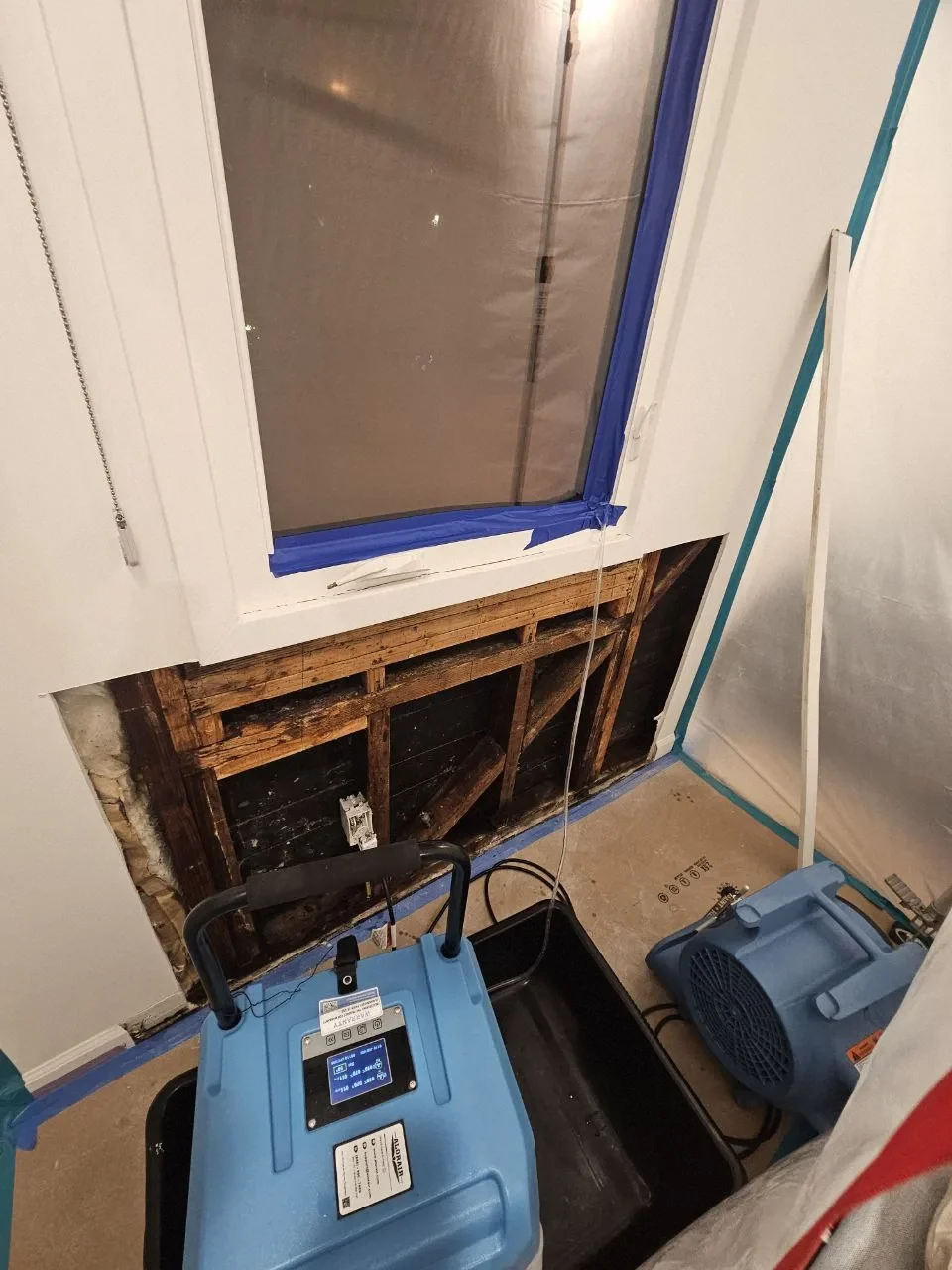
After safe access and source control, accessible water and debris can be removed. Drying then addresses moisture in the materials that remain. A surface that appears dry may conceal a wet layer underneath, so ask how the assembly will be evaluated before a new floor or wall finish is installed.
Avoid carrying soiled belongings through unaffected spaces and do not use household fans as the only treatment for contaminated water. The work should be adapted to the materials and the source rather than assuming that every flood is equivalent to a clean supply leak.
The repair may involve more than one trade
A flood can damage electrical components, plumbing, floor finishes and exterior drainage at the same time. Different people may be needed to make utilities safe, identify the source, dry the structure and reconstruct it. Ask who is responsible for each step and how information will be shared as conditions are discovered.
If a slope, retaining wall or drainage feature contributed to entry, a site-specific review can identify possible corrections and where water will go after a change. Avoid directing water onto a neighbor’s property or blocking an accessible exit. Temporary protection and a permanent drainage repair are separate decisions.
Discuss proposed building, plumbing or electrical repairs with the City and arrange any required inspections before closing regulated work. If the scope expands after a wall or floor is opened, update the project description rather than assuming an earlier approval covers everything.
Contents, residents and documentation
If the property is rented or shared, inform the owner or manager promptly and coordinate access to adjoining units and common spaces. Water may travel beneath a floor or through a shared wall. Keep people and pets away from affected materials, and ask before moving belongings through clean areas.
Create an inventory and photograph the loss only when safe. Ask an insurer what documentation it needs for emergency work, damaged contents and any temporary accommodation. Coverage and reimbursement depend on the individual policy and the insurer’s review. Keep receipts and the repair diagnosis with the claim records.
If a room cannot be occupied, identify a contact who can authorize work and receive updates. Note which spaces remain inaccessible and which repairs will be performed separately. An organized handoff helps the restoration team, owner and repair contractor work from the same description of the damage.
Plan access and next steps with the people involved
When a flood affects more than one room, agree on a safe route for the people inspecting the property. Let the team know about restricted areas, pets, medical equipment and belongings that need special handling. A manager or owner may need to coordinate access to adjoining units. No one should enter a restricted or electrically unsafe space merely to prepare for cleanup.
Make a simple timeline of the storm and the water entry. Note whether water rose from a drain, entered under a door or arrived through a damaged roof, and whether the source has stopped. If the cause remains uncertain, record that uncertainty. A later inspection can compare these observations with the building layout and drainage conditions.
Before approving reconstruction, ask how the source repair, moisture assessment and any required inspections will be sequenced. If the cleanup uncovers a new area of damage, discuss how that changes the plan. Preserve the records so the person installing replacement materials knows which areas were opened, assessed or left inaccessible.
For a business, identify equipment, records and inventory affected by water and agree on safe access for staff. Do not restart electrical or mechanical systems simply because the floor appears dry. Have the relevant qualified trade assess them, and retain a written record of what was checked and what still needs attention.
Confirm safe access first.
After the visible water is gone
A persistent damp area or odor should prompt investigation of the source and affected materials. A fresh coat of paint cannot establish that moisture beneath the surface has been addressed. Ask what was cleaned, removed and checked, and what remains outside the restoration scope.
If an exterior repair is scheduled separately, coordinate it before restoring vulnerable finishes. Keep photographs and any inspection records for the people completing that repair. Where a building or utility system was damaged, ask the appropriate authority and qualified trade before returning it to service.
A creek project or an account of a past storm provides local context; neither is a substitute for a current assessment of the property. The cleanup plan should follow the observed water route and the actual condition of the materials.
Common questions
Does San Bruno Creek drain part of South San Francisco?
OneShoreline says the creek collects stormwater from parts of South San Francisco. The drainage and flood hazard at an individual address require a separate check.
Are the lower Colma Creek flood walls complete?
The Army Corps described a 2025 partnership to design and construct walls at the water quality plant and Pump Station 4. Confirm current project status; the announcement does not establish completed protection.
What happened to the rental building in the January 2023 storm?
The City reported roof damage, water intrusion affecting electrical systems and a yellow tag at a four-unit building. It was an individual incident.
How many lower-creek pump stations did the 2021 study describe?
The 2021 project description identified seven City-operated stations along the specified reach. It is a historical count and may not reflect the present system.
Can I enter a flooded room to turn off an appliance?
Stay out of water near electrical equipment and arrange qualified help. Follow officials’ instructions about entry.