Stay clear of unsafe floodwater
Floodwater can carry mud and other contamination, hide uneven ground and reach electrical equipment. Do not enter moving water or a flooded room containing energized equipment. Leave an unstable structure or slope and follow directions from emergency officials. If there is an immediate threat to life, call emergency services.
Water Damage Guard serves Brisbane from San Carlos. Call (650) 550-0619, 24/7, to discuss a flooded property once it is safe to arrange access. Describe where water entered, whether it is still rising, what it contacted and whether officials have restricted entry. A useful cleanup plan begins with actual conditions at the site.
An exterior barrier or a temporary pump may be considered in some situations, but neither is a substitute for a safe assessment. Do not place equipment in water near electrical hazards, and do not approach a damaged retaining wall or moving soil. The source and route of water need attention before affected materials are restored.
What Brisbane’s past storm shows
Brisbane’s General Plan records that debris flows occurred in portions of several planning subareas during the 1982 storm. This is one dated event, not a prediction that a particular property will flood. It demonstrates why flood response may include both water and unstable soil, with separate expertise needed for each.
Brisbane’s General Plan describes Central Brisbane soils as subject to moderate-to-high erosion rates and notes that erosion and slippage potential increase on steeper slopes. The description applies to a planning area; it does not diagnose a particular hillside or retaining wall. If new cracks, leaning or soil movement are observed, keep clear and ask a qualified professional to evaluate the site.
Record the entry point and the direction from which water or mud arrived when it can be done safely. The path may involve a roof discharge, paved area, slope or drainage feature. A stain inside a room may be some distance from the opening where water entered.
A documented drainage constraint in Baylands
The City’s April 2025 draft Baylands environmental report describes a specific drainage condition near Bayshore Boulevard: during a large storm, water can exceed the Levinson detention basin’s capacity and flow over its berm onto the roadway. This is a description of that drainage area, not a designation of a residential neighborhood or a conclusion about another site.
The same report is a planning document, and a modeled or described condition should not be converted into a guarantee about future weather or the safety of a property. If a building floods, establish the actual water pathway and seek a property-specific assessment. Keep emergency routes clear and follow official notices about closures.
Flooding that begins outside can deposit silt, debris and potentially contaminated water inside. Tell the cleanup team that the water came from outdoors and identify the areas it touched. Do not move soiled belongings through unaffected rooms before a plan for handling them is established.
From extraction to drying and repair
After safe access is established and water entry is controlled, a cleanup scope can address standing water, debris and affected materials. The work depends on the source, depth and duration of flooding as well as the building’s construction. A porous material soaked by outdoor water may need a different response from a hard surface.
Water can move beneath flooring or into a wall even when the visible flood mark is limited. Ask how the affected assembly will be evaluated and what must be opened to understand its condition. Drying should be coordinated with any work needed to stop the exterior entry; repairing finishes while the source continues can repeat the loss.
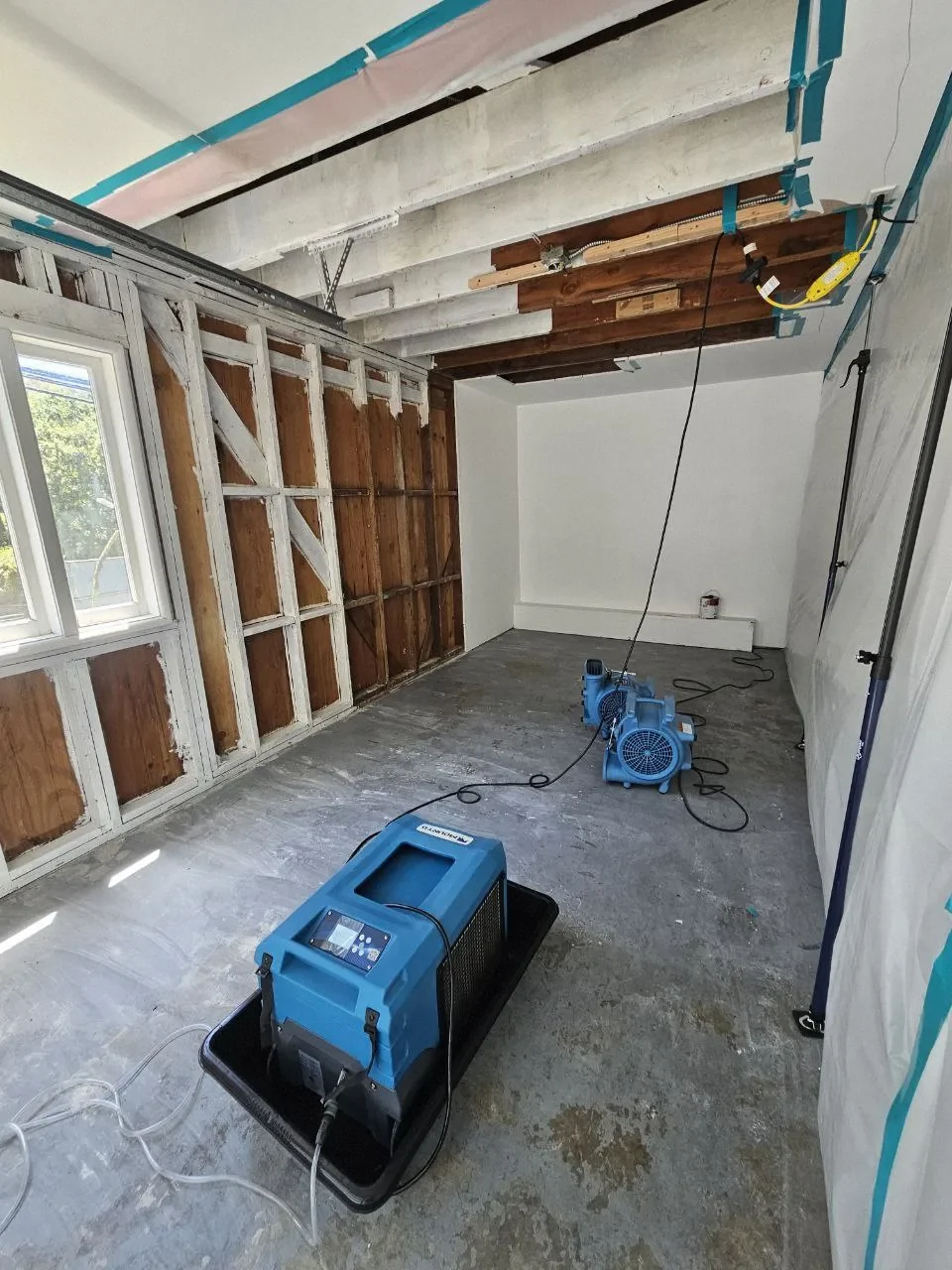
Avoid using household fans as the only response to dirty water or disturbed debris. Protect unaffected spaces and discuss how equipment and removed materials will be handled. The cleanup team should explain the scope and any limitations when an area cannot be reached safely.
A permanent drainage project may require review
Brisbane’s stormwater guidance says a standalone single-family or accessory dwelling project creating or replacing less than 10,000 square feet of impervious surface uses a small-project checklist and at least one site design measure. The rule concerns qualifying development projects, not every emergency extraction. Confirm which standards and approvals apply to the actual proposed work.
An engineer or drainage professional can assess whether grading, a drainage feature or a retaining-wall repair addresses the observed pathway without creating a problem elsewhere. Avoid directing water toward a neighbor or across an accessible exit. Site conditions, permits and the location of public infrastructure can affect the design.
If work must occur in the public right-of-way, ask Public Works about the necessary authorization. Plan inspections before covering regulated work and keep the approved information with the repair records. A temporary barrier placed for a storm does not establish that the permanent drainage problem has been resolved.
Occupants, contents and documentation
Notify the owner or manager if the affected property is rented or shared. Explain whether the water has reached a neighboring unit, common area or route used by other occupants. Agree on access and who can authorize work. Do not assume a dry-looking room beyond a wall was unaffected when water may have passed underneath.
Photograph damage and make an inventory only where conditions are safe. If an insurer is involved, ask what evidence it needs, whether a particular policy covers the event and how emergency work should be documented. Coverage and temporary living expenses depend on the policy and insurer’s review. Keep receipts and written instructions.
If a room cannot be occupied, coordinate temporary arrangements with the responsible housing and insurance contacts. Record what has been removed, what remains to be assessed and which repairs belong to a separate contractor. This helps prevent a gap between cleanup and reconstruction.
Describe the loss before cleanup begins
A short timeline helps distinguish continuing water entry from damage left by an earlier event. Note when the rain began, when water was first observed, whether it rose or receded, and which doors, drains or walls were involved. If the entry point is unknown, say so. A safe inspection may reveal a route that was not visible during the storm.
Tell the people assessing the property about building access, shutoff locations, occupants and any areas already restricted by officials. If an adjoining unit or shared corridor is affected, coordinate with the manager before moving equipment or contents through that space. Keep a clear path for occupants and emergency responders.
Discuss how the cleanup team will separate affected contents, remove debris and assess moisture below finishes. Ask which parts of the repair require another trade or review by the City. When hidden conditions change the scope, request an updated explanation and keep it with the project record.
Keep the property owner or manager informed of new observations, especially if water continues to enter after the visible flood has receded.
Before the room is returned to use
Confirm that the route of water has been addressed and ask how the affected materials were evaluated after cleanup. If a wall or floor was opened, coordinate required inspections before replacement finishes are installed. Retain photographs and records showing the areas assessed and any inaccessible spaces.
Persistent dampness or odor is a reason to investigate the source and condition of the affected material; it is not proof by itself of a particular hidden defect. A written handoff between the owner, cleanup team and repair trades can identify what still needs work and who is responsible for arranging it.
Every flood has its own source and extent. A historical storm or area-wide planning study supplies context, while the safe repair decision comes from the particular property and current conditions. Ask questions about the scope before work proceeds and update it if new damage is discovered.
Common questions
What happened on Brisbane hillsides in the 1982 storm?
The General Plan records debris flows in portions of several planning subareas during the 1982 storm. That historical account does not establish risk at another property.
Does the Baylands report apply to every Brisbane home?
No. It describes drainage conditions in a specific Baylands area near Bayshore Boulevard during large storms.
What does the General Plan say about Central Brisbane slopes?
It describes erosion and slippage potential increasing on steeper slopes. A particular wall or property still needs a site-specific evaluation.
Do all flood cleanups need Brisbane’s small-project checklist?
No. The City’s checklist applies to qualifying development projects; ask the City about the proposed permanent work.
Can the room be repaired as soon as floodwater recedes?
First address the entry path, evaluate affected materials and coordinate required inspections. A visible dry surface may conceal remaining moisture.