Before entering a flooded area
Floodwater can conceal electrical hazards, sharp debris, damaged flooring or contamination. Keep people and pets out of the affected area. Do not cross standing water to reach a breaker or touch an appliance that may be energized. If the building or ground appears unstable, leave and contact the appropriate authority. An immediate threat to life calls for 911.
Once access is safe, describe where water entered, how high it reached and whether it is still arriving. An exterior runoff problem, an overflowing drain and a burst supply line may all produce water on the same floor, but their sources and cleanup requirements differ. Photograph from a safe location and preserve the timeline. A restoration assessment should establish what can be inspected and which conditions remain unknown.
A local slope and drainage example
A March 2026 Caltrans notice describes winter slope failure and a failed culvert along State Route 35 in Daly City, with proposed work intended to protect the road and property below the slope. This was a specific documented project. It does not establish that the proposed repairs are complete or that every hillside property faces the same condition.
For an individual property, look at the observed path of water rather than drawing a conclusion from proximity to a slope. Note whether runoff approached a wall or doorway, whether soil or debris moved and whether the condition began during a specific storm. If a wall, slope or footing appears unstable, keep away and have the condition evaluated by a qualified professional. Excavation or pressure washing could make the situation worse or obscure useful evidence.
Grading is a separate decision from interior cleanup
Daly City requires a grading permit for earth-disturbing work that may cause erosion, subject to the city’s listed exemptions. One exemption has several conditions, including limits on natural and finished slopes and no blocked or modified drainageway. A project must meet the stated criteria rather than only one item on the list. Ask the city about the actual work before moving soil to redirect water.
Extracting water inside a building does not determine whether a proposed exterior grading project is permitted or appropriate. A permanent correction may require a site-specific design that accounts for where water will go, nearby structures and existing drainage. Keep temporary cleanup and future site work distinct in the plan, while coordinating them so that the source is not ignored.
Bring the building office a description of the proposed earthwork, approximate location and any known drainage features. If a professional is preparing a plan, explain where water was observed and whether the condition recurs. A permit decision depends on the actual proposal and city requirements, not a general statement that all yard work is exempt.
Retaining walls and the public right-of-way
Daly City identifies certain retaining walls among work that can require plan review, and its front-yard material notes that a retaining wall may require a building permit. Whether a particular wall needs review depends on its design and circumstances. A wall that appears to hold soil is not necessarily designed to stop water; drainage, structural support and waterproofing need to be assessed for the actual site.
The city also requires an encroachment permit for work in the public right-of-way, including under-sidewalk drains and installation or repair of sanitary sewer laterals. A homeowner considering a drain outlet near a sidewalk should verify its location and the applicable permit before work begins. An interior extraction contractor cannot authorize a change to a public sidewalk or city infrastructure.
If water has left soil or debris beside a wall, record the condition from a safe location and preserve photographs before arranging cleanup. A qualified professional can determine whether material should be removed and whether the wall or adjoining ground needs evaluation. The restoration plan should acknowledge where access is unsafe or outside the agreed scope.
Water extraction and material decisions
When the source has been controlled and entry is safe, extraction can remove standing water from accessible surfaces. Remaining moisture may be present under flooring, behind baseboards or in lower wall cavities. The route and source of water matter when deciding how to handle the materials. A clean supply leak, storm runoff carrying debris and a sewage backup are not interchangeable cleanup situations.
Contents should be separated according to their condition and the owner’s instructions. Discuss items that may be cleaned, protected or removed, and record decisions before disposal where it is safe to do so. Heavy wet materials can make floors difficult to navigate. Establish a work path that avoids carrying contaminated debris through unaffected areas unnecessarily.
An assessment may reveal that flooring or wall material must be opened to reach trapped water. Agree on the reason for an opening, the limits of access and who will repair the underlying source. If additional damage is found, update the scope instead of assuming that the first visual inspection captured everything.
Drying after the immediate water is gone
Drying is not simply a matter of making the floor look dry. Different materials hold and release moisture at different rates, and an enclosed assembly may remain wet after an exposed surface feels dry. Measurements taken over time can guide the plan when interpreted with the construction and the condition of nearby materials. Areas that cannot be reached should be identified as such.
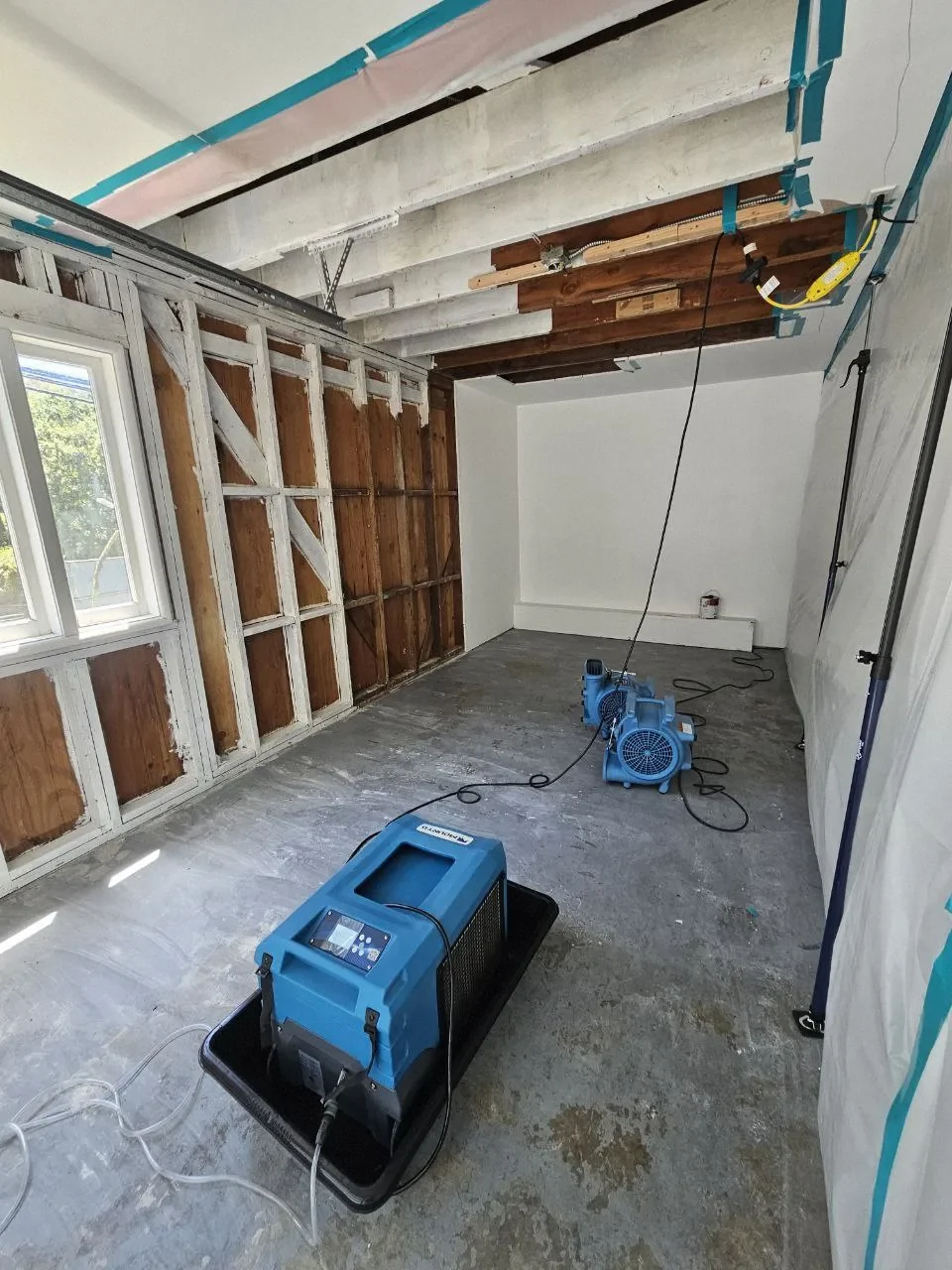
Equipment placement must account for access, safe power and the condition of the occupied building. Discuss where occupants can travel, whether rooms will be unavailable and who will check equipment. A change in the source condition, such as a renewed leak or additional storm entry, may require the plan to be revised.
Before closing a wall or replacing finishes, confirm that the water source has been addressed and that affected materials are ready for the next stage. A repair that blocks an inspection or conceals continuing water can lead to avoidable rework. The person responsible for the project should coordinate those decisions with the relevant trades.
When water may contain sewage
If a toilet, shower or floor drain is releasing wastewater, limit access and avoid contact with the water or contaminated items. Stop using the affected plumbing if it can be done safely, and notify the owner or manager. Record which fixtures are involved and whether the level changes when plumbing is used. This information can help the appropriate sewer or plumbing professional locate the blockage.
Do not use ordinary household fans to spread residue through the property. The affected materials and contents need an assessment that accounts for the source. Cleaning decisions should distinguish a hard surface that can be treated from porous material that cannot be adequately cleaned. The location of a blockage must be established before assigning responsibility for the repair.
Preparing for the next storm
After the immediate recovery, review the path water took and whether the correction has been completed. A door threshold, roof opening, drainage inlet or slope can each require a different specialist. Keep photos and a record of repair dates so that a later inspection has a useful history. If water returns, note whether it follows the same path or appears in a different area.
For a rental or shared property, agree on who will report a recurrence and who can authorize access. A property manager may need to coordinate common areas or neighboring units. Avoid promising that any single improvement eliminates future flooding; site conditions, maintenance and the severity of a storm all influence the result.
Water Damage Guard accepts calls 24/7 at (650) 550-0619. Tell us what is affected, whether water is still entering and whether access is safe. A specific scope, including drying and any removal, depends on the conditions observed at the property.
Common questions
Is it safe to enter standing water?
Avoid water that may contact electrical equipment or conceal hazards. Wait for qualified help when the area is unsafe.
Does a flood in a garage identify the cause?
No. Runoff, a drainage problem or plumbing can produce similar symptoms; the entry path must be checked.
Can I move soil to redirect water without checking?
Daly City regulates grading that may cause erosion and lists specific exemptions. Ask the city about the proposed work.
Does a retaining wall automatically stop runoff?
No. The wall and its drainage need to be evaluated for the actual property.
Can Water Damage Guard be contacted after hours?
Yes. Call (650) 550-0619, 24/7, to discuss the conditions and next steps.