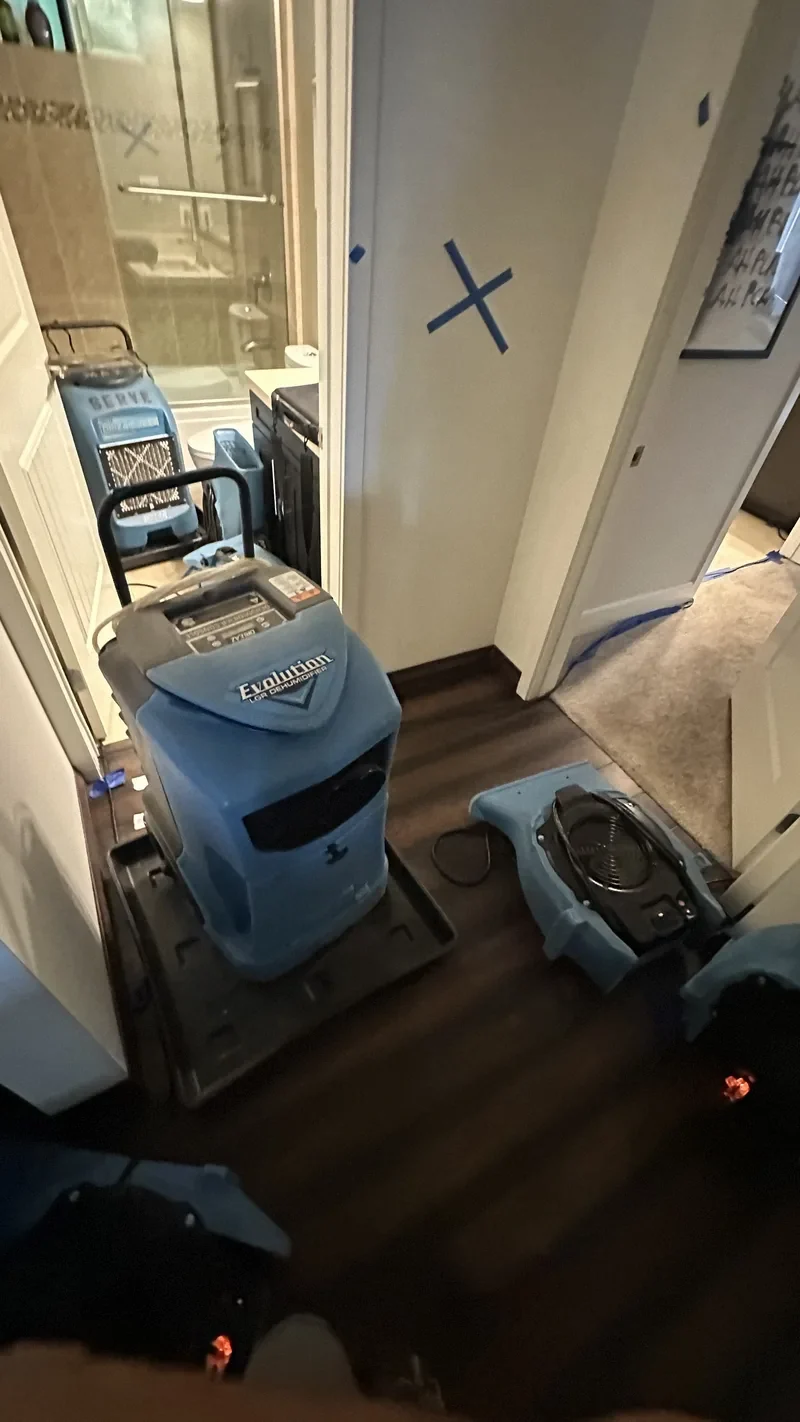
Water damage in San Carlos: make the area safe
When water is entering a building, move people away from electrical equipment and unstable areas. Do not cross standing water to reach a panel or touch a wet appliance. If a valve can be reached without entering a hazardous space, closing it may stop a fixture leak. Otherwise leave the area and ask the utility or a qualified electrician or plumber for help. Call 911 when there is an immediate threat to life.
Tell the property owner or manager what happened and where the water is visible. Take photographs from a safe location and record the time, the suspected source and any steps already taken. If a ceiling is sagging or a floor feels unstable, stay clear and have it evaluated. Avoid treating a visible stain as proof of the source; water can move before it appears on a finished surface.
Water Damage Guard is based in San Carlos, CA 94070 and accepts calls at (650) 550-0619, 24/7. Describe whether water is still entering, which rooms are affected and whether sewage or damaged wiring may be involved. An assessment determines the actual scope, including areas that may be hidden behind finishes.
Water service and drainage in San Carlos
Cal Water includes San Carlos in its Bayshore District service area. The Mid-Peninsula Water District also serves portions of the city, so identify the utility for the property rather than assuming every address has the same provider. For a concern involving a public meter or supply, contact the responsible utility and avoid operating equipment you do not control.
A Belmont Creek restoration proposal identifies the creek as a storm-drainage collector for San Carlos, Belmont and parts of San Mateo County. The existence of a creek or a citywide drainage system does not establish the flood risk at a particular parcel. A roof opening, private drain, surface runoff and plumbing leak are different possible routes that require investigation on site.
For winter 2026–27, the county listed a self-fill sand pile at 1000 Bransten Road with ten bags after the opening date. The published list said the opening day was to be determined. Check the current status and supply before going; the listing does not establish that sandbags are already available. Stay out of floodwater and follow official instructions during a storm.
- Cal Water lists San Carlos in its Bayshore District service area.
- Belmont Creek collects storm drainage for San Carlos as well as Belmont and San Mateo County. (archived copy)
- The county’s winter 2026–27 list identifies the sand pile at 1000 Bransten Road, with ten self-fill bags after the opening date.
- Flood cleanup in San Carlos
- Flood restoration process
What inspection and drying involve
Water can travel under a floor finish, behind a cabinet or through a wall cavity. The first visible mark may be some distance from where a line failed. During an assessment, identify the source if possible, the areas affected and any places that cannot be accessed without opening an assembly. Ask for the observations and limitations in plain language.
Extraction removes standing water; drying addresses moisture remaining in materials and air. Depending on the condition, the work may include moving contents, selecting drying equipment and monitoring progress. The water source and electrical condition affect the sequence. Drying should follow source correction, because an active leak can continue to wet the same assembly.
Different materials may need different treatment. A hard surface, insulation, a cabinet base and an upholstered item do not respond identically to water or contamination. Ask why an item is proposed for cleaning, drying or removal, and document valuable belongings from a safe location. The proper scope depends on what is found rather than a fixed number of days or an assumption that every wet component must be discarded.
Before work begins, discuss where contents can be stored without being exposed to more moisture. Ask how the team will protect an unaffected path through the building and how the owner will be informed if an inaccessible space needs to be opened. These decisions depend on the layout and the condition of the property.
Sewer, laterals and right-of-way work
San Carlos says a Public Works encroachment permit is required before work in the public right-of-way or a utility easement. Its examples include sewer lateral and drainage work. A private cleanup inside a home is not automatically the same as work in a street or easement; ask Public Works and the responsible trade about the exact location and proposed scope.
The city also says grading and hauling are not allowed from October through April unless the city engineer approves an exception. This is a seasonal condition for the work described in the city’s permit information, not a rule that emergency water extraction must wait until spring. Confirm current requirements and any exception for a proposed exterior project.
If sewage has backed up, keep people and pets away from affected water and avoid spreading it into clean rooms. The cause may require a plumber or public agency investigation. Cleanup and repair should account for what the water contacted and whether affected materials can be cleaned. Do not enter a hazardous space to determine whether the blockage is in a private or public line.
Housing, older homes and the actual property
The city’s Housing Element reports that 68% of San Carlos housing units in 2020 were detached single-family homes. Census QuickFacts estimates that 67.8% of occupied units were owner occupied in 2020–2024. These are different measures for different periods: one describes building type and the other occupancy. Neither identifies the condition of a specific house or the material of its pipes.
In any home, ask what is known about previous repairs and whether drawings or records are available. An older construction date can be a reason to review the actual work history, not proof that a particular pipe is galvanized, cast iron or original. A plumber can assess the material and location of an accessible leak. The work plan should distinguish the observations from assumptions about concealed components.
If the source is in a shared building, identify who can authorize access to another unit or common area. Notify the manager in writing and keep the date and a copy. A visible stain in one unit does not settle responsibility for a leak in another location; the cause, governing documents and insurance arrangements require separate consideration.
- San Carlos’s housing element reports that 68% of the city’s housing units in 2020 were detached single-family homes.
- The Census Bureau estimates that 67.8% of occupied housing units in San Carlos were owner occupied in 2020–2024.
- Old-house plumbing in San Carlos
- Rental leak responsibilities
- Condominium leak responsibility
- Asbestos survey before demolition
San Carlos neighborhoods and service
San Carlos planning documents name White Oaks and Crestview as neighborhood planning areas, and a city project narrative identifies Beverly Terrace as a residential neighborhood. Crestview’s planning area also extends into unincorporated Devonshire Hills, so its planning boundary should not be treated as the city boundary. Water Damage Guard serves San Carlos; check the individual address and the responsible jurisdiction when a property is near the city limit.
Rental complaints and mold concerns
San Mateo County Environmental Health directs San Carlos residents to local code enforcement for housing complaints instead of its standard county housing complaint route. A tenant should give the owner or manager written notice of a leak, keep a copy and ask how access and repairs will be arranged. If the condition persists, the city can explain its complaint process for the property.
If a damp area has suspected growth, avoid scraping or painting over it while the extent and moisture source are evaluated. EPA advises correcting water problems and drying materials; a contaminated heating or cooling system should not be run because it may spread mold. Health concerns should be discussed with a health professional rather than inferred from appearance.
A remediation plan should describe which areas are affected, what will be cleaned or removed and how the moisture problem will be corrected. In a rental or condominium, identify the person who can authorize work and access. A restoration assessment, a code complaint and an insurance claim are distinct processes and do not automatically decide one another.
After a fire or storm
After a fire, return only when the responsible authority says the building is safe to enter. Smoke, heat and water used in suppression can affect separate areas. Do not reconnect damaged utilities or operate wet equipment. Document conditions from a safe position and ask which parts of the building and contents can be assessed.
For a major storm, follow local alerts and avoid moving or standing floodwater. A private restoration team does not replace emergency responders or the public agency responsible for a street or public system. Once safe access is available, the team can evaluate water, residues and materials and explain the proposed work sequence.
If the repair changes plumbing, electrical, structural or other building components, ask the Building Division about permits and inspections for the actual project. Keep approved documents and inspection records with the photographs and assessment. If hidden damage changes the scope, coordinate the change before covering the work.
Plan the next steps
Prepare a concise list of affected rooms, when the source stopped and any access restrictions. Identify the manager, owner or utility contact if another party must authorize work. Note essential belongings and any circumstances that affect safe access. You do not need to diagnose concealed damage to ask for an inspection.
Ask for the proposed sequence: source correction, assessment, water removal or cleaning, drying and monitoring, then repairs where needed. Discuss who will coordinate the relevant trades and how additional findings will be communicated. If insurance is involved, contact the carrier and ask what evidence or approval it needs before disposal where practical.
Water Damage Guard serves San Carlos homes and businesses from its San Carlos base. Call (650) 550-0619 at any time to discuss the property and the next step. For immediate danger, call 911; for public-system issues, notify the responsible public agency or utility as well.
Common questions
Does Cal Water serve every San Carlos address?
No single provider should be assumed for every property. Cal Water includes San Carlos in its Bayshore District, while Mid-Peninsula serves portions. Check the property’s utility account.
Is the Bransten Road sandbag site open?
The county’s winter 2026–27 list gave an opening day to be determined. Confirm current availability before going.
Who handles housing complaints in San Carlos?
County Environmental Health directs San Carlos residents to local code enforcement for housing complaints. Give the owner or manager written notice of the issue as well.
Does an older home necessarily have original metal pipes?
No. Construction age does not establish pipe material or condition. Have the actual system assessed.
Does right-of-way work require city coordination?
San Carlos says work in the public right-of-way or a utility easement needs a Public Works encroachment permit. Confirm the scope with the city.
When can I call Water Damage Guard?
Calls are accepted 24/7 at (650) 550-0619. Describe the source and any immediate safety concern.
Sources
- San Carlos, utility or county official source Checked
- San Carlos, utility or county official source (archived copy) Checked
- San Carlos, utility or county official source Checked
- San Carlos, utility or county official source Checked
- San Carlos, utility or county official source Checked
- San Carlos, utility or county official source Checked
- San Carlos, utility or county official source Checked
- CDC electrical hazards Checked
- EPA mold cleanup Checked
- San Carlos park master plan Checked
- San Carlos Beverly Terrace project narrative Checked