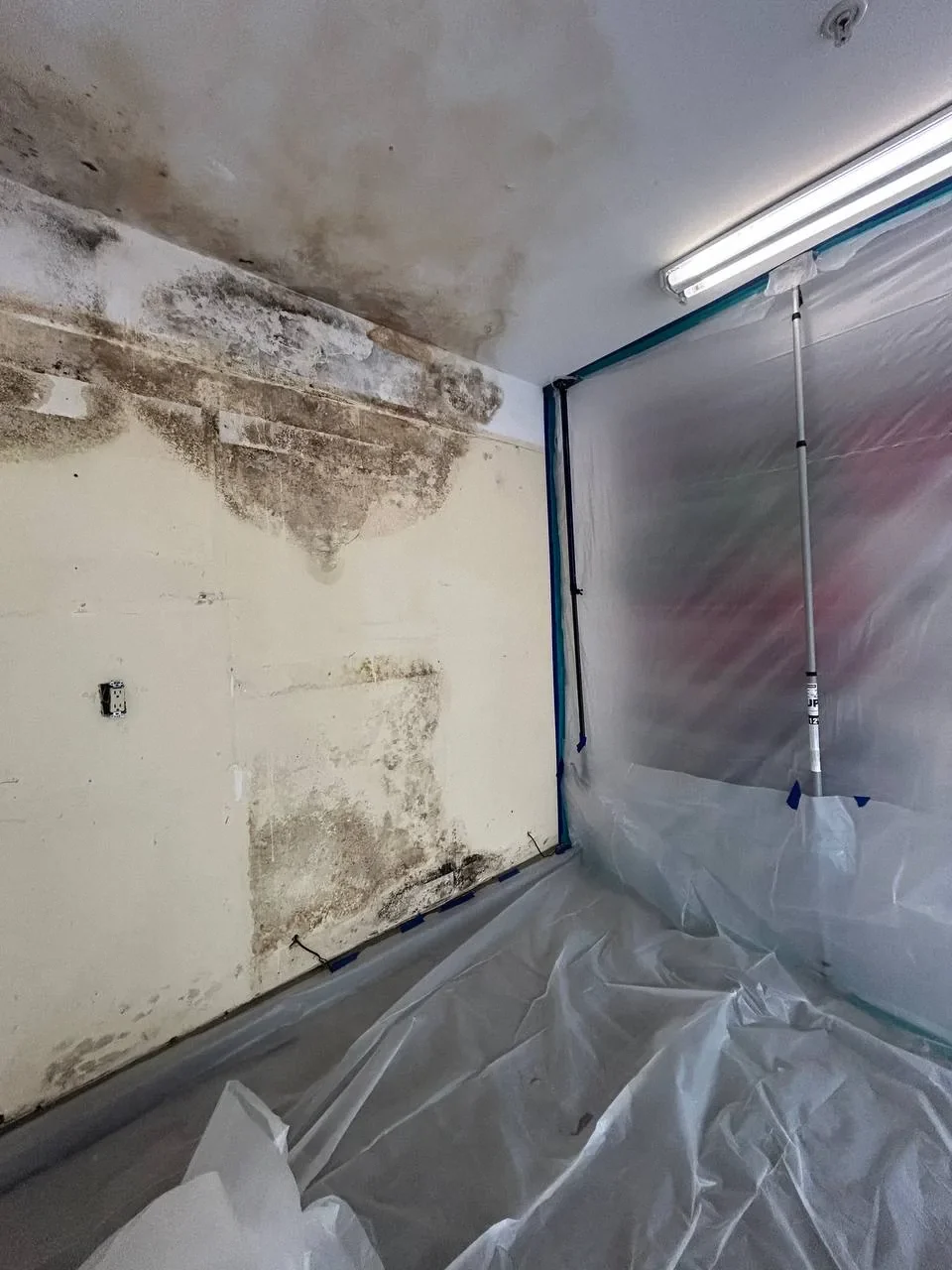
Investigate moisture before covering a stain
A suspected mold problem begins with a question: where is the moisture coming from, and is it still present? A leak at a supply connection, water entering at a roof or moisture remaining after a flood can affect very different materials. Make a note of when the condition appeared and whether the surface becomes wet again. An inspection can establish which accessible areas are affected and where further access may be needed.
Do not scrape or paint over suspected growth while the issue is being evaluated. EPA advises repairing water problems and drying affected materials; covering mold does not correct the underlying moisture. Keep people and pets away from the affected area. If you have a health concern, consult a health professional instead of trying to infer a diagnosis from the color or appearance of a spot.
Water Damage Guard is based in San Carlos and accepts calls at (650) 550-0619, 24/7. Describe the moisture history, affected rooms and any access restrictions. A photograph is useful, but it cannot show the complete condition of a concealed wall, floor or cabinet.
A local route for rental complaints
San Carlos says its Building Division oversees a rental inspection program that provides a process for tenant code-violation complaints. Its apartment checklist updated in 2019 also includes checks of bathroom and laundry exhaust ducts and grilles. These are checklist items, not a diagnosis of an individual unit; ask the city about current criteria and the process for the property.
Give the owner or manager written notice of the leak or suspected growth, identify its location and keep a copy. If water is actively entering, say so and request a plan for access and repair. A code complaint and a restoration assessment are different processes: the first concerns enforcement, while the second evaluates affected materials and possible work.
The San Carlos apartment inspection checklist includes caulking at tubs and sinks and the operation of fixture shutoff valves. These are examples of items on the city checklist, not proof that a particular apartment is defective. If a fixture area is wet, explain what you observed and let the responsible parties arrange inspection and repair.
Coordinate access and responsibility
The city’s Housing Element reports that 28% of San Carlos housing units in 2020 were multifamily. This describes the housing stock at that time; it does not measure the prevalence of mold. In a shared building, a moisture source and the visible damage may be in different spaces, so access and communication can be as important as the first cleanup step.
Ask the manager or association who controls the roof, common wall, service space or adjacent unit that may need inspection. Do not enter another unit or open a shared assembly without authorization. A mark below a neighboring space does not by itself determine where the leak began or who must pay. Keep communications and photographs so that the people responsible for the property can evaluate the evidence.
For an owner-occupied house, the same distinction applies between source correction and repair of affected materials. A plumber or roofer may address the entry point while the restoration work addresses the wet area. Agree on the sequence and the person who will verify that the source has stopped. A continuing leak can undo a completed interior repair.
What the assessment should explain
The initial evaluation should record visible conditions, the reported moisture history and the materials that may need closer inspection. Water can collect behind a cabinet, beneath flooring or above a ceiling. Do not assume the visible edge is the full boundary, but do not assume all nearby materials must be removed either. Ask the assessor to state what was observed and what could not be accessed.
The plan may call for protecting adjacent areas, cleaning appropriate surfaces, removing materials that cannot be adequately cleaned and drying the assembly. The water source, material and condition affect that decision. EPA notes that some porous materials can be difficult or impossible to clean completely when mold has entered them. Ask why a proposed method fits the specific material.
If a heating or cooling system is known or suspected to be contaminated, EPA advises not running it because it can spread mold. A separate qualified trade may be needed to inspect equipment or repair plumbing and electrical components. Ensure the property owner or manager authorizes the necessary access and knows which work is outside the restoration scope.
Contents, records and follow-up
Identify important belongings in or near the affected area without entering an unsafe space. Photograph and list them before moving or discarding them when practical. Paper, textiles, furniture and electronics may need different evaluation. If insurance is involved, ask the carrier what documentation it needs and retain receipts and correspondence. A restoration assessment does not determine policy coverage.
After the source is repaired and the work is complete, ask what was cleaned, what was removed and whether any area remained inaccessible. Keep moisture readings or other records provided with the project documents. If water reappears, report it promptly and describe the location and timing. The earlier work addressed conditions found then; later maintenance and new leaks require their own attention.
Where replacement of building components is proposed, ask the San Carlos Building Division about the project’s current permit and inspection requirements. Do not close an assembly before required inspections. Coordinate with the owner and the relevant trades, especially where a shared system or another unit is involved.
When the affected room contains a sink or bathroom, discuss how it can be used while the source is isolated and work is underway. The manager may need to coordinate water shutoffs and access times with other occupants. Ask for advance notice where possible and record any restrictions on using the room. If belongings must be moved, agree on a dry location and identify who can access it. These practical arrangements should be made before work begins when conditions allow, particularly when a common wall or building service is involved. If the work exposes a larger affected area than expected, pause to review the additional scope with the person authorized to approve it.
If the source is intermittent, note whether it occurs when a fixture is used or after rainfall. Share that observation with the person investigating; it is a clue rather than proof of the cause. Arrange any testing or opening with the owner’s approval and avoid operating a fixture that is actively leaking.
Discuss the next step
Before calling, list the affected spaces, the suspected source, when it was last wet and any work already performed. Identify the owner or manager who can approve access. Tell us if the area contains standing water or equipment that may be energized; do not investigate those hazards yourself.
Ask for a written explanation of the proposed scope and how changes will be communicated if concealed damage is discovered. A useful plan identifies the limits of the inspection and the source correction, rather than presenting a standard removal scope as a diagnosis. Call Water Damage Guard at (650) 550-0619 to discuss a San Carlos assessment; calls are accepted 24/7.
Common questions
How can a tenant report a housing concern?
Notify the owner or manager in writing and keep a copy. San Carlos says its rental inspection program provides a process for tenant code-violation complaints.
Does a stain prove the source of moisture?
No. Water can travel before it appears. The source and affected materials need to be evaluated.
Should I paint over suspected mold?
No. Correct the water problem and evaluate the affected material before covering it.
Can a shared wall require access to another unit?
It can. The owner, manager or association can coordinate access and authorization for the relevant space.
Should a suspected contaminated HVAC system be used?
EPA advises against running a system known or suspected to be contaminated because it could spread mold.
Sources
- San Carlos or county official source Checked
- San Carlos or county official source Checked
- San Carlos or county official source Checked
- San Carlos or county official source Checked
- EPA mold cleanup Checked