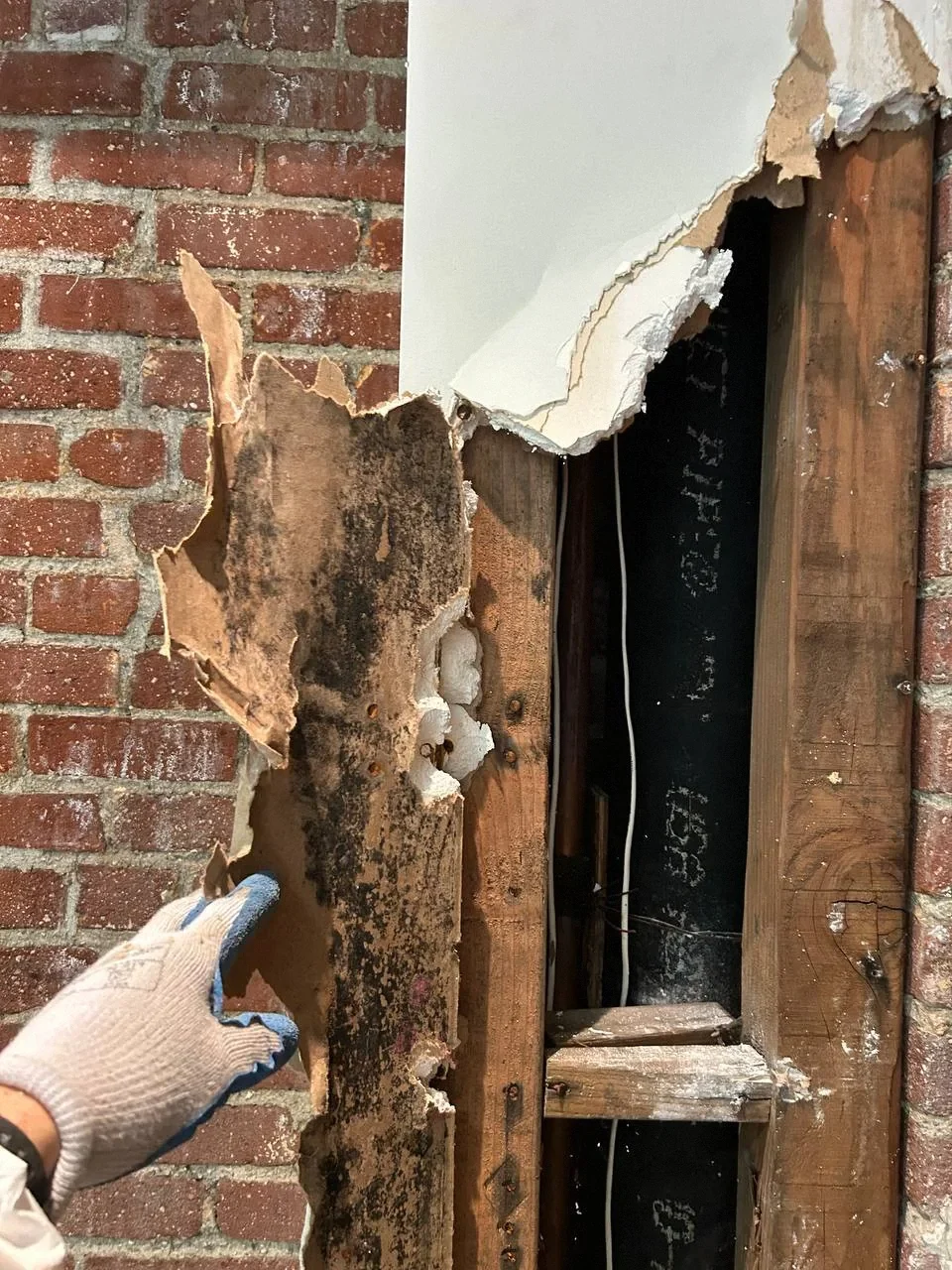
Find the moisture source
Visible growth or a musty area after a leak should lead to an investigation of the water source and affected materials. A supply connection, roof, drain or condensation problem can require a different repair. Record when the area was wet and whether the condition returns. A mark alone does not reveal what is behind a finish or establish a health diagnosis.
While the area is being assessed, avoid disturbing suspected growth or covering it with paint. Keep people and pets away from the affected space. EPA recommends fixing water problems and drying the materials; if a heating or cooling system is known or suspected to be contaminated, it advises not running it because it may spread mold. Consult a health professional about personal health concerns.
Water Damage Guard is based in San Carlos, CA 94070 and serves Redwood City. Call (650) 550-0619, 24/7, to discuss the affected rooms and the next step. Tell us whether the water source is still active and who can authorize entry. An inspection is needed to define the actual scope.
Redwood City housing complaint routes
Redwood City’s habitability handout distinguishes city Code Enforcement for rental properties of up to three units from county responsibility for properties with four or more units. Ask the appropriate office how this division applies to the property and the issue. The handout says that, when an officer verifies a code violation, the owner receives a notice with a compliance date.
For a townhome or condominium complaint, county guidance directs residents to the owner or association, or to legal advice. That is a route for seeking help, not a determination of liability. The governing documents, the source of moisture and the circumstances of the property may matter. Keep notices and photographs so that the parties can evaluate the same information.
A tenant can give the owner or manager written notice of the location, active leak and observed condition, then keep a copy. If the issue persists, contact the appropriate enforcement office. An agency investigation, a restoration assessment and an insurance claim serve different purposes; the outcome of one does not automatically decide the others.
When a rental repair affects occupancy
Redwood City’s tenant ordinance includes mold abatement among work that can qualify as substantial remodeling only when the ordinance’s conditions are met, including a necessary vacancy of at least 30 consecutive days. The rule does not mean that every mold cleanup requires a tenant to move or qualifies as a covered termination. Coverage and exclusions must be evaluated for the actual tenancy and project.
If work will make a room unusable, ask the owner or manager for a schedule and explain any access needs. Keep written notices and receipts. If displacement is proposed, review current city information and obtain appropriate advice about the individual situation. A restoration team can describe its work area and schedule; it cannot determine the tenant’s legal rights or insurance coverage.
Condominium residents may also need to coordinate with an association when a common wall, roof or another unit is involved. Notify the responsible contact promptly. Do not open shared construction or enter a neighboring residence without authorization. A visible stain in one unit does not establish where the leak began or who pays.
- Under Redwood City’s tenant ordinance, mold abatement can qualify as substantial remodeling only when the ordinance’s conditions, including at least 30 consecutive days of necessary vacancy, are met.
- Redwood City tenant ordinance and repairs
- California rental mold information
- Condominium leak responsibility
Inspect and plan the work
An assessment follows the reported water path through accessible areas. Moisture at a ceiling may be connected to an opening above; a cabinet base can become wet from a nearby supply or drain. Ask the assessor to identify observed conditions and any area that cannot be reached without opening material. A visible edge is not necessarily the boundary of the affected assembly.
The work plan should identify how the source will be corrected, which spaces and belongings need protection, and how materials will be cleaned, removed or dried. Porous materials may be difficult or impossible to clean completely when mold has entered them. Other surfaces can require a different approach. The choice depends on the material, the water source and what the inspection finds.
Where electrical equipment, plumbing or mechanical systems are involved, the appropriate qualified trade may need to make a separate evaluation. Agree who will coordinate those trades and who may approve changes if concealed damage is found. Do not assume that an apparently dry or newly painted surface establishes the condition behind it.
When a source is intermittent, record whether moisture appears after rainfall or when a particular fixture is used. Share that information with the person investigating. It is a clue to the water route, not proof of the cause. Avoid using a fixture that is actively leaking until the responsible party has addressed it.
Contents, drying and records
When it is safe, identify essential items in or near the work area and photograph them before movement or disposal. Paper, fabric, furniture and electronics may need different evaluation. Ask the insurer what documentation it needs and keep receipts. Store unaffected belongings in a dry place that does not obstruct safe access or required inspections.
Drying follows correction of the source and is adapted to the affected materials. Ask how the work will be monitored and what will happen if an enclosed area is still wet. Equipment placement must account for electrical safety and the condition of the building. There is no reliable fixed duration for every material and every loss.
After the work, retain the scope, photographs and any monitoring records. Ask what areas remained inaccessible and whether follow-up is recommended. If water reappears, document its location and timing and notify the responsible party. A completed project addresses the conditions found during that work; future leaks require their own response.
If an affected kitchen or bathroom must remain unavailable, discuss how occupants will safely use the property while work is underway. The manager may need to arrange a shutoff, access to a shared service space or notice to an adjacent unit. Agree on the contact who can approve changes and how progress will be communicated. If the inspection reveals a larger affected area than expected, review the additional work with the authorized owner before proceeding. Record the location of any concealed space that cannot be inspected and arrange follow-up if needed; an uninspected area should not be described as cleared.
Repairs and coordination
Before replacing finishes or changing plumbing, wiring or structural components, ask the Redwood City Building Division which permits and inspections apply to the proposed work. Coordinate source repair, drying and reconstruction so required inspections can occur before the work is concealed. A permit question depends on the actual scope rather than the label “mold repair.”
If several parties control access, agree on a contact and the sequence of visits. The owner or manager can coordinate common areas and neighboring units. Discuss where occupants can safely remain during work and how changes will be approved. Do not assume that the presence of a restoration plan determines who is responsible for a leak.
Call Water Damage Guard at (650) 550-0619 to discuss a Redwood City assessment. Calls are accepted 24/7. Describe the suspected moisture source, the affected space and any restrictions on entry.
Common questions
Which office handles a rental housing complaint?
The city handout describes a city and county division based on property size. Ask the appropriate office about the specific building and issue.
Does every mold cleanup require a 30-day vacancy?
No. The 30-day condition is part of the ordinance’s definition for a covered substantial-remodel termination; it does not apply to every cleanup.
Should suspected mold be painted over?
No. The moisture problem and affected material should be addressed before a surface is covered.
Can the leak be in another unit?
It can. The manager or association can coordinate authorized access and an investigation of the actual source.
Can an insurer decide whether a repair is covered?
Coverage depends on the policy and circumstances. Contact the insurer for its decision and documentation requirements.
Sources
- Redwood City or county housing source Checked
- Redwood City or county housing source Checked
- Redwood City or county housing source Checked
- EPA mold cleanup Checked