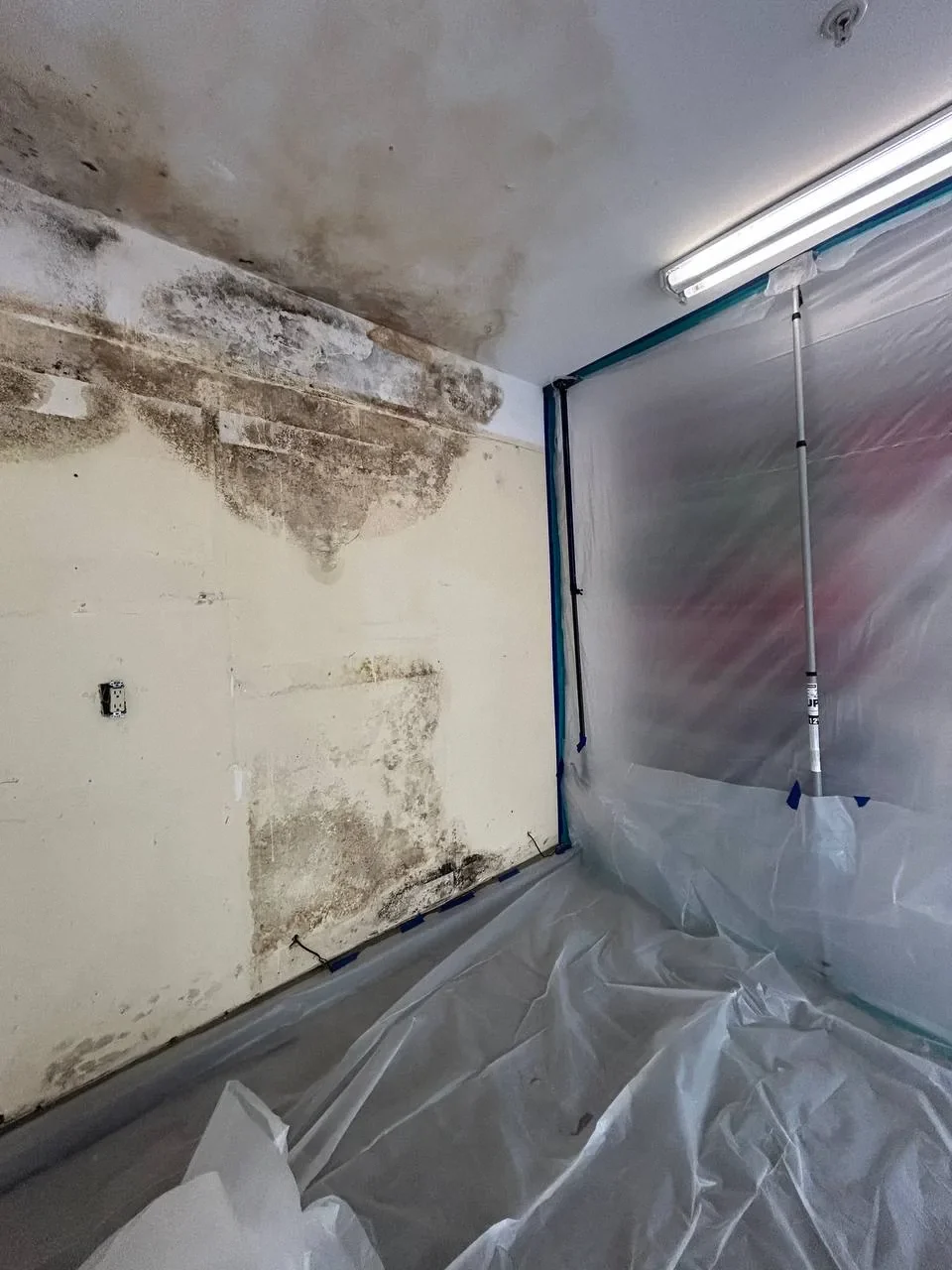
Begin by identifying the water source
A patch on a wall or an unusual odor can raise a question about moisture, but neither identifies the type of growth or its extent. A roof leak, a supply pipe, a drainage issue and a wet crawl space need different corrections. Describe when you noticed the condition and whether the area is still receiving water.
If a pipe is actively leaking, isolate it only when the valve is safely accessible. Keep out of standing water near electrical equipment and do not use a wet switch or appliance. A sagging ceiling or loose material may also be hazardous. An appropriate professional should address immediate safety and source issues before intrusive inspection.
Water Damage Guard can discuss an assessment of the affected materials. Call (650) 550-0619 at any time, 24/7, and explain whether the problem followed a leak or storm, which rooms are involved and whether the source has been repaired. Mention any restrictions on access to a shared wall or another unit.
Moisture around the building
Water may enter below a door, travel along framing or remain in a crawl space after a storm. It may also come from a plumbing fixture or condensation. A mark near the bottom of a wall is a clue about where to investigate, not proof that a particular drainage component failed.
Outside conditions should be examined from a safe place. Do not approach unstable soil, damaged trees or an area with downed utility lines. If water repeatedly collects near the foundation, a qualified drainage or building professional can assess the site and the possible paths of entry. Avoid changing a drainage route without checking the applicable town requirements.
Correcting the source is essential to a lasting cleanup. A surface can be cleaned or a wet finish removed while a leak still continues behind it. Conversely, repairing the pipe or roof does not necessarily address material already affected by water. Agree who will carry out each step and how the work will be coordinated.
Rental housing and local contacts
San Mateo County Environmental Health lists mold among complaints it accepts for rental apartment buildings of four or more units, subject to the county’s geographic and property-type exclusions. For single-family homes, duplexes and triplexes, it directs housing complaints to local code enforcement. The appropriate agency can explain its jurisdiction and complaint process.
For a rental, promptly tell the landlord or manager about dampness, the location and any ongoing water entry. Follow up in writing and retain the response. If the source may be in a neighboring unit or a common system, ask management to coordinate access rather than opening a shared wall yourself.
An agency’s inspection is distinct from a cleanup assessment. It may address whether conditions violate applicable housing requirements, while the cleanup plan evaluates affected materials and the work needed. Neither a complaint nor a photograph automatically establishes the cause or the outcome of a dispute.
If reconstruction is needed
Woodside says a building permit is required for repair or alteration of a building or its plumbing, electrical, gas or mechanical system and advises contacting the town if in doubt. The question is the actual reconstruction scope, not the presence of a stain by itself. Ask the Building Department which approvals apply before replacing or altering building components.
The town lists interior-only remodels among permit types available through its eTRAKiT portal, while remodels with exterior modifications are submitted by email. Confirm the application route and required documents for the particular project. A private restoration proposal or insurance estimate does not itself authorize work requiring a permit.
Before concealing plumbing or electrical repairs, coordinate the work with the people responsible for any required inspections. Keep the permit information and records of source correction with the cleanup documentation. That sequence helps prevent a new finish from hiding a leak or uninspected work.
Assessing the materials
The assessment should consider what became wet, how long it remained wet and what lies behind accessible finishes. Moisture can move beyond the edge of a visible patch. A team may inspect neighboring areas or recommend opening an assembly where there is a sound reason to do so. Ask what the initial inspection establishes and what remains uncertain.
Different materials respond differently to water. A hard accessible surface may be suitable for cleaning, while some porous materials cannot be effectively cleaned and dried. Explain any important contents before they are moved and ask how the proposed work protects unaffected rooms. The appearance or color of a patch does not, by itself, establish its species.
If an assembly must be opened, discuss the location and extent first. Older paint, insulation or other materials may need special handling; appearance and building age cannot identify their contents. Have qualified professionals evaluate suspect material before disturbing it.
Cleanup and drying
A plan can include cleaning, removal of affected material and drying, depending on the inspection. It should explain the area covered, how debris will be handled and whether further access might change the scope. If unexpected conditions appear, pause and discuss them before extending the work.
Power for drying equipment must be safe and appropriate to the building. Moisture measurements help track progress, but a surface that looks dry can conceal a damp layer. Ask how the team will evaluate the affected assembly and what must happen before finishes are replaced.
For water from outside or a sewer, tell the team what the water passed through before it entered the home. Possible contamination can change how materials are handled. Keep away from suspect water and coordinate with the responsible sewer district or septic professional to control the source.
Records and next decisions
When safe, keep photographs, notes about the date and source, and records of repairs already made. Ask your insurer what information is needed before discarding items or beginning permanent reconstruction. The policy and the facts of the loss determine coverage, so a cleanup scope cannot promise a particular claim result.
Owners of condominiums or other shared property should involve the association when a common component may be affected. Access, source repair and the handling of contents may be assigned to different parties. Keep written communications and request clarification before work extends beyond the area you control.
Compare proposals by the materials and rooms included, the source repair assumed and how additional discoveries will be handled. The most useful scope identifies remaining questions as well as the work already agreed. After treatment, coordinate any separate repairs and required inspections before closing the affected space.
If an affected item has sentimental or monetary value, identify it before the work begins and ask whether a specialist should evaluate it. Keep it out of unaffected living spaces if it may be contaminated. For items that cannot be retained safely, discuss the inventory and photographic record with the insurer before disposal when circumstances allow. These decisions depend on the item and the conditions it encountered.
Common questions
Does a dark patch identify the type of mold?
No. Appearance alone does not establish the species or extent. The moisture source and affected materials need assessment.
Where can a Woodside renter report a housing concern?
San Mateo County lists covered rental apartment buildings of four or more units, subject to exclusions, and directs single-family, duplex and triplex complaints to local code enforcement.
Does cleanup automatically require a building permit?
The proposed work matters. Woodside says repairs or alterations to a building or its systems require a permit; ask the town about the specific scope.
Should I paint over a damp area?
Identify and correct the moisture source and address affected material before covering it. Paint does not stop an ongoing leak.
Can a shared wall be opened without coordination?
Confirm who controls the wall and arrange access with the owner, manager or association before intrusive work.
Sources
- Housing, permit or moisture source Checked
- Housing, permit or moisture source Checked
- Housing, permit or moisture source Checked
- Housing, permit or moisture source Checked