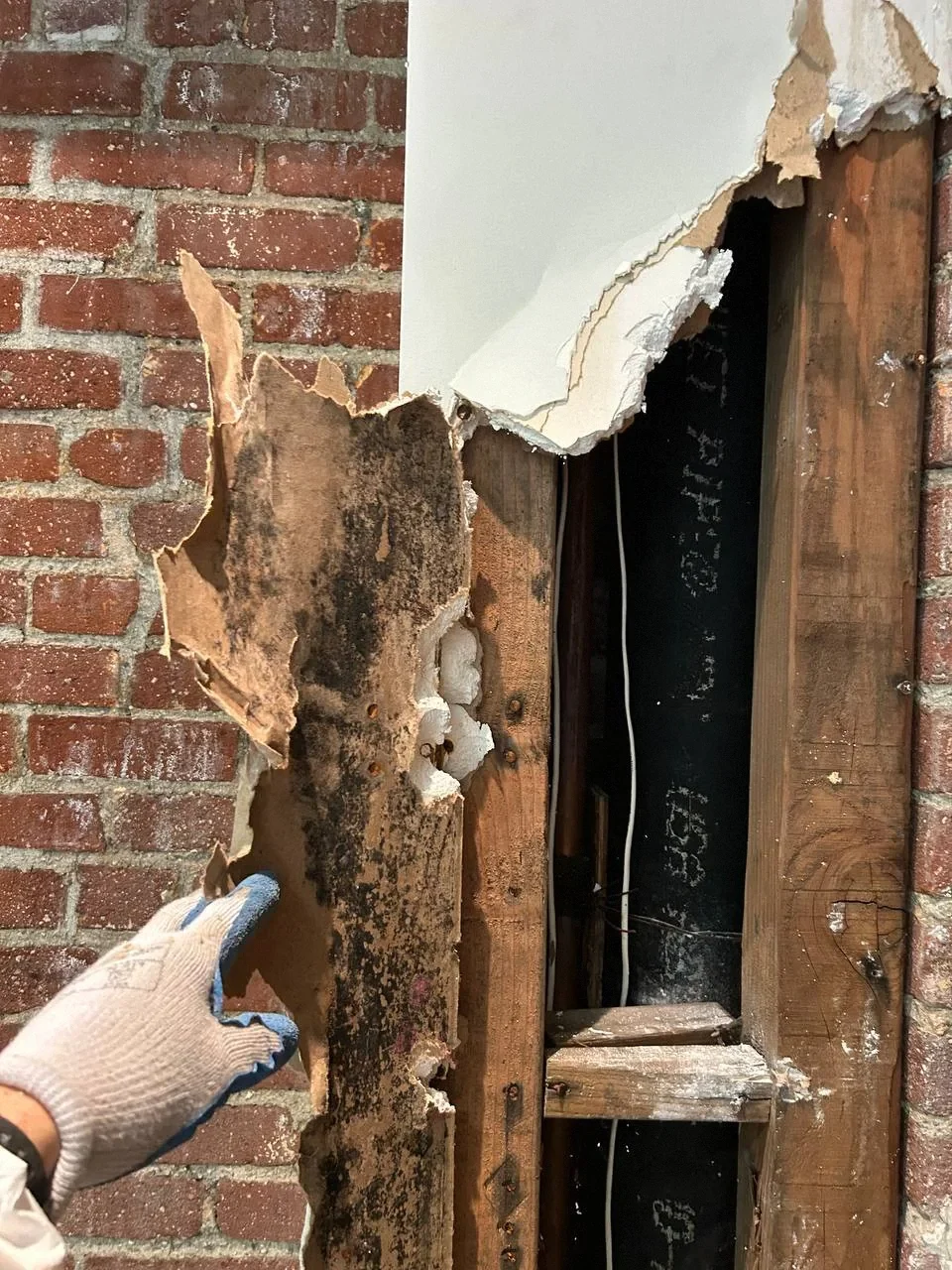
Start with the moisture source
A patch of discoloration or a recurring odor is a reason to look for moisture, not a diagnosis of the entire building. A leak may be active in a wall, water may enter at a window during rain, or condensation may collect on a cold surface. The appropriate cleanup depends on the actual condition and on whether the source can be stopped.
Keep people away from unsafe or heavily affected areas and avoid disturbing suspect material while the situation is assessed. Do not aim a fan at a dusty patch to try to dry it. If you have health concerns, discuss them with a qualified health professional. For an active leak, arrange the source repair as well as the assessment of affected materials.
Photograph the area without opening a wall or moving unsafe debris. Write down when the condition appears, whether it changes after rain or plumbing use, and whom you notified. This history helps a contractor understand the problem but does not substitute for inspecting the actual space.
Mountain View multifamily inspections
Mountain View describes a Multi-Family Housing Inspections Program for buildings with three or more dwelling units. The city’s housing materials say a tenant, owner or manager can request a non-routine inspection. Ask the program about the building and its process; an inspection request does not guarantee an immediate visit or a particular finding.
When describing the issue, identify the affected room and any ongoing leak. If access to a common roof, wall or neighboring unit is needed, the owner or manager may have to coordinate it. An inspection for housing conditions and a restoration assessment have different roles. The first concerns the applicable housing standards; the second identifies the materials and work needed to address an observed condition.
Keep copies of reports and communications for the people responsible for the property. If an agency requires a correction, discuss the sequence with the contractor so that a necessary inspection is not blocked by new finishes. The building’s actual configuration determines which spaces need access.
Written repair notice and a tenant petition
Mountain View’s rent-stabilization FAQ tells eligible tenants seeking a rent reduction for unrepaired conditions to give the landlord written notice of needed repairs and keep a copy. City materials describe Petition B as a way for eligible tenants to request a reduction for failure to maintain livable conditions or a reduction in housing services. Eligibility, evidence and outcome depend on the circumstances; a stain alone does not establish the result of a petition.
The notice and petition are separate decisions. Record the condition, the date and the response to the request, and ask the city’s program which procedure applies to the tenancy. A resident should not infer that every rental has the same protections, or that submitting a petition replaces the need to address an active water source.
For a building owner, a clear repair record can also identify when a contractor attended and which areas were accessible. If conditions recur, compare the new observations with the earlier work. Follow the applicable agency instructions and consult the responsible program about deadlines and documentation.
When necessary repairs affect occupancy
The city’s 2025 housing FAQ describes circumstances in which a landlord terminating an eligible CSFRA tenancy for necessary repairs may have to offer relocation assistance to income-eligible tenants and notify them of their rights. This is conditional on the tenancy and facts. It is not a promise that every cleanup requires a move or qualifies a household for payment.
Before work starts, discuss whether the affected room can remain in use, how long access is needed and who makes decisions about shared areas. If the proposed work would affect occupancy, the tenant and landlord can contact the city’s housing program about the applicable process. Restoration scheduling, legal tenancy rights and housing arrangements should be coordinated without treating them as the same question.
Inspecting surfaces and concealed spaces
The visible patch defines a starting point. An assessment may examine adjacent baseboards, the other side of a wall or a cabinet below a plumbing fixture. The team should explain what it can see, what measurements suggest and whether an opening is needed. A reading can identify a material that merits investigation; it does not by itself identify the source of water or the complete area affected.
An owner or manager should authorize access before an assembly is opened. A small opening may reveal a larger area of wet insulation or a second leak. If that happens, pause and agree on the changed scope rather than proceeding under an estimate based on an inaccessible space. Record the areas that could not be inspected and the reason.
Independent assessment or sampling may be appropriate for a particular situation. Clarify the purpose of any test and how it will inform the work. Sampling does not repair a pipe, dry an assembly or replace an inspection of the physical condition.
Choosing what can be cleaned
A cleanup plan should distinguish hard surfaces from porous materials and consider whether an item can be cleaned effectively. Material that has stayed wet for a long time, is deteriorated or cannot be reached may require removal. The method depends on the actual material and its condition; there is no useful fixed rule that every item in a damp room must be discarded.
Containment and a planned route for moving debris can limit disturbance to unaffected spaces. Discuss equipment, access, pets and occupants before work begins. Items the resident needs to keep should be identified in advance where it is safe to do so. If the building is shared, the plan should account for corridors and adjacent areas that workers must use.
Ask how the team will document material removed and what conditions would change the estimate. If removal exposes structural damage or a continuing leak, the appropriate trade should evaluate it. Cleaning a surface and correcting the source are linked but distinct parts of the recovery.
Drying, repairs and follow-up
After the source is corrected, affected materials need to be dried and checked before finishes are restored. Materials do not all dry at the same rate, and a surface may appear dry while a hidden layer remains wet. Record what was measured and which areas could not be reached. The work plan should state how those limitations will be resolved.
If plumbing, framing or electrical components need repair, ask the responsible trade and the city about permits and inspection stages for that work. Do not close a space merely because cleanup equipment has been removed. Confirm that the source repair and applicable inspections have been completed.
After restoration, observe the area under the conditions associated with the original problem. Renewed staining after rain or a fixture is used is information for another investigation. Keep the dates and repair records; the next cause may be different from the first.
For a shared building, identify who will receive the completion information and who can arrange access if a concern returns. The person responsible for a common roof or pipe may differ from the occupant of the room where moisture appeared. Sharing the documented location and repair history can help the parties coordinate without assuming responsibility before the source has been examined.
Common questions
Does an odor show the size of a mold problem?
No. An odor can prompt investigation, but the moisture source and affected materials need assessment.
Can a tenant request a city housing inspection?
Mountain View describes non-routine inspection requests by tenants, owners and managers for buildings covered by its multifamily program.
Is a rent reduction automatic?
No. Mountain View describes Petition B for eligible tenants; the city evaluates the applicable circumstances.
Should wet material be covered immediately?
No. First correct the source, assess and dry the affected materials, and complete any required inspection for repairs.
Can I call Water Damage Guard after hours?
Yes. Call (650) 550-0619, 24/7, and describe the condition and any ongoing leak.