Limit contact and added flow
If sewage returns through a fixture, keep people and pets away and stop using connected toilets, sinks, showers and appliances while the cause is investigated. Additional wastewater can enlarge the affected area. Do not enter standing water to operate a switch or handle wet electrical equipment.
Note which fixtures are involved, when water rose and whether it is still entering. A low fixture can show the first symptom while a blockage lies elsewhere. A plumber or the responsible agency can investigate the line; contaminated floors, walls and contents need a separate assessment.
Water Damage Guard provides sewage cleanup from San Carlos. Call (650) 550-0619, 24/7, to discuss the San Francisco property and access conditions. A phone conversation cannot identify a hidden defect or establish the full scope of cleanup.
Rain, ponding and sewer backflow
SFPUC says intense storm runoff can block catch basins and pond before entering the sewer. It also says extreme storms can rarely overwhelm the combined system, and low-lying properties may experience backup through plumbing fixtures. These are different pathways; do not assume every puddle or backup has the same cause.
Describe whether water entered through a fixture, crossed an exterior opening or appeared at a cleanout. Record the approximate timing if it is safe to do so. A professional and the agency can use those observations to investigate, but an online description cannot establish the condition at the property.
If a plumber identifies a possible structural defect in the lower lateral, SFPUC asks the owner to notify 311 so its sewer operations crew can inspect. That process concerns the lower lateral; the building’s wet materials still need their own assessment.
Backwater valves and local code
SFPUC recommends considering a backwater valve when the lowest fixture drain is below the lateral’s fresh-air inlet. The agency recommends following the manufacturer’s maintenance instructions and checking the valve before each rainy season. Debris can interfere with its operation; a device should not be treated as maintenance-free.
San Francisco Plumbing Code section 710.1.1 uses a specific flood-rim comparison: piping serving a fixture installed with its flood rim at or below the fresh-air inlet serving the house trap must have an approved backwater valve. A fixture with a higher flood rim must not discharge through that valve. This is not the same measurement as the utility’s practical drain-height heuristic.
Ask the Department of Building Inspection or a qualified plumber to evaluate the actual installation and applicable code. Do not assume every existing building must be retrofitted solely from a general description, or that a valve can prevent every route of floodwater entry.
Investigate the source
The first overflowing fixture does not prove where a blockage lies. Explain whether several fixtures are affected, whether water rises while no one is using them and whether the problem occurs during rain. Those observations help direct an investigation but do not establish a defect in a particular pipe.
A camera can show accessible internal pipe conditions. Ask the plumber what the recording shows, where it was taken and whether other testing is appropriate. Keep the report and avoid treating a partial view as proof that the entire lateral is sound.
If a shared building is affected, identify who can authorize access to common drains and notify the manager. Multiple units may depend on the same line. A conclusion about responsibility should follow the actual layout, inspection and applicable rules.
Protect unaffected rooms and contents
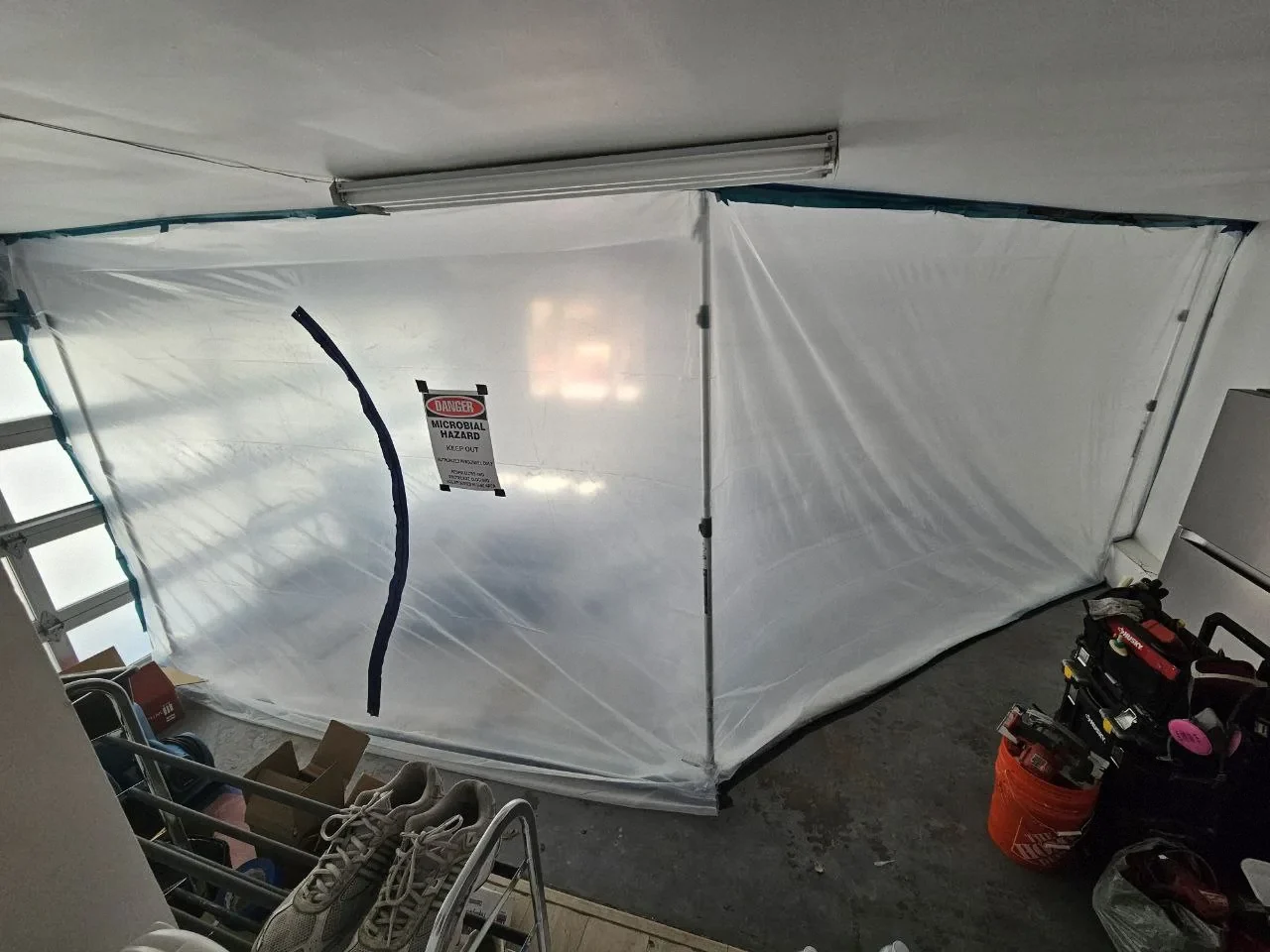
Sewage can carry contamination onto flooring, belongings and footwear. Agree on a boundary and a route for workers and removed material. A shared hallway or occupied neighboring unit may require coordination so the response does not unnecessarily affect clean areas.
Hard surfaces and porous materials can require different handling. Ask why an item is proposed for cleaning, removal or specialist evaluation. A clean-looking exterior does not establish the condition of an underside, seam or enclosed material.
When it is safe, photograph affected items and ask the insurer what documentation it needs before disposal if circumstances allow. Coverage is decided under the policy; a utility inspection does not determine reimbursement.
Find moisture beyond the visible water
Wastewater can move beneath floor finishes or behind cabinets and baseboards. Ask what was inspected, what remains inaccessible and whether opening an assembly is needed. A reading at one location is useful but cannot establish all hidden moisture or contamination.
After the source is controlled, cleaning or removal and drying should be coordinated. Do not cover a damp assembly simply because the surface appears dry. If additional conditions are found, request a revised description and determine whether another trade or inspection is needed.
If odor remains, ask for a further investigation. Residue, damp material and an unresolved drain condition are different possibilities. A fragrance cannot identify the source, and a prior pipe repair cannot prove the cause of a later recurrence.
Coordinate the trades
A plumber may repair a line while a restoration team addresses affected materials. Identify who is responsible for each portion and how findings will be shared. Electrical, structural or other reconstruction may need separate professionals and approvals.
Tenants should notify the owner or manager promptly and retain written communications. Discuss access and the use of essential facilities. An official restriction on occupancy takes precedence over an estimated cleanup schedule.
Before closing a wall or floor, ask which inspections apply to the actual work and who will arrange them. Keep the source diagnosis, permit documents and restoration scope together for the owner and insurer.
Discuss the fixture layout
A valve decision requires more than knowing that a room is called a basement. A plumber can identify the fresh-air inlet, the fixtures served by the line and their elevations, then explain the code requirements for that configuration. The flood rim and the drain opening are different reference points; an owner should not substitute one measurement for the other.
Ask where a proposed device would be accessible for inspection and maintenance and whether a permit is required. Fixtures above the relevant inlet have a different rule under the local code. A professional should determine the connection and avoid routing fixtures through a valve in a way that conflicts with that rule.
If water also entered across a threshold, ask for a separate evaluation of that pathway. A device in a drain does not act as a barrier at a door. The SFPUC program and the city’s building authority can explain the relevant options and approvals for a particular property.
Questions to ask before authorizing work
Who will establish whether additional wastewater can enter? What was examined and what remains uncertain? Request a description of the work boundary, contents handling and the proposed source repair. Ask how newly discovered conditions will be reported.
For a backwater valve, request an address-specific evaluation of fixture elevations, code applicability, access and maintenance. Do not assume that a protective device can resolve a leaking pipe or water entering from outdoors.
At completion, retain the inspection and repair documents. If wastewater returns, report the new symptoms and provide the previous record to the investigator. The history helps frame the question but does not establish the new cause.
Common questions
Should I use connected fixtures during a backup?
Avoid adding flow to the affected drain until the cause is understood.
Can rain pond before reaching the sewer?
Yes. SFPUC says runoff can block catch basins and pond before it enters the system.
Does every storm overwhelm the combined system?
No. SFPUC describes such overwhelm as rare during extreme storms.
What determines the code’s backwater valve requirement?
Section 710.1.1 compares the fixture flood rim with the fresh-air inlet serving the house trap; ask DBI or a qualified plumber about the installation.
Does a valve need maintenance?
SFPUC advises following the manufacturer’s instructions and checking it before each rainy season.