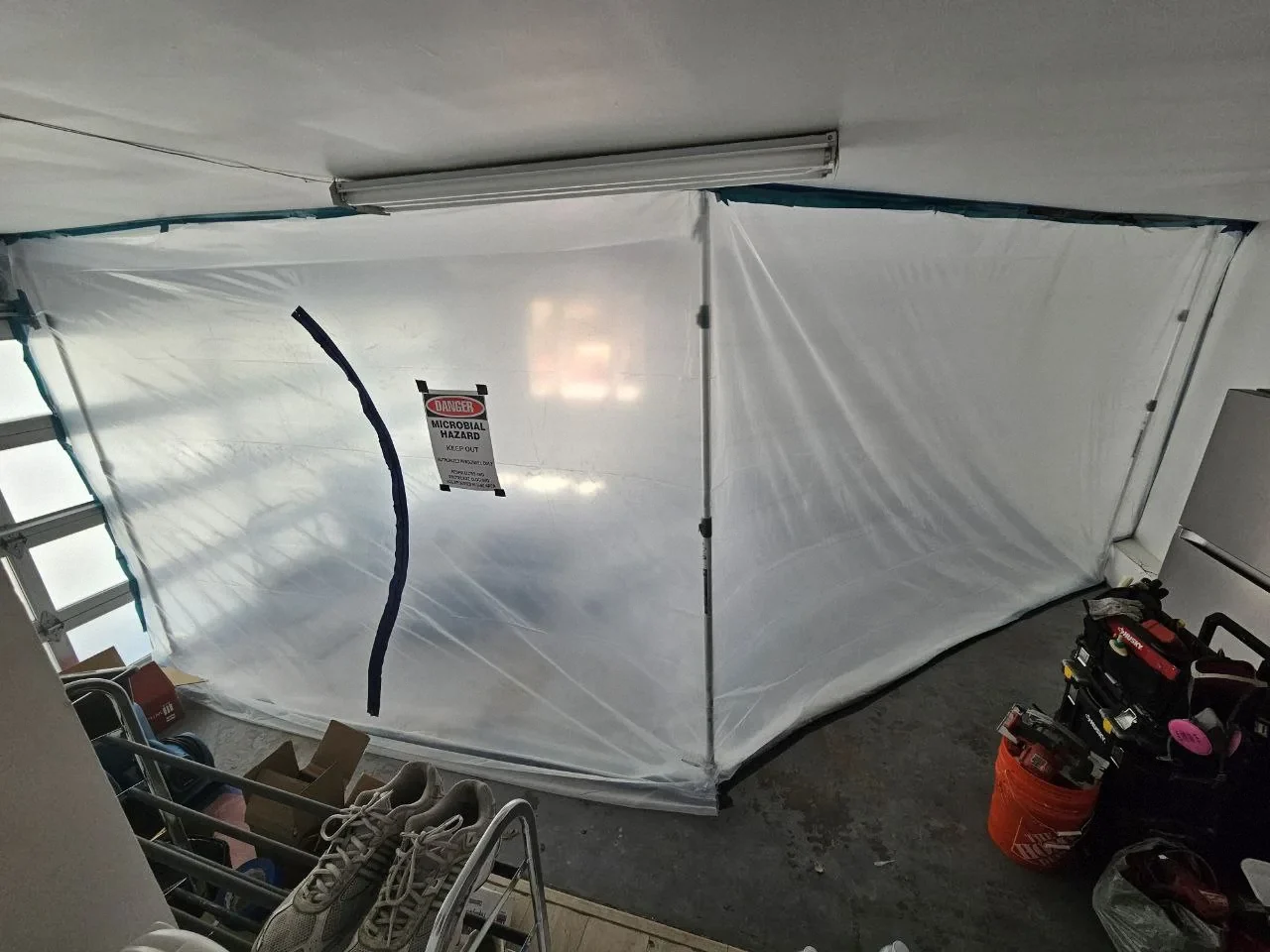
Reduce exposure and additional flow
A sewage backup requires a different response from a clean supply leak. Limit use of toilets, sinks, showers and other fixtures that could add flow to the blockage. Keep people and pets away from wastewater and do not move soiled belongings into unaffected rooms. If water reaches electrical equipment, stay clear and arrange for a qualified person to make it safe.
Water Damage Guard serves South San Francisco from San Carlos and takes calls at (650) 550-0619, 24/7. Describe where wastewater appeared, whether it is still rising and which rooms and belongings it touched. The visible overflow is not enough to establish where a blockage is located; the source needs diagnosis.
If a structure is unstable or officials restrict access, follow their instructions. Photograph conditions only from a safe place. A plumber, the City and a cleanup team may have separate roles: restoring flow, determining the system problem and addressing contaminated building materials are related but distinct tasks.
Maintenance depends on the cleanout location
South San Francisco Municipal Code §14.14.040 describes owner maintenance to an eligible cleanout and City maintenance from a properly located approved cleanout to the main. When the cleanout is outside the specified locations, the code assigns maintenance through the connection to the main to the property owner. The actual cleanout, permit and property conditions need to be checked.
For a newly installed cleanout, §14.14.120 describes conditions before the City accepts maintenance from that cleanout to the main, including required work, inspection and a compliance certificate. Installing an access point alone should not be treated as proof that the City has accepted maintenance responsibility. Ask Public Works about the individual connection.
A camera can help a qualified contractor examine an accessible line. It may show a blockage or defect but cannot alone determine every responsibility or the final repair scope. Keep the inspection record and ask who will review it under the applicable City process.
Repairs, remodels and cleanout requirements
The City code lists lateral repair or replacement among circumstances in which a missing sidewalk cleanout must be installed at the owner’s expense, subject to City standards. The location and scope should be reviewed with Public Works and the contractor rather than assumed from a general description.
The code also describes a lateral inspection and compliance certificate before a building permit for a project remodeling, altering or enlarging more than 25% of the building area. That is a separate trigger from a property sale, with its own conditions. Ask the City how the rules apply to a particular repair or larger project.
Coordinate permit and inspection requirements before a repair is covered. An emergency clearing may restore flow, but it does not establish whether a damaged pipe has been repaired or whether the City has accepted the work. Obtain a clear description of the work performed and any further inspection required.
Assess the affected materials
Wastewater can carry contaminants into flooring, wall cavities and contents. The cleanup plan should consider the source, duration and materials touched. Hard surfaces and porous items may need different handling; ask how affected rooms will be separated from spaces that remain in use.
After accessible wastewater and debris are removed, moisture remaining in materials must be assessed before reconstruction. A dry-looking surface may cover a wet layer. Discuss whether a finish needs to be opened for inspection, what will be cleaned or removed and how the area will be dried.
A smell after visible water is gone can indicate that more investigation is needed. Masking the odor does not establish that the source or affected material has been addressed. Ask what was checked, what remains inaccessible and whether the cause of the backup has been corrected.
Shared buildings and contents
If the property is rented or managed, notify the owner or manager promptly. Wastewater may travel beneath a floor or through a shared wall, so access to another unit or common area may need coordination. Do not enter a neighboring unit or disturb a shared system without the appropriate permission.
List the affected rooms and contents and take photographs only when safe. Protect a route through the property so that soiled material is not carried across clean areas. Sensitive documents, electronics or upholstered items may need specialist assessment. Ask what can be retained safely before discarding items.
If an insurer is involved, ask what records it needs and what the individual policy covers. A sewer backup can be treated differently from another water loss. Keep repair, inspection and cleanup records together, but do not assume a restoration estimate determines coverage.
Prepare for reconstruction
The cleanup team, pipe contractor and owner should agree on the order of work. A permit or inspection may be necessary for the pipe repair, while affected flooring or wall material may require cleaning or replacement. Confirm the source has been controlled and arrange required inspections before regulated components are closed.
When an opened area reveals additional damage, ask for an updated explanation and revised scope. Record what was found and which parts remain inaccessible. That information can help the contractor completing the repair and the owner understand the limits of the assessment.
Keep photographs, permit information and the final description of the pipe work with the property records. They provide context for future maintenance, but a past repair does not guarantee the condition of every part of the system. If symptoms return, arrange a new diagnosis.
A practical record of a backup
Write down when the backup began, which fixtures were in use and whether water continued to emerge after those fixtures were stopped. Note the highest visible level and the areas contacted if it is safe to observe them. These details can help the person investigating the line, but they do not replace a physical diagnosis or prove where responsibility lies.
If a contractor clears a line, ask for a description of the location and method used. If a camera inspection is performed, keep the report and ask whether further work or City review is needed. The pipe may require a separate repair even when normal flow has returned. Avoid placing a new floor or wall finish until the source and affected assembly have been addressed.
Coordinate with the property manager if a shared hallway, adjoining unit or common utility space may be involved. Explain which areas need access and who is authorized to make decisions. People should not be asked to walk through wastewater or handle contaminated belongings simply to prepare the property for an assessment.
At the end of the work, keep the cleanup scope, inspection information and repair documentation together. If some space was inaccessible, note that limit explicitly. A clear record supports later maintenance and helps the next trade understand the work without implying that uninspected areas were confirmed unaffected.
Keep the contact details for the responsible property manager available.
Confirm safe access before each visit.
Questions to settle with the responsible parties
Identify who can authorize work, who will be present for access and who should receive updates. If the problem may involve a public main, provide the City with the location and observations. If a private line needs attention, ask the plumber what was inspected and where the problem was found.
Discuss how contaminated materials will be separated from unaffected contents and where equipment can be placed safely. An occupied building may require a staged plan, with a clear route for occupants and emergency access. The plan should fit the actual conditions, not a presumed layout.
Before the affected space returns to use, ask what was removed, cleaned and checked, and what remains for another trade. A cleared drain and a clean-looking room are not a substitute for confirming the repair and addressing the materials exposed to wastewater.
Common questions
Does South San Francisco maintain every part of a lateral?
No. The code distinguishes owner and City maintenance based on an eligible approved cleanout and its location. Ask Public Works about the particular connection.
Does a new cleanout automatically transfer maintenance to the City?
No. The code describes conditions including required repairs, inspection and a compliance certificate before City acceptance.
Can a major remodel trigger lateral inspection?
The City code describes inspection and certification for a building-permit project remodeling, altering or enlarging more than 25% of the building area, subject to applicable conditions.
When can a missing sidewalk cleanout be required?
The code lists lateral repair or replacement among the triggering conditions, subject to City standards. Confirm the property’s requirements.
Does clearing the blockage complete sewage cleanup?
No. Affected surfaces and contents still need assessment and appropriate cleaning or removal, and the cause of the backup needs attention.