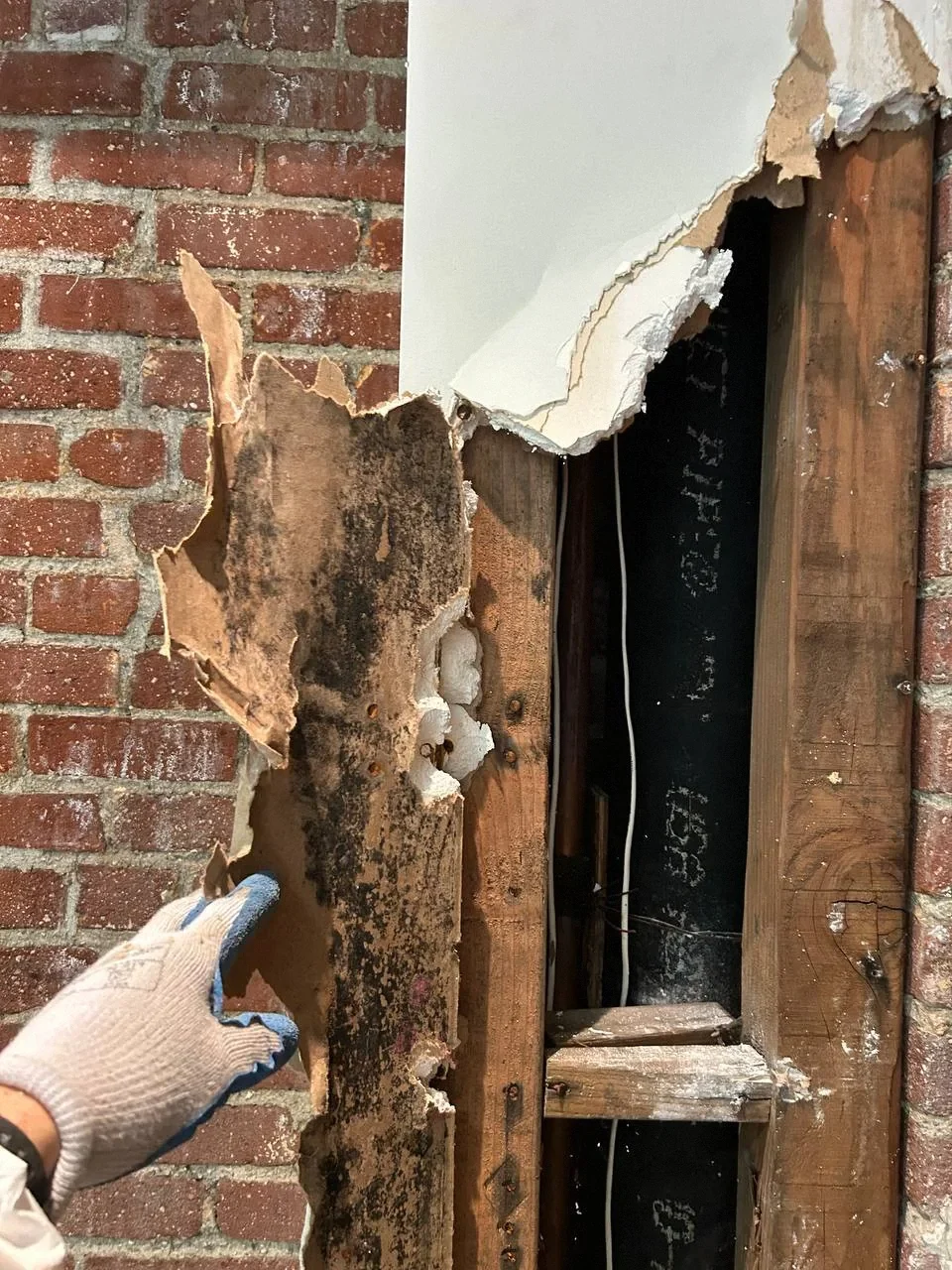
Begin with the moisture pathway
A mold concern needs an assessment of both the affected material and the water or moisture that reached it. A mark, odor or patch of visible growth may indicate a problem but does not show the full extent behind a finish or establish a health diagnosis. Describe when the condition appeared and whether water is still entering.
Water Damage Guard serves San Bruno from San Carlos. Call (650) 550-0619, 24/7, to discuss a damp area or suspected mold. The response depends on the actual material, amount of moisture and use of the room. A leak that remains active should be addressed before permanent finishes are restored.
If water is near a switch, outlet or appliance, stay clear and arrange for qualified help. Keep people away from an unstable ceiling or structural material. A safely accessible shutoff may limit a supply leak, but it does not replace repair of the source.
Inspect the affected assembly
Moisture can move under a floor finish, behind a cabinet or through an opening around a pipe. The visible edge of a stain does not necessarily mark the limit of the affected area. Ask what can be examined in place and what may need to be opened, together with the reason and the plan for controlling debris.
A roof opening, fixture leak or condensation can produce similar symptoms inside. Avoid assigning a cause from the appearance of a wall alone. A plumber or building-envelope specialist may be needed to trace the pathway while the restoration team evaluates the affected materials.
Porous materials and contents can require different handling from hard surfaces. Discuss how unaffected rooms will be protected and how affected items will be inventoried. Do not mix cleaning chemicals or disturb a large area without understanding the containment and safety needs.
Reporting a housing condition in San Bruno
San Bruno says Code Enforcement handles housing and building code complaints and accepts requests concerning suspected private-property violations. A renter should promptly tell the owner or manager about a continuing leak and keep a record of the notice and visible conditions. The City can explain how to report a concern and which office handles it.
The City also lists Project Sentinel as a resource for tenant-landlord disputes and repairs. A housing dispute, a City complaint and a private restoration contract are separate processes. Contact the appropriate resource about the individual circumstances rather than assuming an outcome from a general description.
If water may have crossed a shared floor or wall, coordinate permission to inspect adjacent spaces with the owner or manager. Do not enter a neighboring unit or alter shared equipment without authorization. A written timeline can help the people involved understand when conditions appeared and what was reported.
Repair and temporary housing resources
San Bruno lists Rebuilding Together Peninsula as a home renovation and repair resource for income-qualified homeowners, including seniors and people with disabilities. Ask the organization about current eligibility, availability and the specific repair; the City listing does not promise mold-remediation coverage.
If housing is lost or at risk, San Mateo County identifies YMCA Community Resource Center as the core agency serving San Bruno. The County says its core agencies can help people access emergency housing and shelter. Contact the agency about the household’s circumstances; a placement or payment is not guaranteed.
These resources address different decisions. A repair program may assist with eligible work, while a core agency can discuss housing needs. Neither replaces an inspection of the moisture source or an assessment of the building materials.
Sequence repair and drying
Once the source is controlled, decide how affected material will be cleaned, dried or removed. A finish that looks dry may cover a wet layer. Ask how the assembly will be evaluated before it is closed, and identify any plumbing, electrical or structural work assigned to another trade.
A repair can include plumbing, electrical or structural work as well as the replacement of a finish. Ask the Building Division about the actual scope and arrange required inspections before closing regulated work.
If additional damage is found when a wall or floor is opened, request an updated scope and confirm any required inspection. Keep photographs and a record of areas that remain inaccessible. A cosmetic finish should not conceal an unresolved source.
Plan around occupants and contents
Explain which rooms are occupied, whether anyone needs assistance leaving the work area and where essential belongings are stored. Agree on a safe route for equipment and debris. A multi-unit property may need a staged plan so that unaffected spaces remain accessible.
Keep an inventory of items touched by water. Documents, electronics and upholstered belongings may need specialist assessment. Ask the insurer about documentation before disposal if items can be retained safely. Do not carry contaminated material into a clean space simply for convenience.
If an insurer is involved, ask what the individual policy covers and retain receipts and written instructions. Coverage and temporary living expenses depend on that policy and the insurer’s review. A restoration estimate does not determine the claim.
Records that help the next decision
A useful timeline records when a stain, odor or leak was first noticed and whether the condition changes with rain or fixture use. Keep copies of any written notice to the owner or manager. The timeline is a starting point for diagnosis; it does not prove whether a concealed pipe, roof opening or another source is responsible.
Take photographs only where it is safe and do not disturb material simply to make a better picture. If a wall is opened by the people performing the work, record what was found and which adjacent spaces were checked. Note where access was not possible so that the next contractor understands the limits of the assessment.
If a leak affects an adjoining unit, coordinate with the property manager before arranging access. Establish who may authorize work and who should receive updates. Occupants should not be asked to move through a hazardous area or handle affected belongings as a condition of inspection.
When a plumber or another trade repairs the moisture source, keep the diagnosis and repair description with the cleanup scope. A temporary shutoff or patch can limit additional damage but may not resolve the underlying defect. Ask how the permanent repair will be checked and whether a permit or inspection applies.
Before replacing finishes, discuss whether the remaining material has been evaluated and how the work area will be returned to use. If new damage appears, request a revised scope instead of treating the earlier estimate as a complete description. A written handoff can identify work left for a separate trade.
If relocation or insurance is involved, ask the relevant agency or insurer what documentation it needs and preserve receipts. Resources can have eligibility and funding limits. Keep their decision separate from the technical question of how the building will be dried and repaired.
Confirm the contact and safe route before each visit.
Questions to ask before approving work
Ask which moisture pathway was identified, what material was visibly affected and what remains uncertain. A useful scope distinguishes a confirmed finding from an area that has not yet been opened. If another trade must repair the source, agree on how the work will be coordinated.
Discuss how the workspace will be separated from occupied rooms and how debris and contents will be handled. The measures depend on the material, extent and location. If a concealed area is opened and the condition differs from the initial assessment, request an updated explanation.
At completion, retain the work description and any inspection records. If the original source returns, those records can help a professional understand what was previously done. They do not prove that the property can never develop another leak.
Common questions
Who handles housing code complaints in San Bruno?
The City says Code Enforcement handles housing and building code complaints and accepts requests about suspected private-property violations.
Where can a San Bruno tenant ask about a repair dispute?
The City lists Project Sentinel as a resource for tenant-landlord disputes and repairs. Ask about the individual situation.
Is home repair assistance available to San Bruno homeowners?
The City lists Rebuilding Together Peninsula for income-qualified homeowners. Confirm eligibility and the work the program can cover.
Where can a San Bruno resident ask about emergency housing?
The County identifies YMCA Community Resource Center as the core service agency for San Bruno. Ask about housing resources and availability.
Does a visible stain establish the extent of mold?
No. The moisture source and affected materials need individual assessment; concealed areas may require separate inspection.