Begin with moisture, not a guess
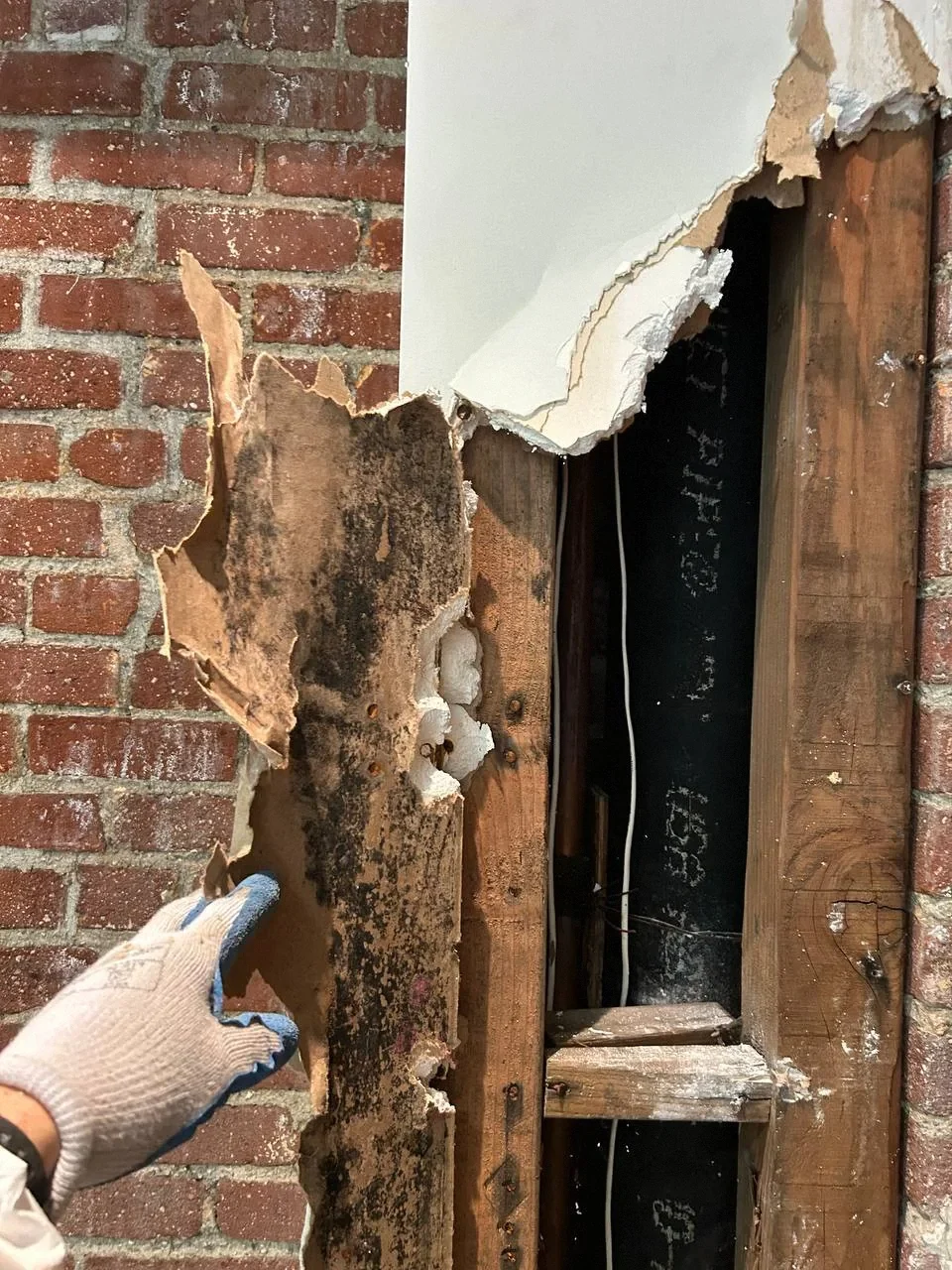
Mold remediation starts by finding and addressing the moisture that allows growth to persist. A stain, odor or patch on a wall calls for an assessment of the affected surface and the path by which water entered. It does not, by itself, reveal the extent of hidden growth or establish a particular health effect.
Water Damage Guard serves Pacifica from San Carlos. Call (650) 550-0619 at any hour to discuss visible growth, a persistent damp area or water damage that has not dried. Describe when the condition appeared, any recent leak or storm, and whether the property is occupied. The appropriate scope depends on the actual building and affected material.
If water is still entering, stop the source only if it is safe to do so. Avoid touching wet electrical equipment or entering standing water around it. Keep occupants away from a damaged ceiling or other unstable material, and arrange for qualified assistance when an electrical or structural hazard may be present.
A water pathway can be different in each building
A supply leak, roof defect, window opening or condensation can produce a similar mark on an interior finish. Inspecting only the mark risks missing a continuing source. The condition of the surrounding wall, flooring and adjacent room matters, as does the time that water may have been present. A restoration plan should distinguish what has actually been observed from what still needs investigation.
Pacifica’s historical General Plan describes the January 1982 storm flooding lower Linda Mar with water and silt. That is a dated local event, not evidence that every home in the area has mold. Floodwater can leave material wet after visible water has receded; an affected property requires a separate assessment and a safe cleanup plan.
For repeated rain-related entry, document where moisture first appears and whether soil or debris enters with it. A drainage or building-envelope specialist may need to examine the exterior route before an interior finish is replaced. Avoid work on an unstable slope or roof during a storm.
What a remediation scope should address
An assessment considers the affected materials, how far moisture has traveled, whether visible growth is present and how the space is used. A porous surface that has remained wet may need a different response from a hard surface. If material must be opened, agree on access and containment before work begins and document what is found.
Cleaning a visible surface while the source remains active can leave the same problem in place. The repair that stops moisture and the work that addresses affected materials should be coordinated. Drying should continue as appropriate before finishes are replaced; a surface that feels dry does not necessarily show what is happening inside the assembly.
Do not mix household cleaning products or disturb a large area of growth without understanding the exposure and containment needs. Protect unaffected rooms and belongings from debris. If an occupant has health concerns, they should speak with a qualified health professional; a restoration inspection is not a medical diagnosis.
Rental conditions and local complaints
Pacifica’s FY 2025–26 budget describes the Building Division as investigating building-related complaints and performing plan review and inspections. A renter who sees an ongoing leak or suspected housing problem should notify the owner or manager and keep a record of the condition and the notice. If the matter remains unresolved, the appropriate City office can explain how to submit a building-related complaint.
A complaint and a cleanup contract are different processes. The City’s role in a reported condition does not automatically authorize a private restoration company to work in the unit. Coordinate access and permission with the property owner or manager, and describe whether water has crossed into an adjoining room or unit. Keep photographs and correspondence where they are accessible.
For a shared building, the visible condition in one unit may have a source elsewhere. Arrange inspection with the people responsible for the other space rather than opening a neighbor’s wall or operating shared equipment yourself. Keep everyone informed if the affected area expands.
Repair assistance and its limits
San Mateo County lists Senior Coastsiders as a source of home repair assistance for qualified low-income homeowners in Pacifica and advises people to check program availability and details. Eligibility and the scope of work must be confirmed with the organization; the County listing does not promise that every mold-remediation project is covered.
If damp conditions leave someone without safe housing or at risk of losing it, San Mateo County lists Pacifica Resource Center as the local core service agency. The County says these agencies can help people access emergency housing and shelter. Contact the center about individual circumstances and availability; placement or payment is not guaranteed.
Keep repair estimates and a description of the moisture source when contacting an assistance provider. Different programs may address a building defect, accessibility need or another eligible repair; the fact that one program lists Pacifica does not establish that it can fund the whole restoration scope.
Before replacing a wall or floor
Once the moisture source is controlled and affected materials have been addressed, discuss the repair sequence with the contractor. A wall may need plumbing, electrical or structural work before a new finish is installed. Ask Pacifica’s Building Division whether the actual work needs a permit or inspection, and arrange any inspection before covering regulated components.
Record the work performed, the reason material was removed and any areas that could not be inspected. This helps the next contractor understand the limits of the assessment. If a concealed area is opened later and the scope changes, update the plan and confirm whether different approvals are needed.
A repair is more durable when the underlying water pathway has been addressed. Repainting a recurring stain without checking the leak or replacing a floor over a still-wet layer may hide evidence of continuing damage. Ask how the affected assembly will be evaluated before it is closed.
Questions to ask during an assessment
Ask where moisture was found and what evidence supports the proposed work. A useful explanation distinguishes a visible patch from a concealed area that has not yet been opened. It also identifies the source that must be repaired and whether additional trades are needed. If the source is uncertain, agree on the next diagnostic step rather than treating a guess as a completed finding.
Discuss how the workspace will be separated from occupied rooms and how furniture or other contents will be protected. Ask whether ventilation equipment will be used and how debris will be removed from the building. The exact measures depend on the affected material and the size and location of the work area.
When the work is complete, request a record of the scope and any remaining limitations. A separate plumbing or exterior repair may still be needed, and ongoing maintenance can matter when the original source was a recurring leak. Keep those responsibilities clear among the occupants, owner and contractors.
Planning around people and belongings
Explain to the restoration team how the affected room is used and whether anyone has difficulty leaving the area. Establish a safe route for access and plan where belongings can be kept while work proceeds. An occupied property may need staging so that unaffected rooms remain usable, subject to the actual conditions and safety assessment.
If insurance may apply, ask the insurer what information is needed for the claim and retain receipts for authorized work or temporary arrangements. A policy may distinguish different causes of water entry; neither the presence of mold nor a restoration estimate alone establishes coverage. Confirm policy-specific terms with the insurer.
At the end, ask for an explanation of the areas addressed and what remains outside the scope. If a roof, pipe or drainage repair is to be performed separately, coordinate it rather than assuming the interior cleanup solved the source. Retain relevant photographs and inspection information for future maintenance.
Common questions
Does the 1982 Linda Mar flood prove mold is present today?
No. It is a historical event. The current moisture source and condition of a particular building need individual assessment.
Who investigates building-related complaints in Pacifica?
The City’s FY 2025–26 budget identifies complaint investigation as a Building Division function. Contact the City about the appropriate process for a specific concern.
Is repair assistance available to Pacifica homeowners?
The County lists Senior Coastsiders for qualifying low-income Pacifica homeowners. Ask the organization about availability, eligibility and the work it can cover.
Where can Pacifica residents ask about emergency housing?
San Mateo County identifies Pacifica Resource Center as the core service agency for Pacifica. Contact it about emergency housing access and eligibility if housing is at risk.
Does Pacifica require a permit to replace damaged material?
It depends on the work. Ask the Building Division about the proposed plumbing, structural or other repair and any required inspections.