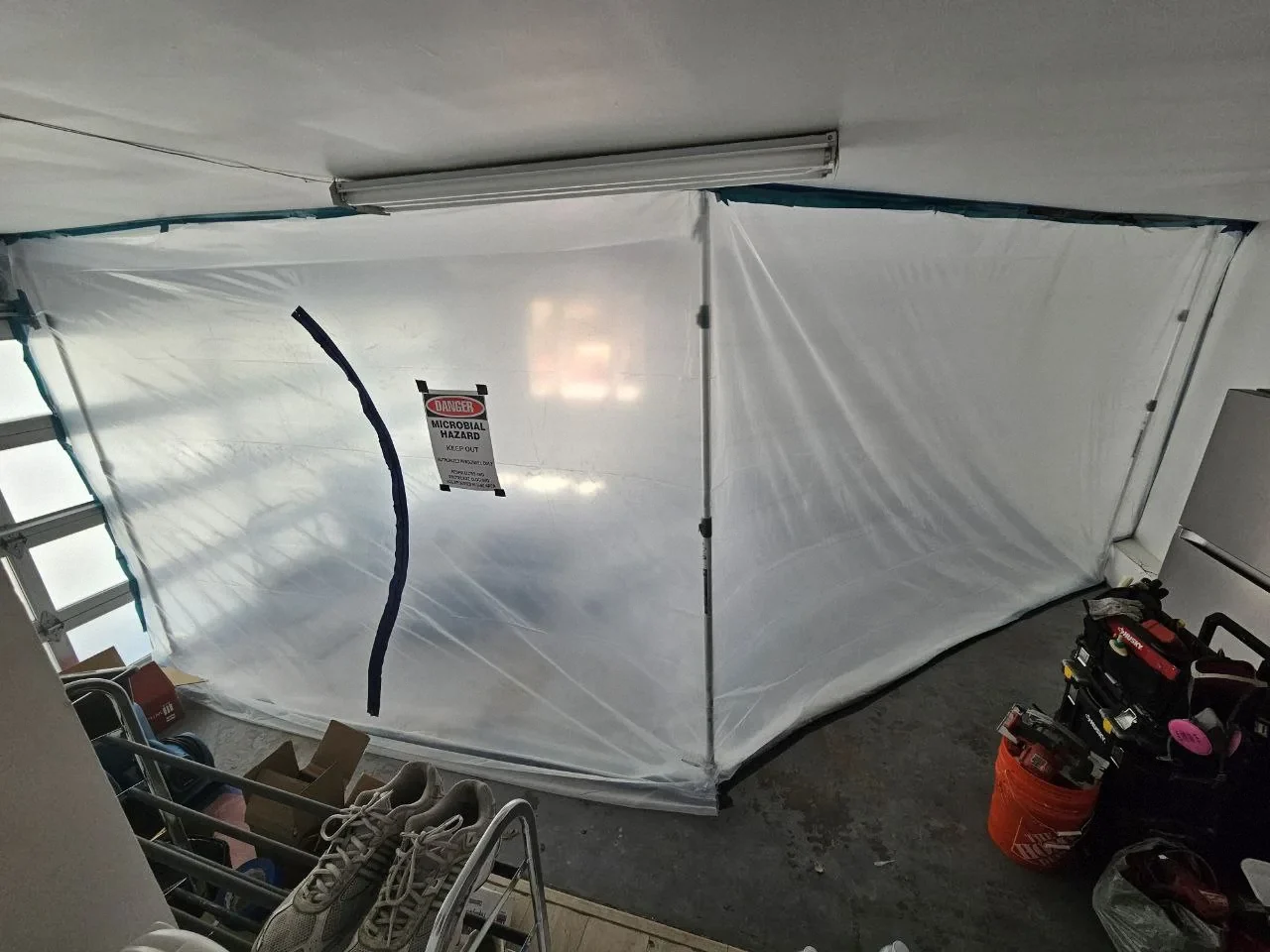
Keep the affected area clear
Wastewater in a bathroom, garage or crawl space can contain harmful organisms. Keep people and pets away, and avoid touching water or contaminated items. If sewage is backing up from a fixture, stop adding water through connected toilets, sinks and appliances. The cause may be a blockage, a problem in a public sewer or an on-site septic system; the first visible puddle cannot determine which.
Electrical safety comes before cleanup. Do not step into water to operate a switch, pump or panel, and do not handle a wet appliance. If power cannot be isolated without crossing water, request assistance from a qualified electrician or the utility. Leave a damaged structure or unstable ground to the appropriate professional to assess.
Call Water Damage Guard at (650) 550-0619, 24/7, and explain what is backing up, which rooms are affected and whether the source has stopped. Also contact the sewer district or septic professional serving the property. Photograph the condition only from a safe location, and tell the insurer what you know about the source.
Determine the system serving the address
A Woodside property may use a public sewer district or an on-site septic system. Check the town sewer-area map and property records. If a backup involves a piped sewer, the responsible district depends on the address. For a septic system, ask a qualified septic professional and San Mateo County Environmental Health about the condition and appropriate next step.
Give the responding agency the address, the fixtures involved and whether sewage is escaping outdoors. Note the time the problem began and whether another service has already worked on the line. These details help the agency locate the issue, but they do not prove in advance whether the blockage is in a public main, a private connection or an on-site system.
Cleaning a room and fixing the wastewater system are separate decisions. A contractor may remove contaminated material, but the problem can return if wastewater still cannot leave the building. Agree on how the diagnosis and source repair will be communicated to the cleanup team before replacement materials are installed.
Selecting a septic pumping service
San Mateo County requires persons and businesses that pump or clean on-site wastewater systems to hold current Environmental Health certification. The county also requires each pumper vehicle to be inspected annually and to carry a current Environmental Health vehicle identification permit. These are county requirements for the pumping activity; they do not mean that every indoor cleanup requires a pumper truck.
Ask the septic service what it will inspect and whether pumping alone can address the reported condition. A full tank, saturated disposal area, damaged connection or alarm can have different causes. Request a clear description of the findings and any recommended repair or further evaluation. Do not enter a septic tank or attempt to open a system during a backup.
If wastewater has reached a yard or drainage area, keep away from the affected ground and keep children and pets clear. Tell the service about nearby wells, watercourses and access constraints. San Mateo County Environmental Health can advise on its applicable process. Avoid directing sewage into a storm drain or another area of the property.
Repair permits depend on the location
Woodside says modifications between a structure and its septic tank require a building permit in addition to applicable septic review. Describe the proposed work to the town and county before starting. Routine assessment, a connection modification and replacement of a treatment component are not necessarily the same type of work.
For work in the public right of way, the town requires an encroachment permit and lists installing a sewer lateral or cleanout among examples. A private-property cleanup does not automatically authorize excavation under a sidewalk or road. Ask the contractor which agency controls the work area and who will apply for the permits.
Coordinate inspections before new finishes or backfill conceal the work. Keep the permit, any system findings and the dates of source repair with the restoration records. Where a line passes through shared property or an easement, identify who can grant access rather than assuming that the nearest opening indicates the full route.
Assess the affected materials
Wastewater can spread below the visible edge of a spill. The assessment should look at the path into adjacent rooms, the lower portions of walls and cabinets, and any accessible area below the floor. Tell the team if the system backed up more than once or if water entered through a floor drain as well as another fixture.
Treatment depends on what contacted the sewage and whether a material can be effectively cleaned and dried. Hard surfaces, padding, insulation and personal belongings may need different handling. Discuss which items are proposed for removal and how unaffected areas will be protected. An odor alone does not establish the complete boundary of contamination.
For valuables or irreplaceable items, ask about safe assessment and documentation before treatment. Keep contaminated items out of clean living areas. The insurer may want an inventory, photographs or reports, but do not remain in a hazardous space merely to make a record.
Cleaning and drying after source control
After the source has been addressed and the space is safe to enter, the plan may include extraction, removal of affected materials and cleaning of surfaces that can be treated. The team should explain the scope by location and identify decisions that depend on opening an assembly. If conditions are different from what was initially visible, review any proposed change before proceeding.
Drying equipment needs a safe power supply and access to the affected material. Measurements help track progress, but a dry-looking finish does not necessarily mean the space underneath is dry. Ask what will be checked, how equipment placement affects the household and what conditions must be met before reconstruction begins.
If a plumbing or septic repair is incomplete, tell the restoration team. Repeated use of a system that still backs up can contaminate a cleaned area again. A documented sequence makes it easier to coordinate the wastewater professional, the building trades and any required agency inspection.
Rentals, claims and remaining work
Notify a landlord or manager promptly if the property is rented. Describe whether the bathroom, kitchen or another essential area is unusable, and follow up in writing. If a shared line may be involved, the owner or association may need to coordinate access. A wet finish in one room does not by itself settle who controls the underlying pipe.
Ask your insurer about the policy and the information needed for a sewage loss. Save photos, findings, invoices and receipts for any temporary arrangements. Coverage depends on the cause and policy. An estimate for cleanup does not decide whether septic work, a public sewer repair or replacement of personal belongings is covered.
Before closing a wall or floor, confirm that the source has been corrected and the required inspection sequence has been discussed. A proposal should say which areas are included, which materials will be removed or treated and who will handle separate system repairs. Keep a list of unresolved items for the final walkthrough.
Common questions
Does every Woodside property use the same sewer system?
No. Check the town sewer-area map and property records to determine whether the address is in a sewer district or uses septic.
What should I do during a sewage backup?
Keep away from wastewater, stop using affected fixtures and contact the responsible sewer district or septic professional. Do not enter water to reach electrical equipment.
Does the county regulate septic pumpers?
Yes. San Mateo County requires certification for septic pumping and cleaning, and annual inspection and a current identification permit for pumper vehicles.
When can septic work need a building permit?
Woodside says modifications between the structure and septic tank require a building permit in addition to applicable septic review.
Does a sewer lateral in the public right of way need separate approval?
Woodside lists installation of a sewer lateral or cleanout in the public right of way as encroachment work requiring a permit.
Sources
- Woodside or county source Checked
- Woodside or county source Checked