Stop using the affected drains
If wastewater is rising through a toilet, shower or floor drain, stop using connected fixtures and appliances. Keep people and pets out of the affected space and avoid carrying contaminated items through unaffected rooms. If standing water has reached electrical equipment, do not enter it or operate the equipment. Arrange a qualified electrician when a safe shutoff cannot be reached without entering water.
Hillsborough lists Public Works at (650) 375-7444 for water and sewer problems and (650) 375-7470 after hours. Give the location and describe whether sewage is entering the building, appearing at an outside cleanout or flowing in a public area. Do not try to clear an overflowing public line yourself. Call 911 if there is an immediate threat to life.
Water Damage Guard provides sewage cleanup in Hillsborough and accepts calls at (650) 550-0619, 24/7. Tell us which spaces may have been contacted, whether water is still rising and whether the building has any access restriction. The town or a plumbing professional can investigate the blockage; contaminated building materials need their own assessment.
Find the blockage without assuming its location
A lateral connects a property to the public sewer. The source of a backup may be in the building, the private lateral or the public system. The place where wastewater becomes visible does not establish where the obstruction lies. Report the problem and ask the town or plumber what they found, which part of the line they examined and whether water use can safely resume.
The town's investigations have identified cracked, root-damaged and otherwise degrading lateral pipes as paths for excess water to enter the system during wet weather. The town also describes the possibility of backups associated with these conditions. That system-level information is not a diagnosis of your lateral. A particular pipe can be assessed only after the appropriate person investigates it.
The town documents a 2010 example of a lateral with root intrusion and groundwater entering through a break even though the residence had not experienced a backup. The example illustrates why no visible backup does not prove a pipe is sound; it does not establish that the same defect exists on another property. Keep any inspection video or report with the repair records and ask what it can and cannot show.
The town program and private work
Following a 2009 regional water board order, Hillsborough described an initial five-year, $25.5 million program to repair or replace defective public sewer pipelines and encourage private lateral work. This is the town's description of an initial historical program, not a current budget or a promise of assistance for a particular owner.
When a contractor proposes a lateral repair, ask where the work will occur and whether town approval is needed. The work may involve the building, the private line, an easement or the public right-of-way. Those locations can affect who authorizes and inspects it. Request a description of the defect, the proposed repair and any permit or inspection documentation.
A cleanup provider and a plumber have related but separate jobs. One may investigate and repair a blockage; the other assesses wastewater contact with building materials and belongings. Coordinate their schedules so water use is not resumed prematurely and a wall or floor is not closed before the source has been addressed. An insurer may request records from both.
Backflow protection is site-specific
Hillsborough says its municipal code requires certain homes to have sewer backflow prevention devices under specified conditions. A backwater valve can limit the reverse movement of sewage toward fixtures when the relevant conditions occur. The actual fixtures, their elevations and the building's drainage design matter; do not assume the same requirement applies to every house or every drain.
Ask the town Building Division or a qualified plumbing professional to assess the property and proposed work. Discuss where any device would be installed, how it remains accessible and what maintenance it needs. A valve can be part of a prevention plan, but it is not a substitute for investigating a blocked line or cleaning a space already contaminated by wastewater.
Keep details of installed equipment, permits and inspection results with the property's maintenance records. If fixtures are added or the drainage layout changes later, ask whether the earlier assessment still covers the new arrangement. A device that is inaccessible or poorly maintained is not useful merely because it appears in old paperwork.
Plan cleanup around contamination
Wastewater can reach beneath flooring, into the base of a wall or through openings around plumbing. The highest visible stain may not show the full path. An assessment should consider the source, the materials contacted, the time wet and areas that remain inaccessible. Avoid assuming that an item can be saved or must be discarded before its condition and exposure have been evaluated.
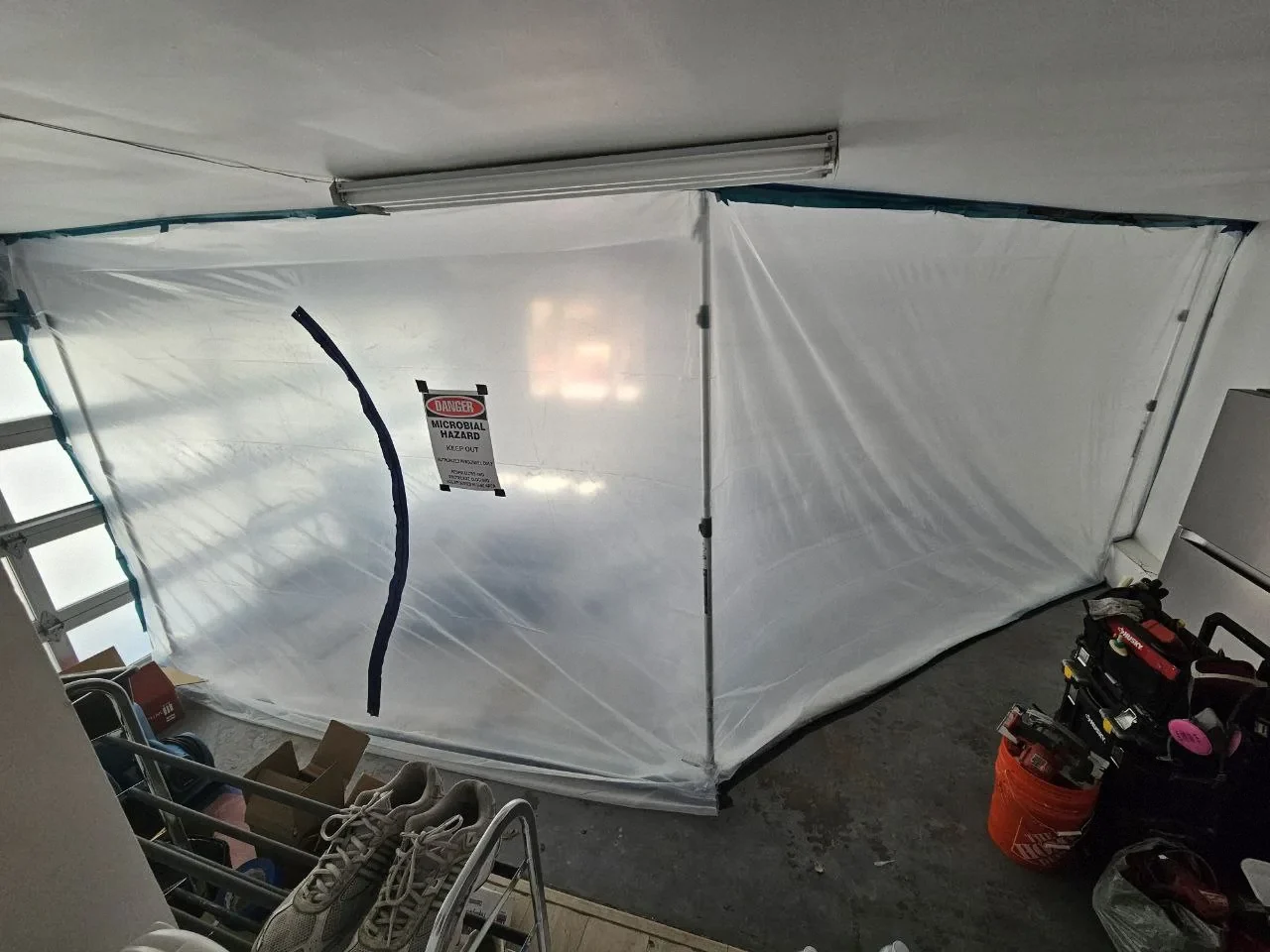
Keep children and pets away, and avoid moving wet contents through clean rooms without a plan. Ask how the restoration provider will separate the work area and document affected belongings. Porous materials and hard surfaces may require different handling. If an item must be removed, ask how it will be recorded and whether an insurer or investigator needs to inspect it first.
A sewage backup is not a simple repainting project. Cleaning, drying and rebuilding have different purposes. Ask which areas will be checked after standing water is removed and how the remaining structure will be evaluated before finishes are installed. Where older coatings or insulation will be disturbed, discuss whether testing or other precautions are needed before demolition.
Coordinate town, plumbing and restoration work
For an active overflow, the priority is to stop additional discharge and keep people away. Once the town or plumber has identified the relevant line, ask who is responsible for the next action and whether the building can use water again. Record the time of each call and the advice received. Do not treat a temporary improvement in drainage as proof that a damaged line has been repaired.
If the repair requires a permit or inspection, obtain the applicable requirements from Hillsborough. Where the restoration work opens a wall or floor, arrange the plumbing and building work so that required inspections happen before the assembly is concealed. Ask who will be responsible for any additional work discovered after opening and how a change in scope will be communicated.
For a shared or rented building, notify the person who can authorize access. An affected fixture in one unit can be connected to piping shared with another. Keep notices factual and avoid assigning fault before the cause is established. Management may need to coordinate access, notices to occupants and the separate restoration of damaged areas.
Keep useful records for the next decision
A practical record includes safe photographs, a list of affected rooms, the observed water level and a timeline of calls and repairs. Request the plumber's findings, the town's relevant inspection information and the restoration scope. The documents need not reach the same conclusion: one describes a pipe, another describes the building and another documents work performed.
If an insurance claim is involved, ask the insurer what evidence it needs and whether it must inspect belongings before disposal. Sewer backup coverage is determined by the policy and circumstances. Water Damage Guard can discuss the cleanup; it cannot decide coverage. Keep receipts and any temporary accommodation information separately so you can answer questions without reconstructing the event later.
Once cleanup and source repair are complete, ask how to maintain access to the cleanout and any protective device. Discuss warning signs that warrant another plumbing call, such as a recurring slow drain or a new overflow. A prevention plan should respond to the property's actual layout and findings rather than a generic assumption about every house on a hillside.
Common questions
Who should I call for a sewer overflow?
Hillsborough lists Public Works at (650) 375-7444 and (650) 375-7470 after hours. Call 911 if there is an immediate threat to life.
Can I keep using the drains during a backup?
Avoid using connected fixtures and appliances while the blockage is investigated; additional wastewater can worsen the overflow.
Does the town require a backwater valve at every home?
The town says certain homes need a device under specified conditions. Ask the Building Division or a qualified professional about the actual property.
Can a lateral be damaged without a backup?
Yes. The town describes a 2010 lateral with root intrusion and groundwater leakage where no backup had occurred; that example does not diagnose another property.
When should finishes be replaced?
After the source is controlled and affected materials have been assessed, cleaned and dried as appropriate, with any required inspections coordinated before the work is concealed.
Sources
- Town of Hillsborough Checked
- Town of Hillsborough Checked